
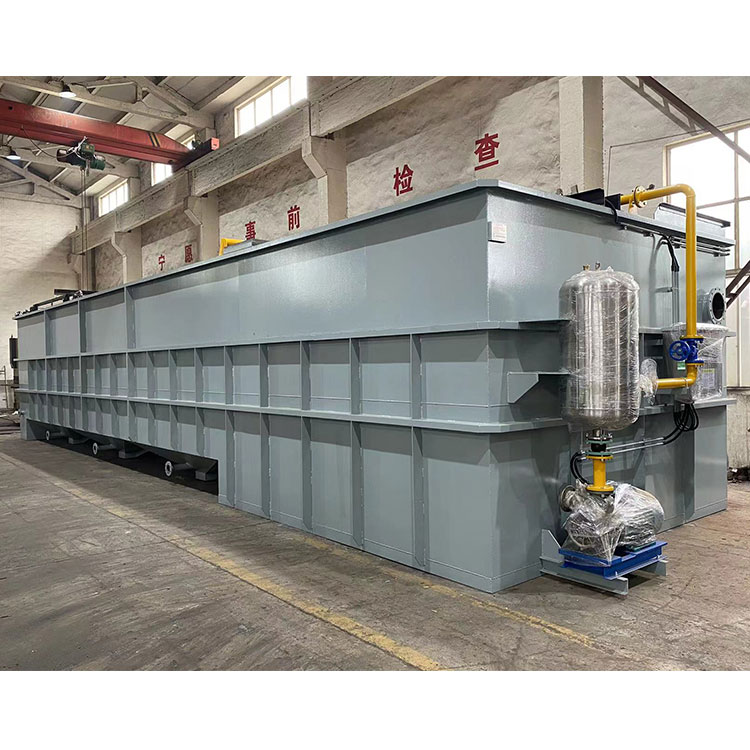
 JF Integrated Air Flotation Equipment
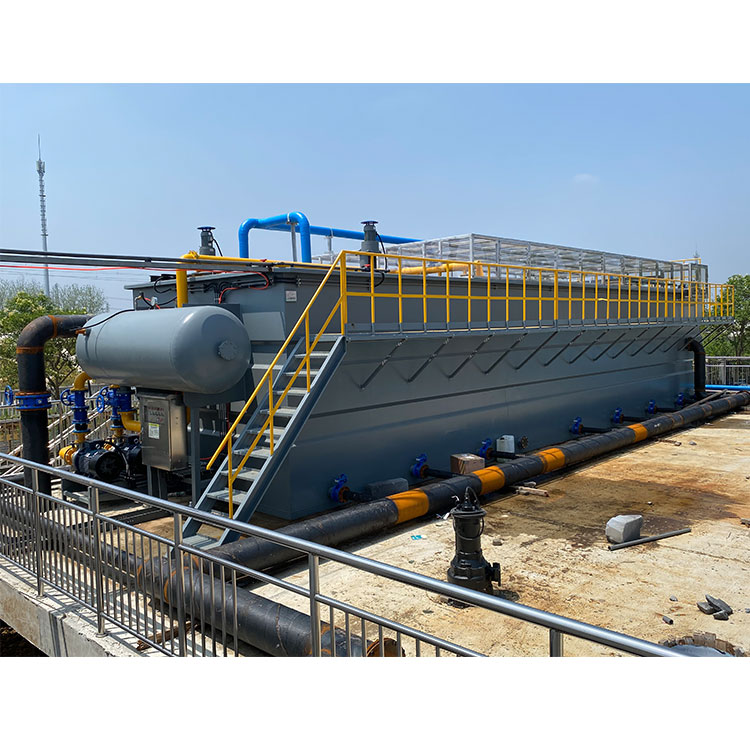 JF Combination Floating Equipment
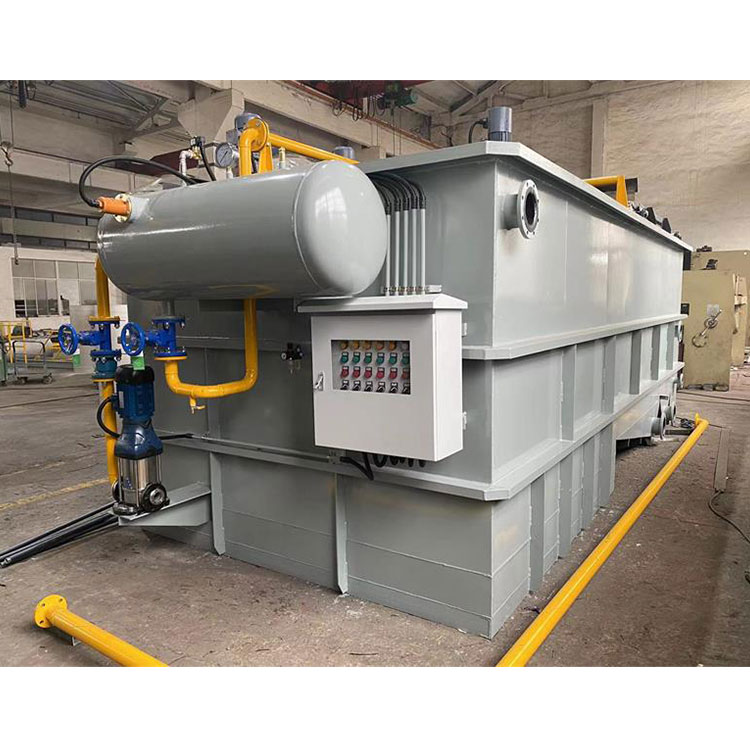 Laboratory Air Floating
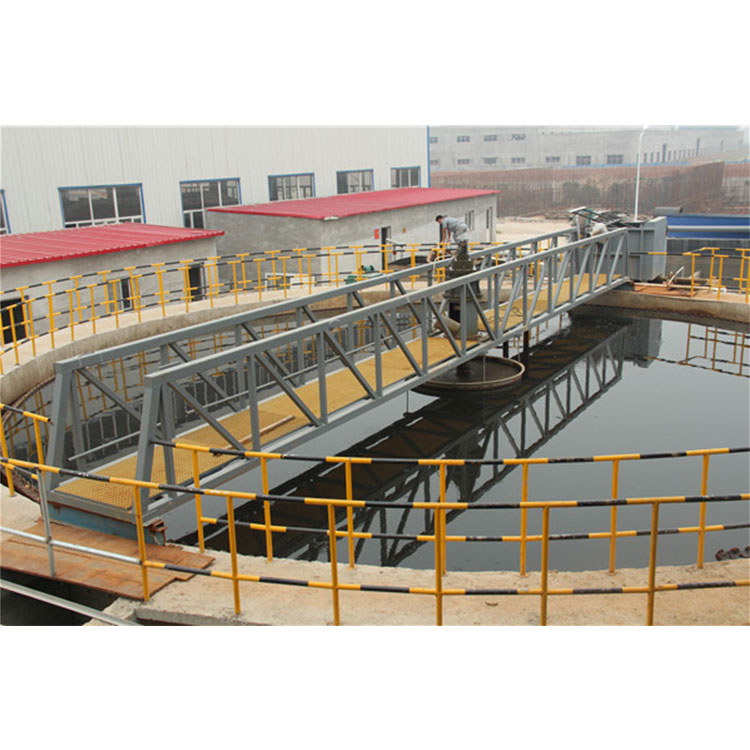 Central Drive Sludge Scraper
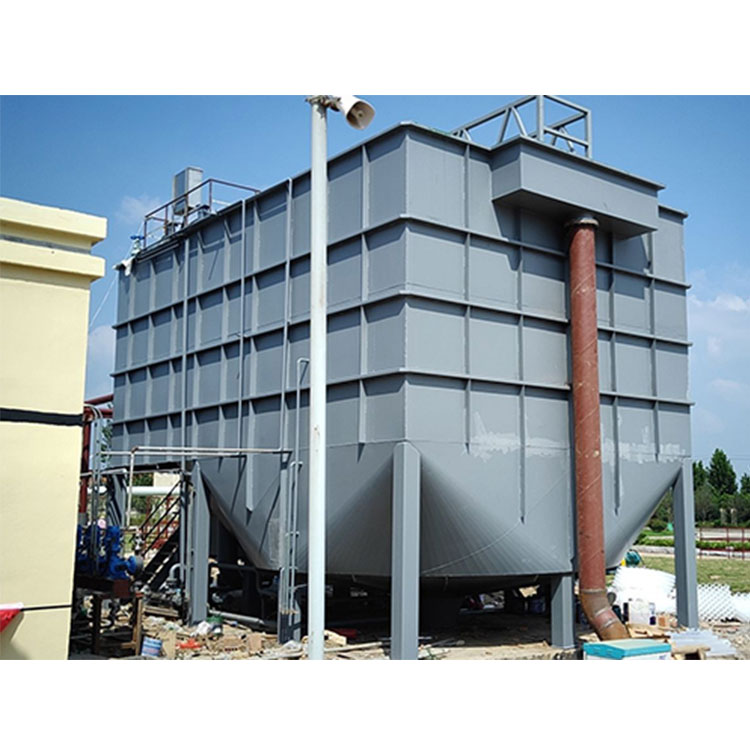 High-density sedimentation pond
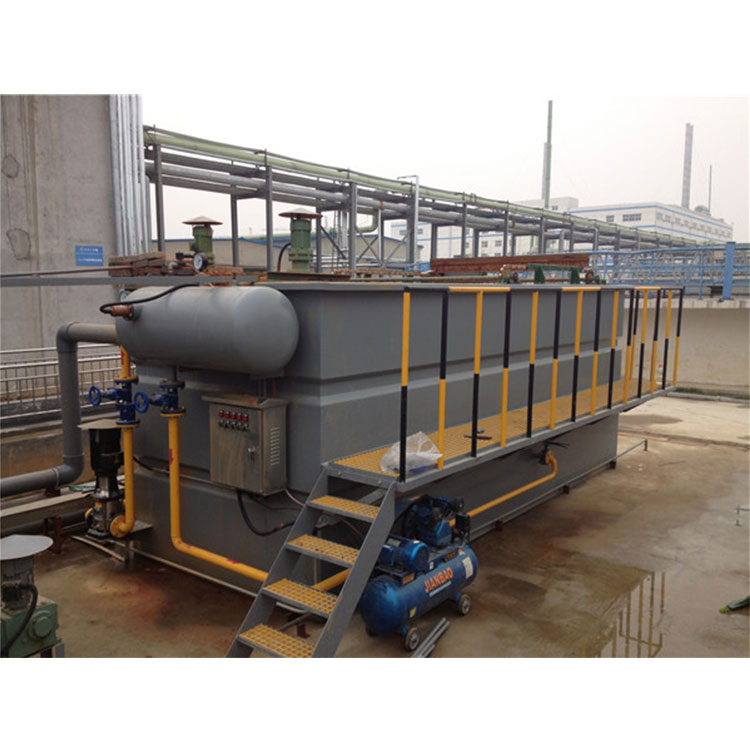 JF Composite Air Flotation
 Shallow Water Floating Machine
Product Details




产品Price Negotiable
最小起订Quantity:1 Tai 供货总Quantity: 10 Tai
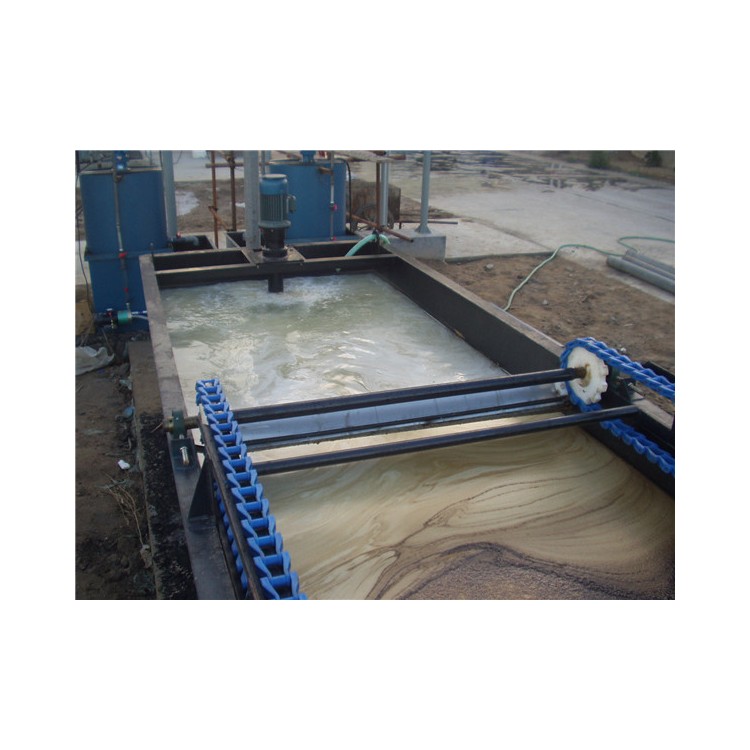
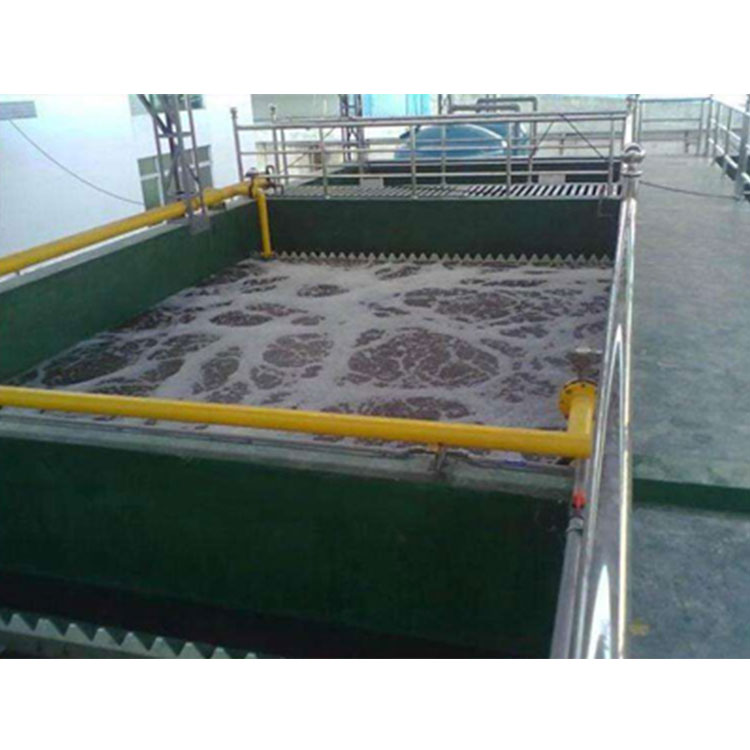
Overview and Application In wastewater treatment processes, solid-liquid separation technology is a key component. For the removal of fine suspended particles with densities close to water, air flotation separation is an ultra-effective method. JWAF is a system specifically designed to remove oils, colloidal matter, and solid suspended solids (SS) from industrial and urban wastewater. It employs the principle of mechanical aeration combined with chemical flocculation to treat various types of wastewater with different water qualities, making it an ideal physical-chemical wastewater treatment equipment. It is well-designed, easy to operate, and cost-effective in operation. It generates bubbles from air, which directly remove solid suspended solids from the wastewater. The system is primarily used for the purification and treatment of industrial wastewater in industries such as papermaking, chemicals, dyeing and finishing, food, beer, and屠宰. Operation Principle: The vortex aeration machine directly injects "micro bubbles" into the wastewater without the need for pre-aeration, and then distributes the "micro bubbles" evenly throughout the wastewater using the diffuser impeller, ensuring no clogging occurs during the entire operation. The vortex aeration flotation machine mainly consists of a tank, an aeration machine, and a sludge scraping system, and does not require equipment such as pressure aeration, air compressors, and circulating pumps. Raw wastewater flows into a small aeration section equipped with an impeller aeration machine, where it is thoroughly mixed with the microbubbles generated by the aeration machine as it rises. The aeration machine transfers air from the surface to underwater through a suction pipeline. The working principle of the aeration machine involves using the high-speed rotation of the diffuser wheel at the bottom of the air conveying pipe to create a vacuum zone in the water. Air above the liquid surface is introduced into the water through the aeration machine, filling the vacuum, and resulting in the formation of microbubbles that spiral up to the surface, with oxygen from the air dissolving into the water as well. By adding the chemical before the aeration machine, the stability of colloidal particles in the water is disrupted due to the chemical action, promoting contact between colloids to form flocs. The vortex swirl in the aeration chamber, combined with dense tiny bubbles, organically binds them together. As the flocs rise within the aeration chamber, they form larger flocs. Due to the imbalance in density between the gas-water mixture and the liquid, a vertical upward buoyancy is generated, lifting the SS to the surface. During the ascent, microbubbles adhere to the SS, and upon reaching the surface, the SS is supported and maintained at the water level by these bubbles. The SS floating on the surface is intermittently cleared by a scraper. The scraper moves along the entire liquid surface, with the SS flowing from the inlet of the air flotation tank to the污泥排放管道 at the outlet. The purified wastewater then flows into the overflow channel and gravitates to the biochemical treatment section. Open return pipes extend from the aeration section along the bottom of the flotation tank. While generating microbubbles, the vortex-shaped aeration equipment creates a vacuum zone at the pool bottom with the return pipe, which draws wastewater from the bottom back to the aeration area and then back to the flotation section. This process ensures approximately 40% of wastewater is recycled, and the flotation section can still operate without incoming water. Model Features System Advantages Save on investment The vortex aeration flotation process does not require pressure vessels, air compressors, or circulating pumps, thus resulting in lower equipment investment. The equipment occupies a small footprint, reducing civil investment. The vortex aeration flotation equipment with a flow rate of Q=200 m3/h requires only a footprint of 36.15 m2. 2. Low operating costs The system saves on energy consumption due to the absence of pressure vessels, air compressors, and circulating pumps. The vortex aeration system with a flow rate of Q=200m3/h consumes only 5.435KW, whereas the dissolved air flotation system consumes up to 65KW. The vortex aeration system is easy to operate, with no complex equipment, thereby reducing labor and maintenance efforts, cutting down on labor and maintenance costs. 3. Notable processing effects Removal rates for oil and solid suspended substances (SS) exceed 80%. BOD and COD removal rates can reach over 60%, while dissolved air flotation systems can only achieve around 35% for BOD and COD. It promotes the oxidation of sulfides, reducing the sulfur content in wastewater. Using it to treat intermediate wastewater from chemical pulping can significantly reduce the scale of biological secondary treatment equipment (if waste paper is used as raw material, wastewater generated from deinking and bleaching processes does not require biological secondary treatment to meet standards for discharge or reuse). It can even eliminate the biological treatment process and discharge directly to meet standards, thereby greatly reducing overall investment costs. 4. Simple to operate This system is easy to operate, without complex equipment; the entire system consists of only two mechanical parts, unlike the dissolved air flotation system, which includes many necessary equipment such as pressure vessels, air compressors, and circulating pumps. Parameters and specifications


