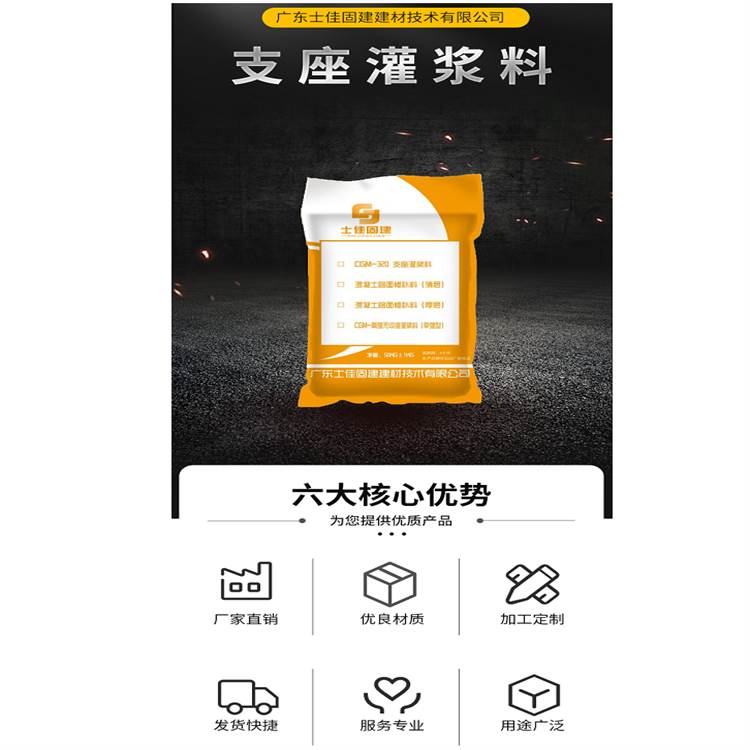

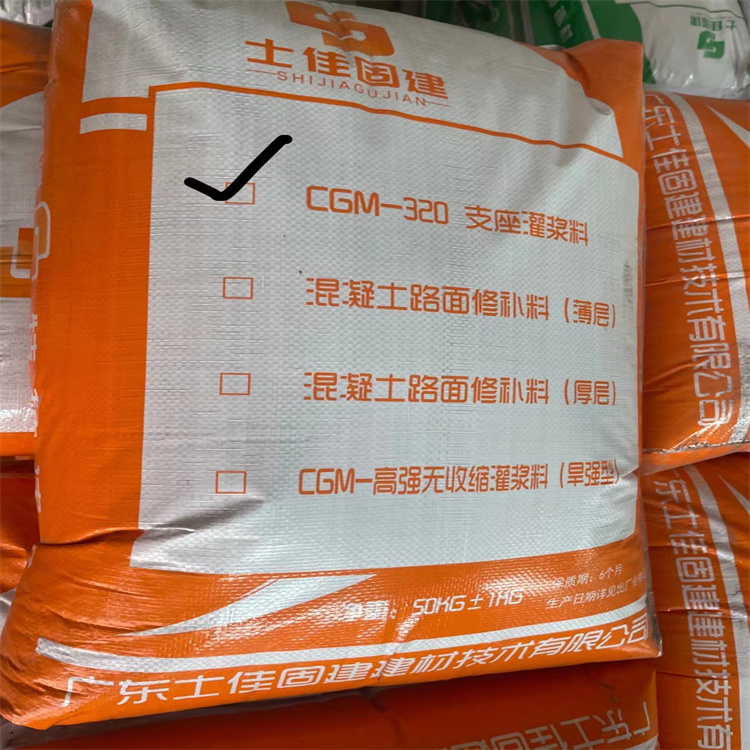

CGM-320 Support Grouting Material
I. Application Scope
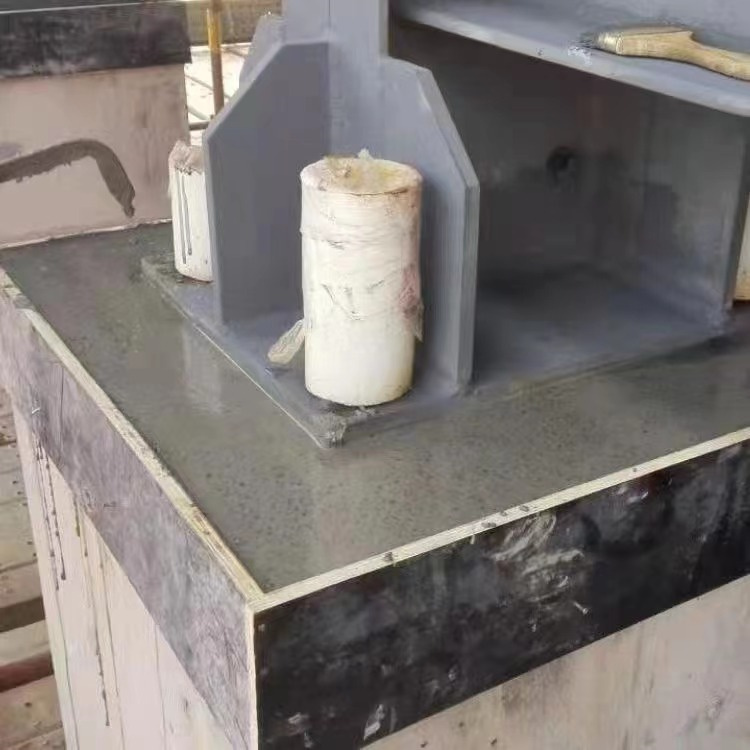
CGM-320 bearing grout is used for gravity grouting in precast simply supported box girder bowl-type rubber bearings, cast-in-situ girder bridge bowl-type rubber bearings, and grouting between the bearing base and pier support stone.
CGM-320 Support Grouting Material is used for precast multi-section T-beam basin-type rubber supports.
II. Product Features
1. High early strength; excellent fluidity.
2. Extended working hours; Cost-effectiveness.
3. Dense and shrinkage-free; rust-free, metal-free aggregate.
4. Easy to install; chloride-free
Section 3: Performance Specifications
Product Model
Performance specifications
CGM-320 Support Grouting Material
Flow Rate (mm)
≥320
—
30-minute flowability (mm)
≥240
—
Bleeding Rate (%)
0
—
Compressive Strength (Mpa)
2h≥20
8h≥25
28d≥50
28d≥50
56d is not less than 28d test results
56d minimum test results not less than 28d
90 days not less than 56 days test results
Flexural Strength (Mpa)
24h≥10
24h≥10
Elastic Modulus (Gpa)
28d≥30
28d≥30
28-day free swelling rate (%)
0.02~0.1
0.02~0.1
The above data were obtained under standard laboratory control conditions. Unit dosage: approximately 2200 Kg/m³
Inspection Basis: Science & Technology Base No. [2005] 101, Temporary Technical Conditions for Bridge Pot-Type Rubber Supports for Passenger Dedicated Lines
Four, Construction Method
1. Install the bracket at the bottom of the beam, ensuring the centerline of the bracket aligns with the centerline of the beam's bottom plate, with no deviation exceeding 0.5mm. Tighten the bracket bolts sequentially, maintaining a consistent tightening level among all bolts; upon completion, there should be no gap between the bracket and the beam's support plate.
2. Install the base bolts into the bolt holes of the support, with the bolts extending 0.25 times the bolt diameter beyond the nut. Secure the nuts and sleeve bolts to prevent leakage at the junction between the sleeve bolts and the bottom surface of the support.
3. Mark the longitudinal and transverse symmetric support centerlines on the support pads. Roughen the surface of the support pads, remove any debris left in the anchor bolt holes, and saturate the surface of the support pads with water but ensure no standing water during construction. Then, lay a 20-30mm thick M50 rigid, non-shrinking mortar layer on the top of the support pads, compact it, and ensure a flat surface. Pay attention to the mortar level, considering the compression of the mortar after the beam is lowered. Remove any debris left in the anchor bolt holes, and within 0 minutes after the beam is positioned, pour M50 mortar into the anchor bolt holes to a level 15mm below the top of the support pads.
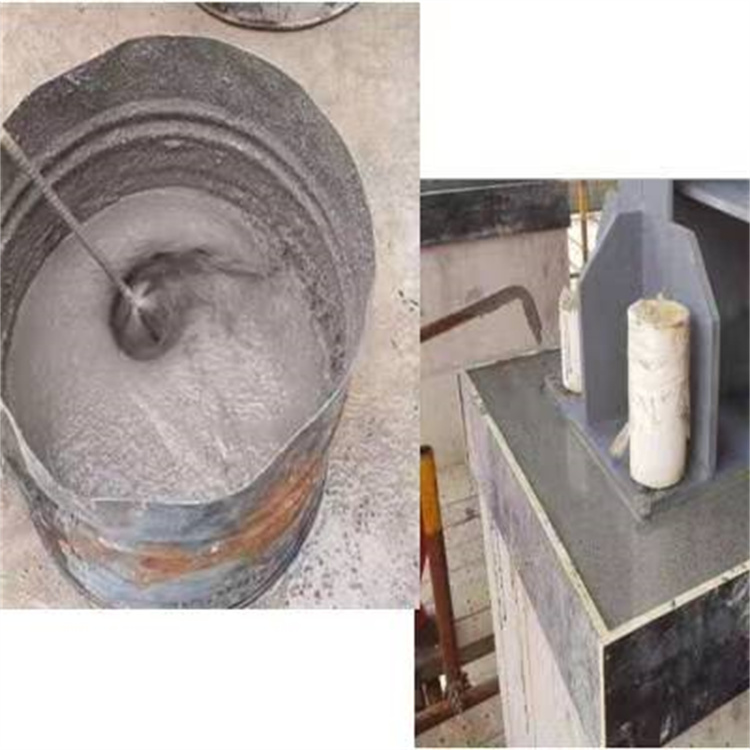
4. Slurry is prepared at a powder to water ratio of 1:0.17 (by weight). First, add the water to the mixing drum, then gradually add the weighed slurry material, mixing continuously with an electric mixer as you pour. Continue mixing for 2-3 minutes after all the powder is added to ensure uniformity. The mixed slurry should be poured within 25 minutes.
5. During the beam lowering, ensure the centerline of the support is aligned with the longitudinal and transverse symmetry centerlines of the bedding stone top support. After the beam is lowered, promptly maintain the M50 rigid, non-shrinking mortar.
6. After the grouting material in the foot bolt holes reaches the specified strength, tighten the foot bolts, remove the temporary support connection plate, and install the support sealing panel.
Five: Packaging and Storage
Packaging specification: 40kg/bag, store in a well-ventilated and dry place, and prevent direct sunlight.
2. Shelf life is 6 months; use only after re-inspection and confirmation of quality beyond the expiration date.
3. Free of benzene derivatives, halogenated hydrocarbons, formaldehyde, heavy metals, and other harmful components; non-toxic, odorless, pollution-free, and non-irritating.
Non-flammable; can be transported as general cargo.