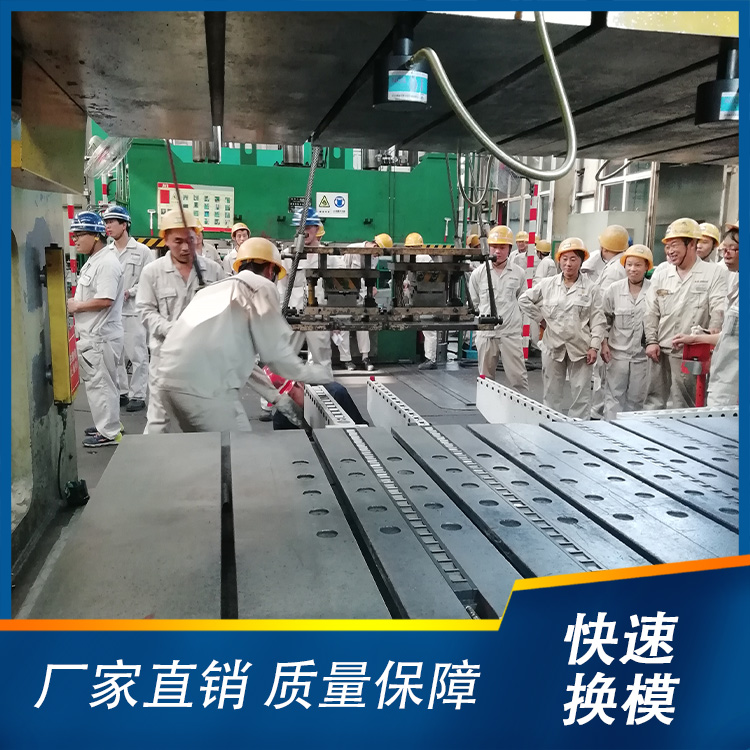
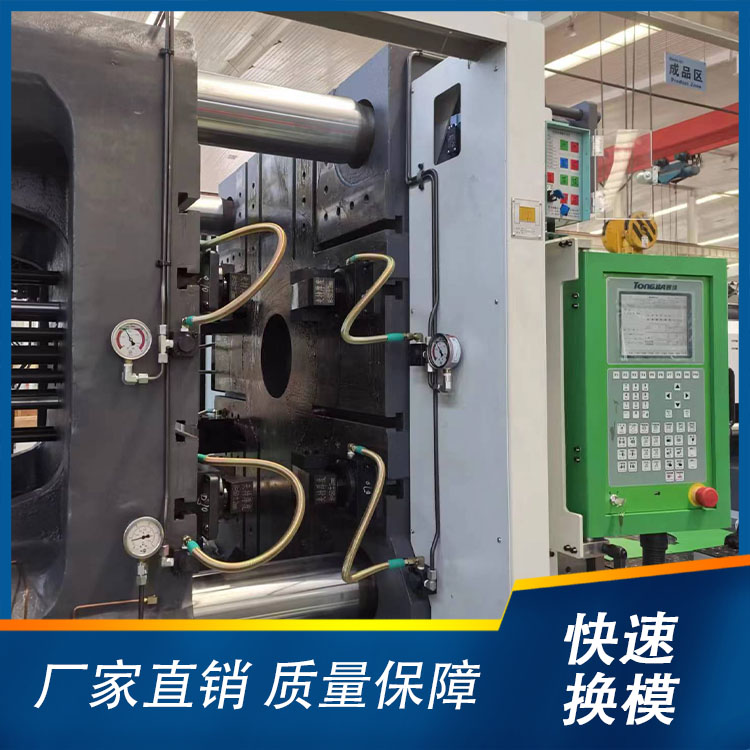
Ruijie Zhichu primarily produces a variety of quick mold ...

Injection Molding Machine Repair Methods and Experience Summary
1.1 The Operating Principle of Injection Molding Machines
The working principle of an injection molding machine is similar to that of a syringe used for injections. It relies on the thrust of the screw (or plunger) to force the melted, plastic in a molten state (also known as the rheological state) into a closed mold cavity, where it solidifies and takes shape, resulting in the finished product.
Injection molding is a cyclic process, with each cycle primarily including: quantitative feeding - melting and plasticizing - pressure injection - mold filling and cooling - mold opening and part removal. After the plastic part is removed, the mold is closed again to begin the next cycle.
1.2 Molded Machine Structure
Injection molding machines are categorized based on plasticizing methods into plunger-type and screw-type injection molding machines; they are further divided by transmission methods into hydraulic, mechanical, and hydraulic-mechanical (linkage) types; and by operation methods into active, semi-active, and manual injection molding machines.
(1) Horizontal Injection Molding Machine: This is a more common type. Its clamping and injection parts are aligned on the same horizontal central line, and the mold opens horizontally. Its features include: a low body, easy to operate and repair; low equipment center of gravity for greater stability; and the product can be actively lowered after ejection using the effect of gravity, facilitating a fully automatic operation. Currently, most injection molding machines on the market are of this type.
(2) Vertical Injection Molding Machine: The mold closing and injection parts are aligned on a straight central axis, and the mold opens in a straight direction. Consequently, it occupies less space, allows for easy placement of inserts, and facilitates mold changes. The material falling from the hopper can be uniformly plasticized. However, it is not easy for the finished product to fall off automatically after ejection, and it is necessary to remove it by hand, making it unsuitable for automated operations. The vertical injection molding machine is best suited for small-scale injection molding machines, commonly used in models under 60 grams, and is not recommended for large or medium-sized machines.
(3) Angle-type Injection Molding Machine: Its injection direction and mold parting surface are on the same plane, making it particularly suitable for flat products where no gate marks are allowed on the central part. It occupies less space than horizontal injection molding machines, but the inserts placed inside the mold may slightly tilt upon insertion. This type of injection molding machine is ideal for smaller machines.
(4) Multi-station Turntable Injection Molding Machine: This is a special injection molding machine with multi-station operation, characterized by a turntable-type structure for the clamping equipment, where the molds roll around a pivot axis. This type of injection molding machine fully utilizes the plasticizing capabilities of the injection unit, enabling shorter production cycles and increased machine productivity. Therefore, it is particularly suitable for the production of large-volume plastic products that require long cooling and shaping times or more auxiliary time due to the placement of inserts. However, due to the large and complex clamping system, the clamping force of the clamping equipment is often smaller, making this type of injection molding machine more commonly used in the production of products like plastic shoe soles.
Typical injection molding machines consist of parts such as the injection unit, clamping unit, hydraulic system, and electrical control system.
The basic requirements for injection molding include plasticization, injection, and molding. Plasticization is a condition for completion and ensuring the quality of the molded products. To meet the requirements of molding, injection must ensure satisfactory pressure and speed. Additionally, due to the high injection pressure, there is a corresponding high pressure in the mold cavity (the average pressure in the mold cavity is generally between 20~45MPa, thus requiring sufficient clamping force). Consequently, it is evident that the injection and clamping units are critical components of the injection molding machine.
1.4 Injection Molding Machine Operation
Injection Molding Machine's Action Program
Nozzle advance → Injection → Pressure holding → Preforming → Re-cocking → Nozzle withdrawal → Cooling → Molding open → Ejection → Retraction → Door open → Door close → Molding close → Nozzle advance
1.4.2 Injection Molding Machine Operation Project: The injection molding machine operation project encompasses three aspects: keyboard operation, electrical control panel operation, and hydraulic system operation. It includes individual actions such as the injection process, feeding, injection pressure, injection speed, and selection of ejection style. It also involves monitoring the temperature and current, voltage of the barrel sections, and adjusting the injection pressure and back pressure.
1.4.2.1 Injection process action selection:
General injection molding machines can be manually operated, as well as semi-active and fully active.
Manual operation involves each action being completed by the operator flipping the operation switch within a production cycle. It is typically used during machine trial and mold adjustment.
During semi-active operation, the machine can actively complete the actions of a work cycle, but after each production cycle is finished, the operator must open the safety gate, remove the workpiece, and then close the safety gate before the machine can continue production for the next cycle.
During full automatic operation, the injection molding machine can actively enter the next work cycle after completing an action in the current cycle. There is no need to stop the machine for control and adjustment during normal continuous operation. However, be mindful that for full automatic operation, (1) do not open the safety door halfway or the full automatic operation will stop; (2) ensure timely feeding; and (3) if using photoelectric sensors, be careful not to block the sensors.
In practice, it is generally necessary to temporarily halt the fully automatic operation, such as applying release agents to machine molds.
During normal production, semi-active or fully active operation is generally used. At the start of the operation, the method of operation (manual, semi-active, or fully active) should be selected based on production requirements, and the corresponding manual, semi-active, or fully active switch should be toggled.
The semi-active and fully-active operation programs have been predetermined by the line itself. Operators only need to adjust the details of speed and pressure, the duration of time, the number of punches, etc., on the electrical cabinet. There is no risk of the operation program becoming chaotic due to incorrect button presses by the operator.
Before adjusting the actions within a cycle, it's advisable to initially opt for manual operation. Acknowledge that each action is functioning normally before selecting semi-active or fully active operations.
1.4.2.2 Pre-forming Action Selection
Based on whether the nozzle retreats before and after the pre-molding feeding, i.e., whether the nozzle detaches from the mold, injection molding machines typically have three options. (1) Fixed feeding: Both the pre-molding and post-molding nozzles remain tightly against the mold, and the nozzle holder does not move. (2) Front feeding: The nozzle pre-molds against the mold, and after completion, the nozzle holder retreats, detaching the nozzle from the mold. The purpose of this method is to use the mold injection holes to assist the nozzle during pre-molding, preventing molten material from flowing out of the nozzle under high back pressure. Post-molding, it also prevents prolonged contact between the nozzle and the mold, which can cause heat transfer and affect the relative stability of their temperatures. (3) Rear feeding: After the injection is complete, the nozzle holder retreats, detaching the nozzle from the mold, then pre-molding occurs. This action is suitable for processing plastics with particularly narrow molding temperatures, as the short contact time between the nozzle and the mold prevents heat loss.


b2b.china9.net © Zhongshang 114 Hebei Network Technology Co., Ltd.Address: Room 6009, Oriental New World Center, No.118 East Zhongshan Road, Qiaoxi District, Shijiazhuang City, Hebei ProvincePlatform Service Hotline: 4006299930