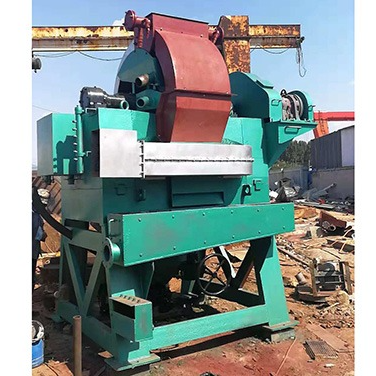
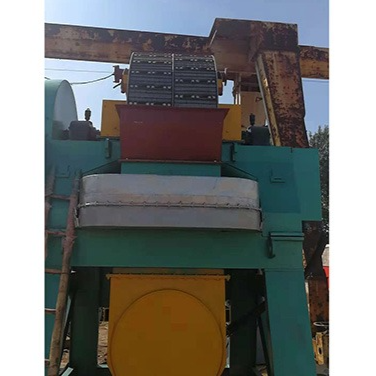
Lihuan Magnetic Separator, High Gradient Magnetic Separator

Several factors can affect the magnetic separation efficiency of high-gradient magnetic separators; here, we list two points that we hope will be helpful to everyone:
The pulp concentration is one of the main factors affecting the magnetic separation efficiency of high-gradient magnetic separators, primarily referring to the overflow concentration of the classifier. If the pulp concentration is too high, it leads to an excessively high separation concentration, severely impacting the quality of the concentrate. This is because the concentrate particles can be easily covered and encapsulated by finer gangue particles, leading to reduced grade when they are selected together. Conversely, if the pulp concentration is too low, it results in increased flow rate and shorter separation intervals, causing some fine magnetic particles that should have been separated to fall into the tailings, increasing the tailings grade and resulting in losses. Therefore, the pulp concentration should be adjusted according to necessity. The adjustment at the high-gradient magnetic separator is mainly achieved by controlling the size of the feed dispersal water. However, the most critical factor is that the overflow concentration of the classifier must meet the magnetic separation requirements. The maximum pulp concentration should not exceed 35%, typically controlled around 30%, with specific determination based on actual conditions.
The most critical factor affecting the magnetic separation efficiency of high-gradient magnetic separators is the particle size of the ore fed into the separator. The fineness of the ore particle size indicates the degree of individual separation of the ore, i.e., the separation level between magnetic particles and gangue grains. If the particle size of the fed ore is small, it signifies a high degree of individual separation, allowing for satisfactory separation indices. Conversely, if the particle size is coarse, it indicates insufficient disintegration of the minerals, with a lower degree of individual separation and a higher prevalence of intergrowths, where magnetic particles and gangue grains are still largely combined. Inter-growths, having a certain magnetic property, can be separated to some extent, leading to a decrease in the concentrate grade. Therefore, it is required that the minerals fed into high-gradient magnetic separators must achieve individual separation to a sufficient degree. For ores with coarse disseminated particle sizes, as long as the minerals and gangue have reached individual separation, the particle size does not need to be excessively fine. Such ores may have coarser particle sizes, yet still maintain a high separation quality, primarily due to the coarse disseminated particle size of the ore, which allows for the separation of valuable minerals from gangue once ground to a certain extent.


b2b.china9.net © Zhongshang 114 Hebei Network Technology Co., Ltd.Address: Room 6009, Oriental New World Center, No.118 East Zhongshan Road, Qiaoxi District, Shijiazhuang City, Hebei ProvincePlatform Service Hotline: 4006299930