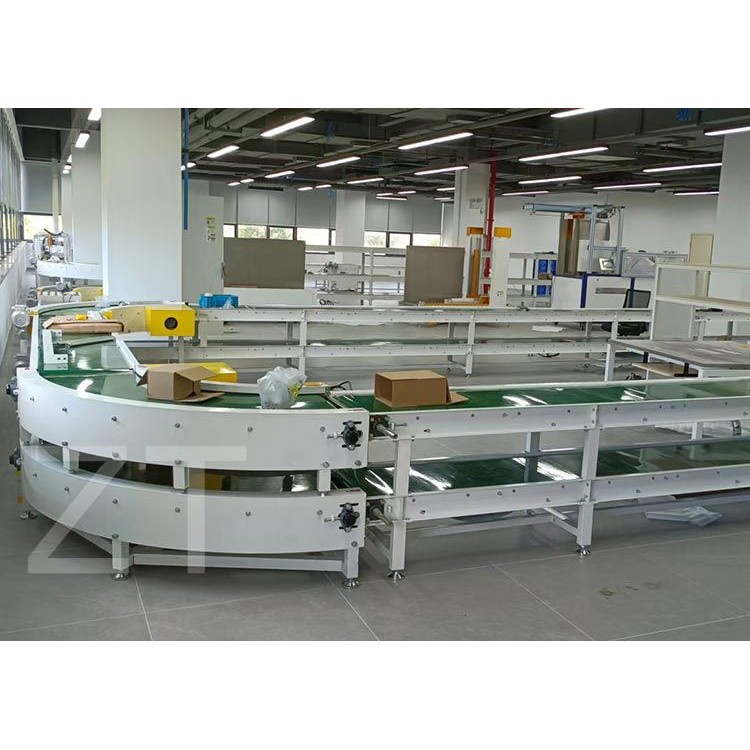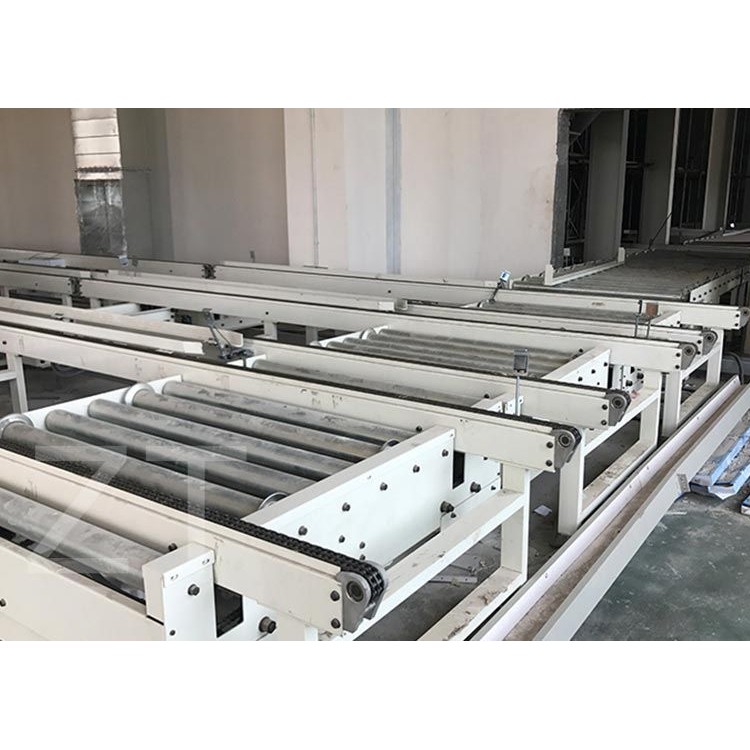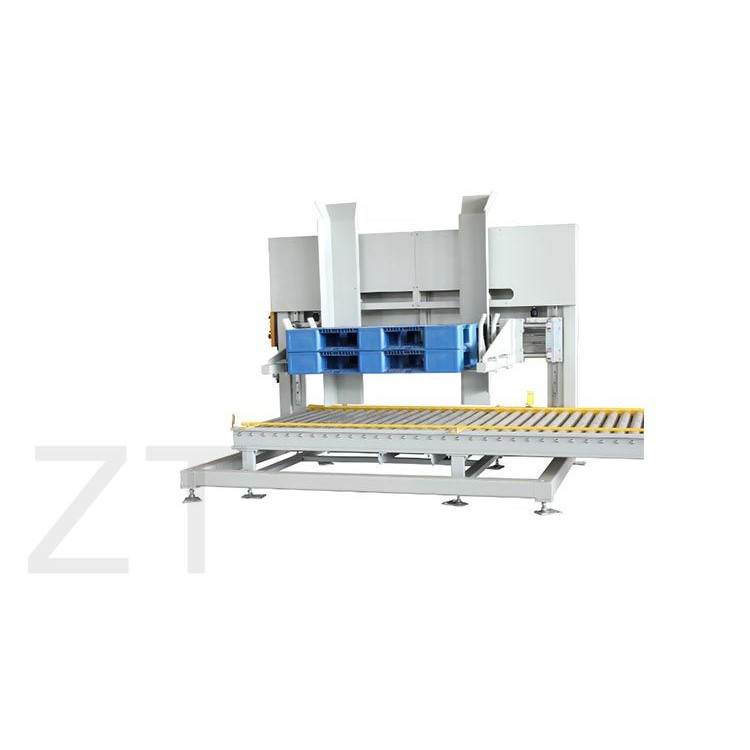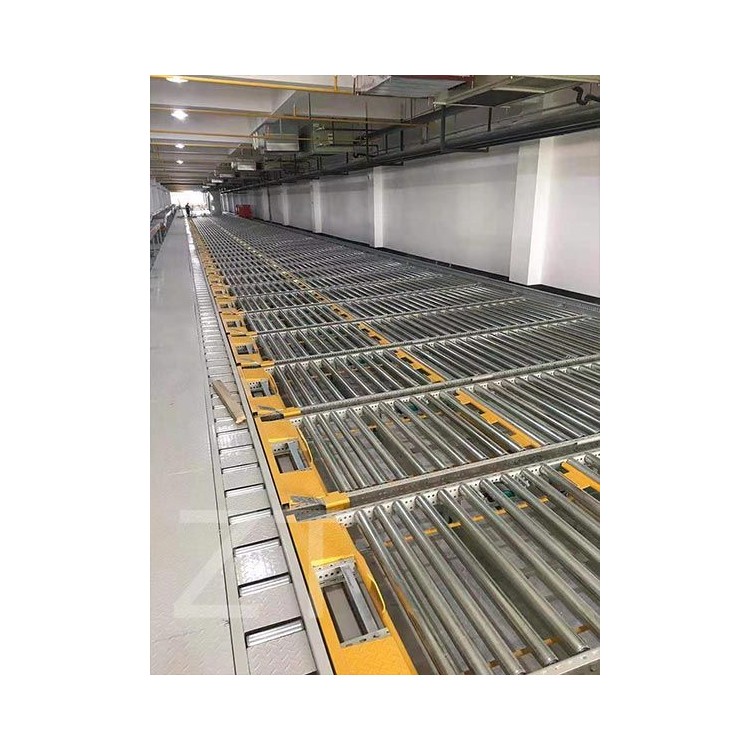
Automated Palletizing Machines, Packaging Machines, Stackers, Pallet Storage - One-Stop Service Provider
15620487858


Product Recommendation
Industrial automation instruments come in a variety of types and structural forms. They can be categorized according to different principles, including chemical instruments, automation equipment, and control systems, which can be classified based on energy forms, signal types, and structural forms.
I. By Energy Used for Instrumentation
可分为 pneumatic, electric, and hydraulic categories. The development and application of pneumatic instruments have a history of several decades, and have been widely used in industrial production since the 1940s. Their features include simple structure, stable performance, high reliability, and low cost. They are fire and explosion-proof, inherently safe in this aspect, and particularly suitable for environments with explosion hazards, such as oil and chemical industries. However, pneumatic instruments generally have a slow response speed, long reaction time; their transmission distance is limited, making it unsuitable for long-distance, large-area centralized display and control; and they are relatively difficult to integrate with computers.
The electric control instruments emerged later, but due to their ease in signal transmission, amplification, and transformation processing compared to pneumatic instruments, they are more convenient for long-distance monitoring and operation. They are also easily integrated with modern technological tools like computers, thus their applications are more widespread. The explosion-proof issue of electric control instruments has been effectively addressed through the use of safe spark explosion-proof measures, allowing them to be used in hazardous areas prone to fire and explosion. Electric instruments, powered by electricity, offer convenient and suitable signal transmission and are easy to connect with computers. Since the 1990s, pneumatic instruments have also been made fire and explosion-proof, further enhancing their safety for use. However, electric instruments generally have more complex structures and are susceptible to environmental factors such as temperature, humidity, and electromagnetic fields.
Industrial applications commonly employ pneumatic control instruments and electrical control instruments. Hydraulically powered instruments are those that operate based on the energy source of the instrument itself. Currently, they are less frequently used.
II. Categorized by Signal Type
The products can be divided into two major categories: analog and digital.
Transmission signals of analog control instruments are typically continuous analog quantities. Such instruments have simple wiring, easy operation, and low cost. They have undergone multiple upgrades and replacements in China, accumulating mature experience in design, manufacturing, and use. For a long time, they have been widely applied in various industrial sectors.
Transmission signals of digital control instruments are typically discontinuous digital quantities. Over the past two decades, with the rapid development of microelectronics, computer, and network communication technologies, digital control instruments and new computer control devices have been successively introduced and increasingly applied in the automation of production processes. These instruments and devices are centered around microcomputers, featuring comprehensive functions and superior performance. They are capable of solving problems that analog instruments cannot, meeting the high-quality control requirements of modern production processes.
III. Categorized by Structural Form
Base control instruments, modular control instruments, assembled comprehensive control devices, and distributed control systems, etc., are available.
1. Base control instruments are primarily composed of indicator and recording instruments, with additional control mechanisms. They not only indicate or record specific parameters but also possess control functions. Base instruments generally have a simple structure and are commonly used in single-machine automation systems.
2. The modular control instruments are designed based on the different functions and usage requirements of various components within the control system. The entire instrument set is divided into several independent units capable of realizing specific functions, which are interconnected using standardized signals. By combining these units in different configurations, a wide range of automatic detection and control systems with varying complexity can be formed. Electric modular control instruments are denoted as DDZ, while pneumatic modular control instruments are represented by QDZ. They are versatile and highly adaptable, suitable for the automation systems of medium and small enterprises. The modular control instruments produced in our country have gone through three development stages: Type I, Type II, and Type III. Through continuous improvements, their performance has become increasingly refined, and a new series of digital DDZ instruments has been launched based on this foundation. This instrument combines analog and digital technologies, with digital technology as the main focus, making it a relatively advanced control instrument.
3. The assembled electronic integrated control device is a complete set of functional and modular instrumentation developed based on unitary combination instruments. It consists of two parts: the control cabinet and the display and operation panel. The control cabinet is equipped with several component boxes, which house multiple component boards, all installed at high density for a very compact structure. Staff utilize the screen display and operation devices to achieve centralized display and control of the production process, thereby improving the human-machine interface and facilitating monitoring and management. The assembled integrated control device is provided to users as a complete set of equipment, significantly reducing the workload for on-site construction design, system installation, and debugging of the automatic control system, shortening the installation and commissioning time, and conveniently serving the users.
4. The Distributed Control System (DCS) is a new type of control device developed based on the rapid advancements in control technology, computer technology, communication technology, and screen display technology, with the microcomputer as its core. It is characterized by decentralized control and centralized management. "Decentralized" refers to the control of individual loops by multiple dedicated microcomputers (such as basic controllers in the DCS or other field-level digital control instruments), ensuring safe and reliable system operation. By connecting these dedicated microcomputers or field-level control instruments with communication cables to a higher-level computer and display/control stations, a decentralized control system is formed. "Centralized" involves centralized monitoring, operation, and management of the entire production process, which is accomplished by the supervisory and management computers and display/control stations at the higher level. Over the past decade, with the rapid development of various high technologies, the DCS has continuously improved and been refined. Various manufacturers have launched open-type control systems with a wide range of functions, complete series, flexible integration, and convenient expansion, achieving significant social and economic benefits in practical applications.
Field-level digital control instruments widely used in industry include programmable controllers and programmable logic controllers. Programmable controllers retain some features of analog instruments in their appearance and panel layout, but offer richer computational and control functions, capable of completing various computations and complex controls through configuration. Programmable logic controllers primarily focus on switch quantity control, but can also control analog quantities, and are equipped with feedback control and data processing capabilities. Both types of control instruments have communication interfaces, allowing them to be used with computers to form different-scale hierarchical control systems.
5. The Fieldbus Control System (FCS) emerged as a new generation of industrial control systems in the 1990s. It is a result of the development of computer network technology, communication technology, control technology, and modern instrumentation technology. The advent of fieldbus has brought about a fundamental transformation in the structure and equipment of traditional control systems. It connects field instruments with digital communication capabilities into a network system, linking them with the upper monitoring and management levels to form a new type of fully distributed control network. The basic features of FCS include its networked and fully decentralized structure, system openness, interoperability of field instruments, functional autonomy, and adaptability to the environment. FCS is superior to traditional control systems in both performance and functionality. As fieldbus technology continues to evolve, FCS will be increasingly applied in industrial automation systems and will gradually replace traditional control systems.
Section 4: Development of Chemical Instrumentation, Automation Equipment, and Control Systems
In recent years, the development of chemical instrumentation has become more diverse, precise, and intelligent. Chemical instrumentation serves as the foundation for the detection, display, recording, or control of process parameters in industrial production. With the advancement of the automated industry, higher requirements have been placed on instrument control systems. Electric instruments are gradually evolving towards digitalization and intelligence, while computer systems are moving towards networking and openness. The key features of the new generation of detection instruments are intelligence and digitalization. These instruments are centered around embedded miniature computers, capable of functions such as automatic zeroing, linearization, compensation for environmental changes, and even include model calculations and the application of artificial intelligence.
In addition, a new detection technology employs advanced methods such as ultrasonic waves, microwaves, and lasers to further enhance the accuracy of automatic control. The newly developed sensors integrate a wide range of new technologies, including nuclear magnetic resonance, laser, and related techniques, leading to integrated sensor solutions. In the instrument regulation loop, apart from the standard proportional, integral, and derivative control principles, researchers are exploring techniques like feedforward, large-time delay, non-linear, correlation, and calculated value regulation to meet the needs of multi-loop automated systems. The extensive use of Application-Specific Integrated Circuits (ASICs) will promote the multifunctional and intelligent development of sensors and actuators, facilitating the formation of field control loops/subsystems and simplifying the maintenance of instrument installation and debugging work.
Contact us

Service Hotline
15620487858
Company Telephone
15620487858

Address
101 Qian'an Road, Dianshanhu Town, Kunshan City
b2b.china9.net © Zhongshang 114 Hebei Network Technology Co., Ltd.Address: Room 6009, Oriental New World Center, No.118 East Zhongshan Road, Qiaoxi District, Shijiazhuang City, Hebei ProvincePlatform Service Hotline: 4006299930