Humanitarian Rainwater Management | Basement Rainwater Management | Construction Rainwater Management | Foundation Rainwater Management | Well Point Rainwater Management
18304595058
1. Measurement and Positioning
Based on the well pad layout, the well locations are measured and set. If the well points are affected by ground obstructions or construction conditions, the site can be adjusted appropriately, but any changes must be approved by the technical personnel of the work area.
2. Drilling
Burying the mouth guard pipe: The bottom opening of the mouth guard pipe should be inserted into the original soil layer, and the outside of the pipe should be filled and sealed with sticky soil to prevent the pipe from spewing out during construction. The mouth guard pipe should be elevated 10cm to 30cm above the ground.
Install Drilling Rig: The rig should be securely and horizontally mounted, with the hook aligned with the center of the hole, ensuring that the hook, the turntable, and the center of the hole form a straight line.
Drilling into Boreholes: The precipitation well bore diameter is φ550mm. When drilling, the wire rope should be tightly hoisted, and the drill should be gently pressed and slowly rotated to ensure the verticality of the borehole. The construction of forming the borehole uses a dry soil drilling machine with clean water.
Verticality should be maintained within 1%, the borehole should be round and even. During the drilling process, observe and record water levels, sand efflux, and gas leakage, and address any issues promptly. Upon reaching the designed depth, the work is to be inspected and approved by the technical staff, quality inspector, and on-site supervisor before proceeding to the next step.
3. Cleaning and Refilling Holes
Upon reaching the designed elevation, lift the drill rod to 0.5 meters above the bottom of the hole before pulling the drill out, to clear any debris and sediment at the bottom of the hole, ensuring it is less than 20 cm.
4. Downhole Tubing
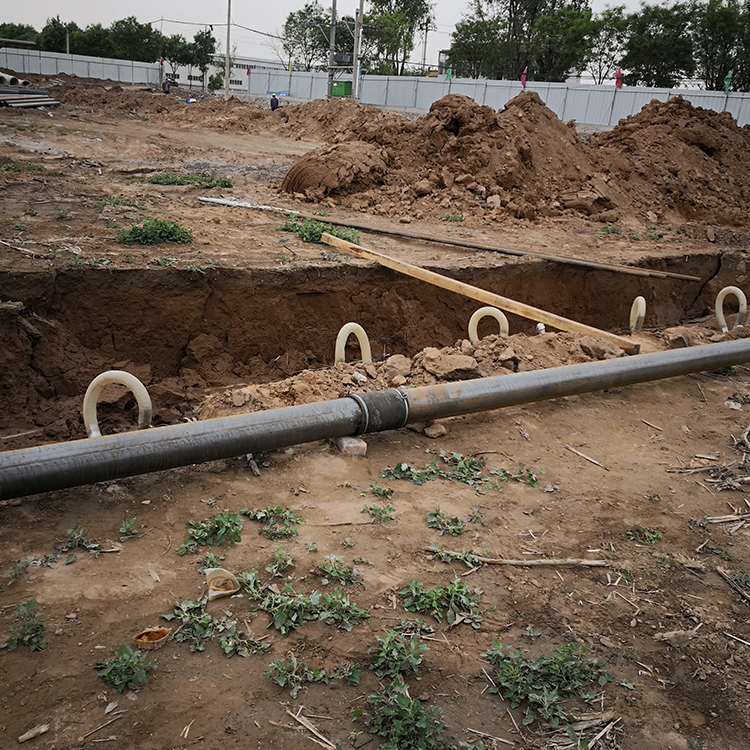
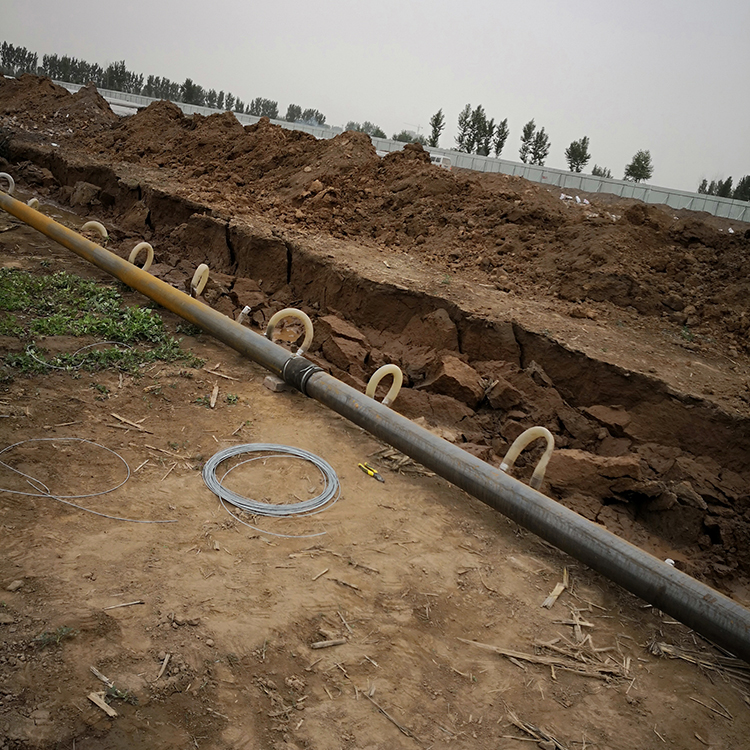
The Well Pipe: After the well pipe is installed, it should be checked to ensure that the filter water pipes meet the specifications. The filter cloth uses double-layer 60-mesh fabric, securely fastened with wire to prevent detachment during the pipe-laying process. Measure the hole depth before laying the pipe, and start laying the pipe once the depth meets the design requirements. During the pipe-laying, place a straightener (aligner) with a diameter less than 5 cm smaller than the hole diameter at both the top and bottom of the filter water pipe to ensure the pipe is centered and has sufficient permeability. The well pipe should be welded securely, vertically, and lowered to the designed depth, with the wellhead centered and fixed. The filter water pipes are set in soil layers with high permeability coefficients and at the bottom of the well to ensure effective water lowering.
During the well casing process, it is important to note that the top of the casing should be elevated 30 to 50 cm above the ground.
Filter Media Refilling
Prior to filling, seal the upper pipe opening of the well casing with appropriate materials, ensuring the casing is centered. Use the recirculating water method for filling. The filter material consists of sand and gravel with particle sizes ranging from 5 to 15 mm, medium to coarse sand, with the gradation meeting the required specifications and impurity content not exceeding 3%. Evenly scatter the material around the well casing with a shovel, filling to a depth of 4 meters below ground level. The upper portion is then filled and compacted with clay.
6. Wellhead Closure
Clay backfill is used above the gravel to reach the ground surface. During backfilling, enclose around the well casing, paying attention to place it slowly and seal the casing opening tightly.
7. Well cleaning
The well cleaning process continues until the well water is mostly free of silt and sand, with the mud density being less than 1.05.
8. Precipitation Operations
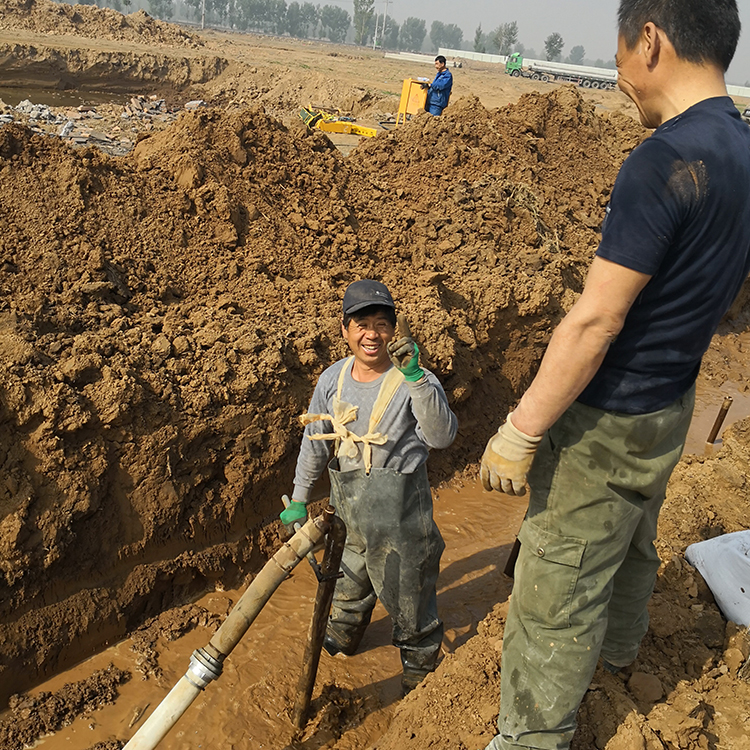
Upon completion of well cleaning, a submersible pump is placed into the water well. During the dewatering operation, care should be taken to avoid damaging the cable and pipeline system when being disturbed by excavators. While the dewatering is in progress, water is drained into the surrounding drainage ditches on the site, and then discharged to the designated location through the ditches.
9. Maintenance and Well Abandonment
During the precipitation operation, a dedicated person observes the precipitation conditions and meticulously records the water output, water levels, and pump operation status. Any anomalies are promptly addressed. The water extracted from the precipitation well is discharged into the construction site's drainage system. After the main structure is completed, the deep well is sealed as a water discharge hole.
Contact us

Service Hotline
18304595058
Company Telephone
18304595058

Address
No Chinese content provided.
b2b.china9.net © Zhongshang 114 Hebei Network Technology Co., Ltd.Address: Room 6009, Oriental New World Center, No.118 East Zhongshan Road, Qiaoxi District, Shijiazhuang City, Hebei ProvincePlatform Service Hotline: 4006299930