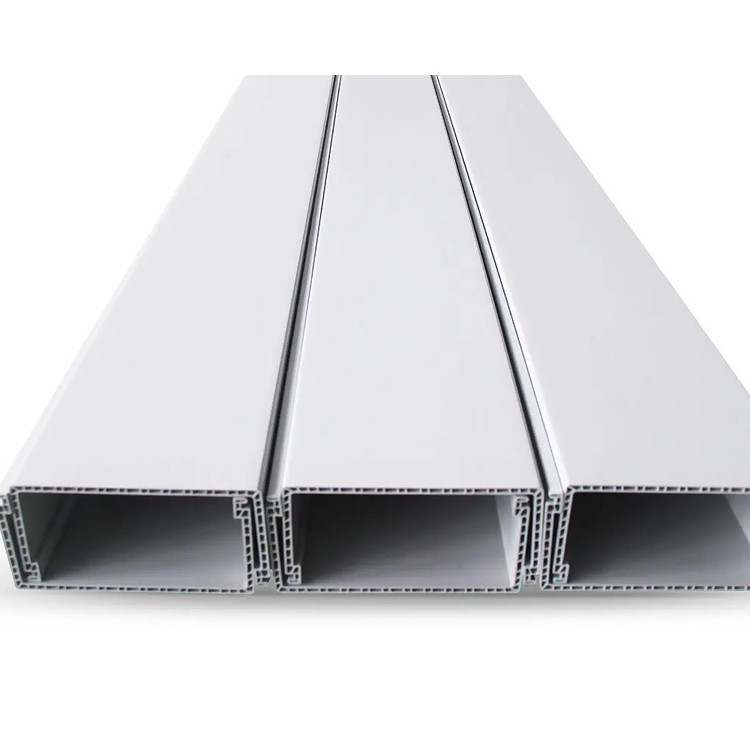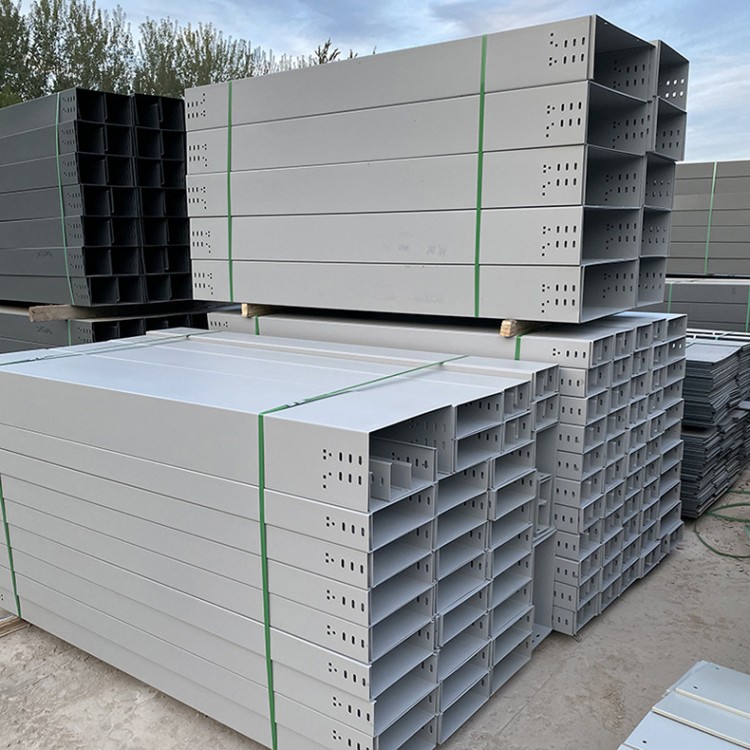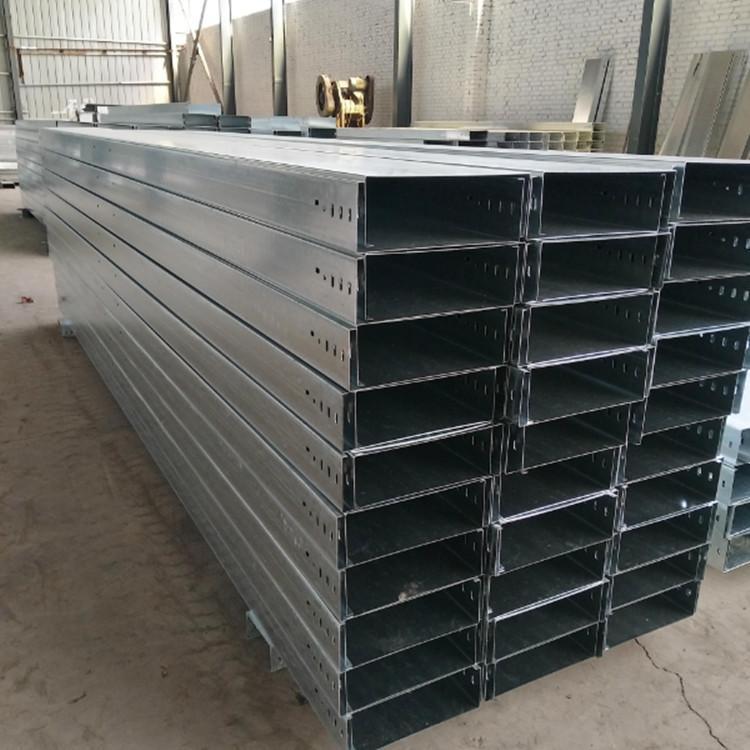
Main Products: Aluminum Alloy Cable Trays, Fireproof Cabl...

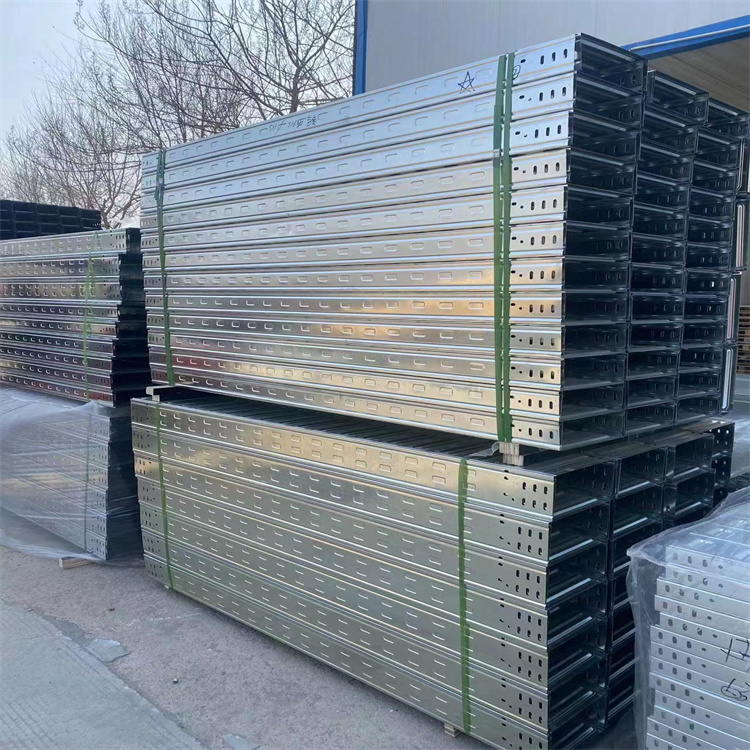
How to determine the deflection value of aluminum alloy cable trays is not yet clearly defined. In heavily loaded areas, it is apparent that the deflection should be minimized, indicating that the amount of steel used will correspondingly increase. Therefore, during the calculation process, as long as the maximum allowable stress of the steel is fully utilized and a sufficient protection factor is ensured, the ratio of maximum deflection to span (distance between support points) should generally be between 1/250 and 1/150.
Aluminum alloy cable trays are calculated for bending moments under concentrated and uniformly distributed loads, based on the condition of equal maximum bending moments: Let pι/4 = q2ι2/8, then q2 = 2p/ι. Since P = 90 kg, therefore q2 = 180/ι. Here: P - Load per person (kg); ι - Distance between support points (take the maximum value if the distances are unequal); q2 - Equivalent uniformly distributed load per person (kg/m). Based on the preliminary determined tray model, specifications, and support point spacing, compile the sample data from manufacturers, repeatedly check the spacing and tray model until the load requirements are met.
Additionally, the down-point position and method of aluminum alloy cable bridge supports; generally speaking, a large number of cables can be routed using vertical bend plates and vertical supports, while a small number of cables can be routed using guide plates or conduit. Noting the routing method is sufficient. Special components such as vertical bend plates and turn bend plates should be counted separately.


b2b.china9.net © Zhongshang 114 Hebei Network Technology Co., Ltd.Address: Room 6009, Oriental New World Center, No.118 East Zhongshan Road, Qiaoxi District, Shijiazhuang City, Hebei ProvincePlatform Service Hotline: 4006299930