



- AllProduct Category
-
Rail Signal Cable
Computer Cables
Mining Communication Cable
City Telephone Cable
Mining Rubber Sheathed Cable
Mining Optical Cable


详情描述
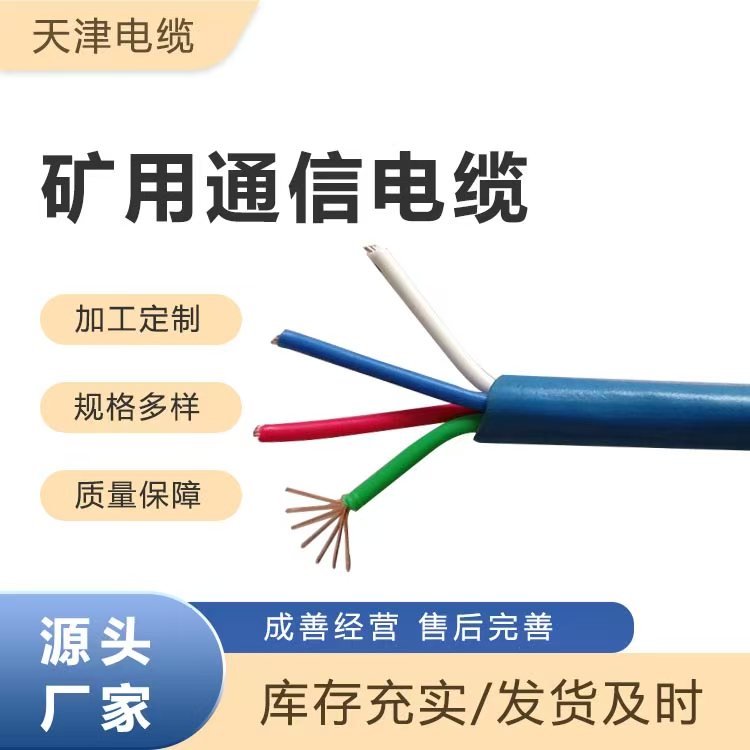
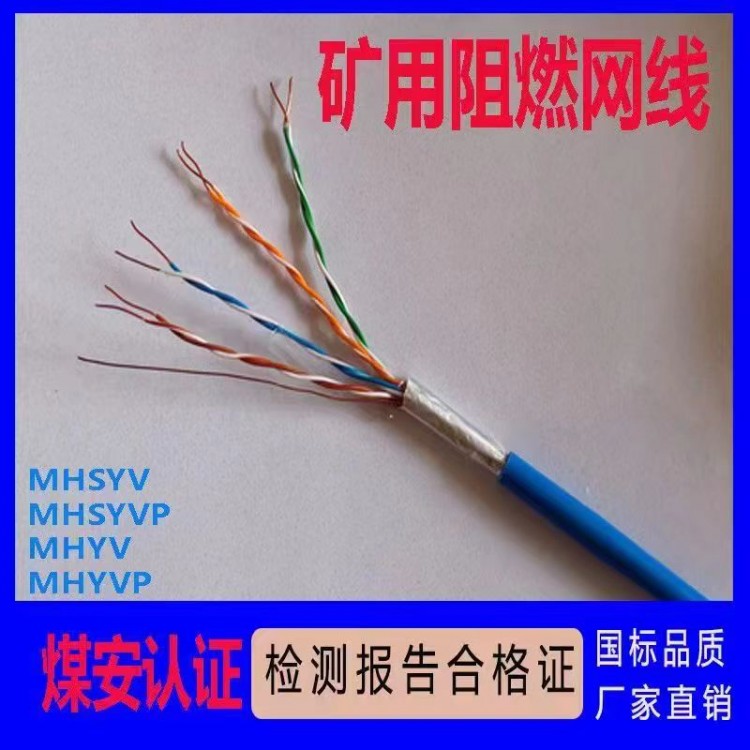
Model: MHYAV, MHYA32, MHYV, MHYVR, MHYVRP, MHYVP, MHY32, MHJYV
Mining flame-retardant cable, 4*2*0.5 product structure:
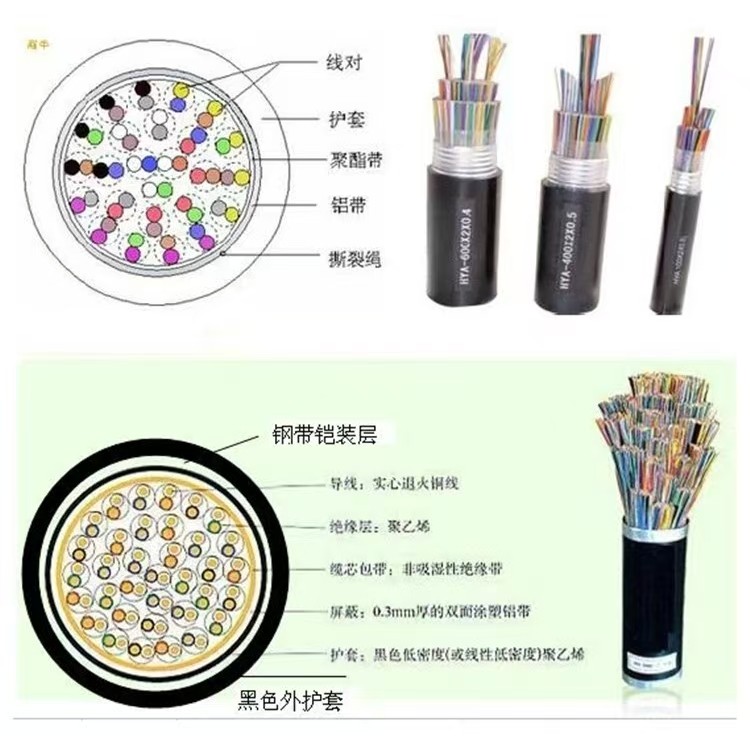
Conductor: Solid copper wire conductor (0.5mm)
Insulation: Solid polyethylene, Colors: Blue*White/Blue, Orange*White/Orange, Green*White/Green, Brown*White/Brown
Twisted Pair: Two insulated core wires are twisted together, with each pair using a different twist pitch to ensure excellent near-end crosstalk (NEXT) characteristics.
Cabling: 4-pair stranded, ensuring superior near-end crosstalk (NEXT) characteristics.
Aluminum Foil + Copper Wire Braid, Braid Density ≧ 60%
Outer Sheath: Flame-retardant Blue PVC
When installing flame-retardant wire for coal mines, strict adherence to the process for sealing is required. Intermediate joints must use a sealed structure with a metallic copper casing and an added PE or PVC insulating and corrosion-resistant layer. Ensure a tight seal with a lead seal during on-site construction, effectively guaranteeing the joint's sealing and waterproof properties.
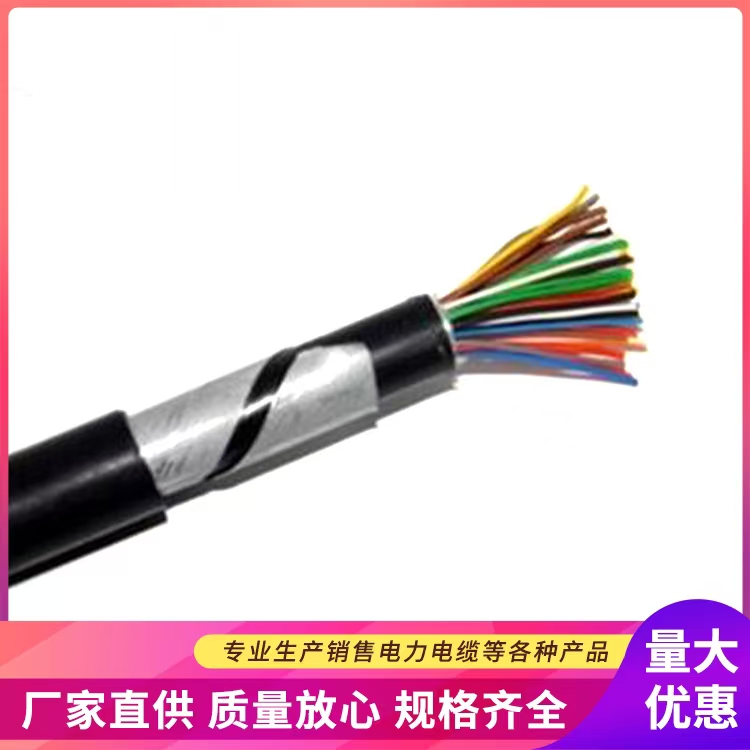
Mining cable can also be custom-made according to customer requirements (e.g., steel tape armoring, steel wire armoring).
Twisted-pair cables are composed of four pairs of copper conductors, each covered with insulating material, twisted together and encased in an insulating sheath. They reduce interference from noise and suppress signal attenuation within the cable. With twisted-pair cables, you can easily add or remove a computer from the network without disrupting its operation, making network maintenance straightforward. If a cable fails, it will only affect the computer or device connected to that specific twisted-pair cable, without causing a network failure. However, using twisted-pair cables requires the addition of a hub or switch in the network.
Code Name
Coal mine flame-retardant communication cable........................MH
Copper Wire Core
Polyethylene Insulation.......................................Y
Aluminum-Polyethylene Bonded Sheath
Polyethylene Inner Sheath
Woven Armor..............................................B
PVC Sheath
Fine round wire armored, polyvinyl chloride sheath...........32
Product Presentation Method
Products are denoted by model and specifications. For example:
a) Coal mine communication cable with a polyethylene insulated aluminum wire, bonded with polyethylene, sheathed with steel wire armor, and covered with a polyvinyl chloride jacket, featuring 30 twisted cores.
MHYA3230 2
b) Coal mine communication cable with polyethylene insulated and polyvinyl chloride sheathed, having a 1-core star绞 wire core, represented as: MHYV1 4
Key Technical Performance and Specifications
DC Resistance of Conductors at 20℃ Ω/km: ≤45 (7/0.28), ≤73 (7/0.28, 3 steel, 4 copper), ≤36.7 (1/0.8)
Fixed Attenuation (800-1000 Hz) dB/km ≤1.1 ≤1.3 ≤0.95
Insulation resistance of cable core at 20°C: ≥3000 MΩ.km
Line-to-line working capacitance (800-1000 Hz) uF/km ≤ 0.06
Near-end crosstalk attenuation (800~1000Hz) dB/500m ≥70
Inductance (800-1000 Hz): uH/km ≤ 800
Tolerant to alternating current at industrial frequencyNear-end crosstalk attenuation1.5KV/1min pressure test
Direct Current Resistance Difference ≤ 2% of Loop Resistance
8. Cable Usage Characteristics
The long-term allowable operating temperature for the cable conductor is -40℃ to +50℃.
Average monthly relative humidity ≤ 95% (at +25℃)
The allowable temperature for the cable's attachment and installation should not exceed -10°C.
Cable bend radius: For MHYV and MHJYV cables, it is 10 times the cable outer diameter; for other cable types, it is 15 times the outer diameter.


