





- AllProduct Category
-
Steel Tube Seat
Blender
Vacuum Concentration Equipment
Laminate Flooring Line
Ultrasonic Humidifier
Through-Flow Sterilization Equipment
Biomass Pellet Burner
Plywood Gluing Machine
Louvered dryer
Three-tube Dryer
Asphalt Mixing Plant
Lifting Equipment
Belt Conveyor
Heating Equipment
Purification Engineering
Waste Gas Treatment Equipment
Arsenic Recovery Equipment from Smelting Waste
Battery Drying Machine
Insulating Material Drying Equipment
Airflow Dryer
Incinerator
Vacuum Wood Carbonization Equipment
Vacuum Series
Vacuum Insulation Panel Heat Shrink Machine
Combustion System
Insulation Decorative Panel Drying Machine
Painting Equipment
Corrugated Paper Dryer
Paper Tube Drying Equipment
Vacuum Wax Injection Machine
Wood Heat Treatment Pest Control Equipment
Hot Water Heating Wood Drying Equipment
Electrically Heated Wood Drying Equipment
Hot Air Wood Drying Equipment
Thermal Oil Wood Drying Equipment
Wood Drying Equipment
Steam Wood Drying Equipment
Dust Removal Equipment
Gas/Oil Hot Air Furnace
Vacuum Dryer
Gypsum Board Dryer, Plywood Drying Machine
Tunnel Dryer
Drying Oven
Tumble Dryer
Drying Belt Oven
Wood veneer drying machine
Single-Board Drying Machine


Recommended Products
详情描述
Dust Removal Equipment
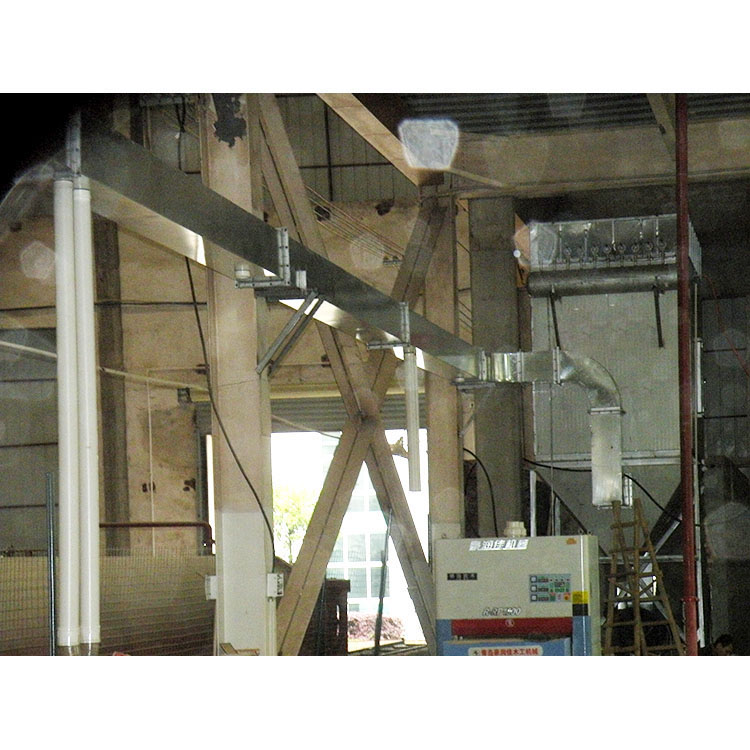
Baghouse Dust Collector: A baghouse dust collector is a dry dust removal device suitable for capturing fine, dry, non-fibrous dust. The filter bags are made of woven fabric or non-woven felt, utilizing the filtering effect of the fibrous fabric to filter the dusty gas. When the dusty gas enters the baghouse dust collector, particles with large size and high density settle down due to gravity, falling into the ash hopper. The gas containing finer dust is filtered through the filter material, where the dust is trapped, resulting in purified gas.
Operating Principle
Baghouse dust collectors and granular bed dust collectors are included in the filtration dust removal systems. The former typically uses filter bags made of organic or inorganic fiber fabrics as the filtration layer, while the latter employs a filtration layer composed of particles of various sizes, such as quartz sand, river sand, ceramic beads, slag, graphite, carbon black, and ultra-fine powder, etc.
As the powder repeatedly adheres to the outer surface of the filter bag, the powder layer continues to thicken, and the resistance value of the bag dust collector also increases; the pulse valve diaphragm issues a command, and the pulse valve opens when it is submerged from both sides. The compressed air in the high-pressure air tank is released. If there is no dust or it is reduced to a certain extent, the mechanical cleaning operation will cease.
The bag dust collector's main body structure is composed of the upper, middle, and lower body sections (ash hopper), cleaning system, and discharge mechanism, etc.
The performance of a bag dust collector is crucially dependent on not only the correct selection of filter bag material but also the cleaning system, which plays a decisive role. Therefore, the cleaning method is one of the characteristics that differentiate bag dust collectors and is a vital aspect of their operation. It falls under the category of medium-efficiency dust collectors and is suitable for purifying high-temperature flue gases, making it a widely used type of dust collector, commonly applied in boiler flue gas dust removal, multi-stage dust removal, and pre-dust removal. Its main drawback is the relatively low efficiency in removing fine dust particles (less than 5μm).
2. Cyclone Dust Collector: A type of dust removal equipment, the cyclone dust collector operates by causing the dusty air stream to rotate. The centrifugal force separates the dust particles from the air stream and collects them on the wall of the collector, with gravity then causing the particles to fall into the ash hopper.
3. Water Film Dust Collector: Dust-laden gas is introduced into the lower part of the筒体 through a tangential inlet, then rises in rotation. The dust particles are separated by centrifugal force and thrown against the inner wall of the筒体, where they are adsorbed by a water film layer flowing over the inner wall. The particles are carried with the water flow to the bottom cone and discharged through the dust outlet. The water film is formed by several nozzles located at the top of the筒体, which spray water tangentially towards the wall. This maintains a thin, rotating water film that flows downward over the inner wall of the筒体, thereby enhancing the dust removal efficiency. This wet-type dust collector has a simple structure, low metal consumption, and minimal water usage. Its drawbacks include a large height, difficulty in installation, and the observation of water carryover during operation.


