Specializing in the production of high-quality precision ...

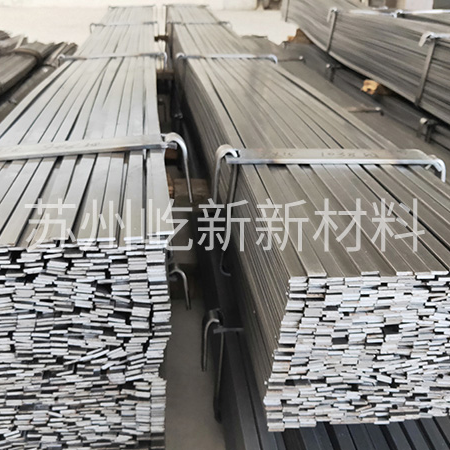
Bright flat steel, as the name implies, is a type of flat steel. Their specifications generally fall within a standard range. The application of flat steel is quite extensive, including use in building materials, mechanical parts, and as springs for cars. Flat steel is typically produced in bulk, with fixed specifications, to facilitate customer use and save material waste. Today, I'll introduce the manufacturing process of bright flat steel!
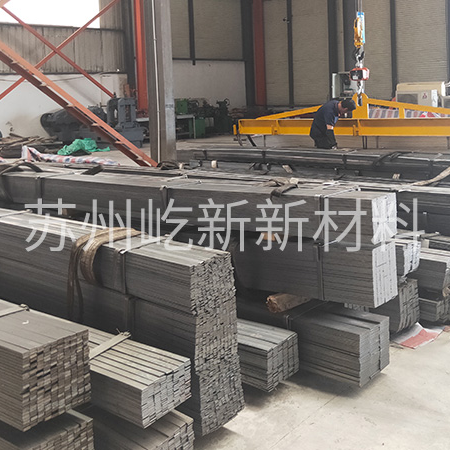
Raw material arrival - Inspection - Storage - Material picking - Rolling - Pickling or shot blasting - Phosphatizing - Cold drawing - Straightening - Packaging - Weighing and marking - Inspection - Finished product storage
The flat spring steel is produced through the converter smelting process. Compared to existing technologies, it offers the following advantages and positive effects.
1. The rolling mill produces flat steel primarily using molten iron as raw material, which contains fewer harmful elements, ensuring the quality of the produced flat steel.
2. Due to high yield rates and low electricity consumption, the cost per ton is lower than that of electric furnaces.
3. Direct casting of molten steel into small billets eliminates the blooming process, reducing costs.
4. The continuous casting small billets have a high length yield rate, ensuring flat steel length yield rate to meet customer needs.
Flat steel refers to steel with a width of 12-300mm, thickness of 4-60mm, and a rectangular cross-section with slightly blunted edges. It can be finished steel or used as billets for welding pipes and as thin plate billets for tandem rolling. Main applications: Flat steel, when finished, can be used to make hoops, tools, and mechanical components. In construction, it serves as structural components for roofs and staircases.
The working principle of the Precision Flat Steel Production Line and the Flat Steel Finisher is to use two sets of vertically alternating leveling rolls to pre-level and finally level the thickness of the cold-rolled flat steel blanks; a pair of horizontally positioned finishing rolls are used to compress the width, achieving the desired parameters with adjustable compression; and five staggered straightening rolls are used to straighten the width. This system is primarily composed of the control box, finishing rolls, pre-leveling unit, finishing unit, and straightening unit.
The production process can be summarized as: preliminary leveling → fine finishing → straightening → final leveling. The flat steel has a width of 12-300mm, thickness of 4-60mm, and a rectangular cross-section with slightly rounded edges. Flat steel can be used as finished steel, as well as the billet for welded pipes and thin plate slabs used in tandem rolling. Main applications: Flat steel, when finished, can be used to make tie rods, tools, and mechanical parts, and in construction, as components for roof structures and staircases. Flat steel is divided into two types based on its shape: flat spring steel and single-sided double-slot spring steel. Hot-rolled spring steel is mainly used for manufacturing leaf springs on vehicles, tractors, and rail transportation equipment.


b2b.china9.net © Zhongshang 114 Hebei Network Technology Co., Ltd.Address: Room 6009, Oriental New World Center, No.118 East Zhongshan Road, Qiaoxi District, Shijiazhuang City, Hebei ProvincePlatform Service Hotline: 4006299930