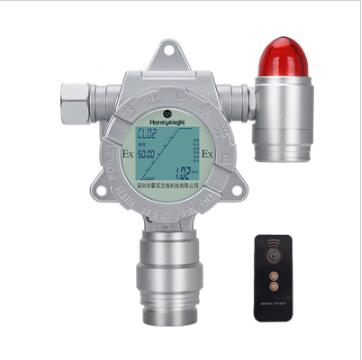


Greenhouse Gas Monitoring Equipment is a device used to measure and monitor the concentration of greenhouse gases in the atmosphere. It aids in understanding the emission of greenhouse gases, providing crucial data support for environmental protection and climate change research. This article will introduce the working principle, application areas, and development trends of greenhouse gas monitoring equipment.
Greenhouse gas detection equipment typically employs infrared absorption spectroscopy technology or chemical sensor technology for measuring greenhouse gases. Infrared absorption spectroscopy measures gas concentration by utilizing the absorption characteristics of gas molecules to specific wavelengths of infrared light, offering high accuracy and rapid response. Chemical sensor technology, on the other hand, measures gas concentration based on the principle that gas molecules generate electrical signals through chemical reactions, providing advantages such as low cost and ease of integration.
Greenhouse gas detectors play a wide range of applications in environmental monitoring, climate change research, and industrial production. In environmental monitoring, these devices can monitor and control emissions of greenhouse gases in the atmosphere, assisting businesses in formulating environmental protection policies and measures. In climate change research, they are used for monitoring and analyzing global concentrations of greenhouse gases, providing crucial data support for research and predictions. In industrial production, greenhouse gas detectors can monitor and treat industrial emissions, ensuring environmental safety during the production process.
With growing environmental awareness and the increasing severity of climate change issues, the development trend of greenhouse gas detection equipment is mainly reflected in the following aspects:
Enhance detection accuracy and stability. With the continuous advancement of technology, the detection precision and stability of greenhouse gas detectors will be further improved, allowing for more accurate reflection of the concentration changes of greenhouse gases in the atmosphere.
Enhance diversity in features and application areas. Future greenhouse gas detection equipment will offer more features and applications, such as simultaneous detection and analysis of multiple greenhouse gases, as well as adaptability under various environmental conditions.
Reduce costs and enhance portability. Future greenhouse gas detection equipment will prioritize cost reduction and portability, allowing for broader application across various fields and scenarios.
In summary, greenhouse gas detection equipment is an environmentally monitoring instrument with significant application value and development potential. With the continuous advancement of technology and increasing demand, it is believed that greenhouse gas detection equipment will see wider application and development in the future.