
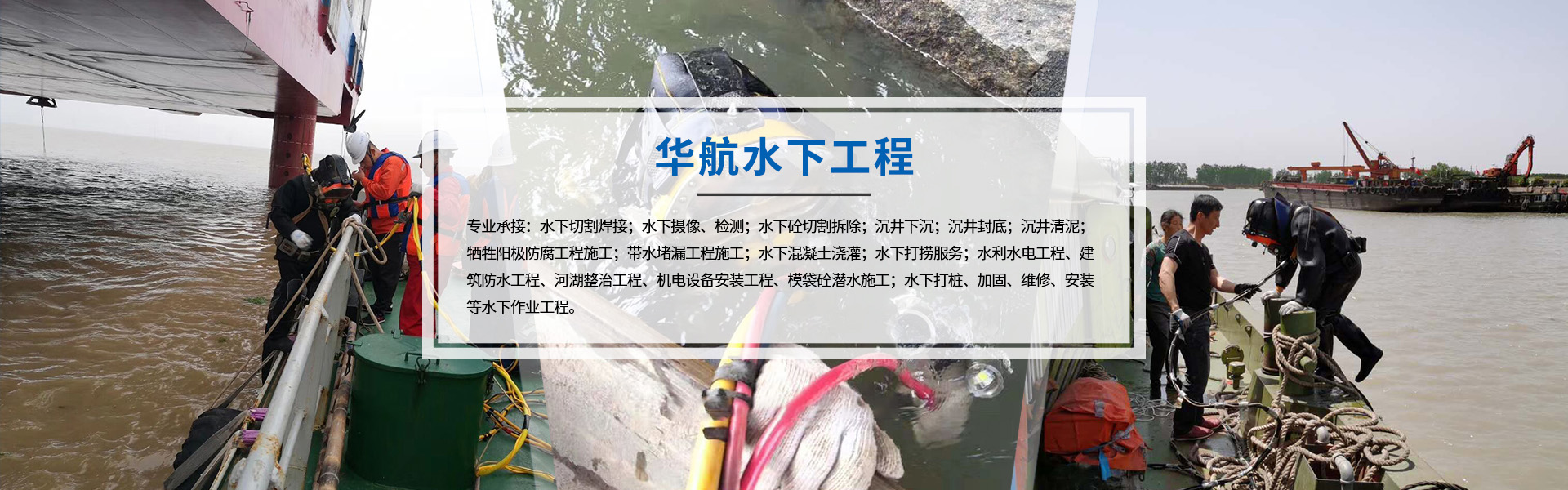
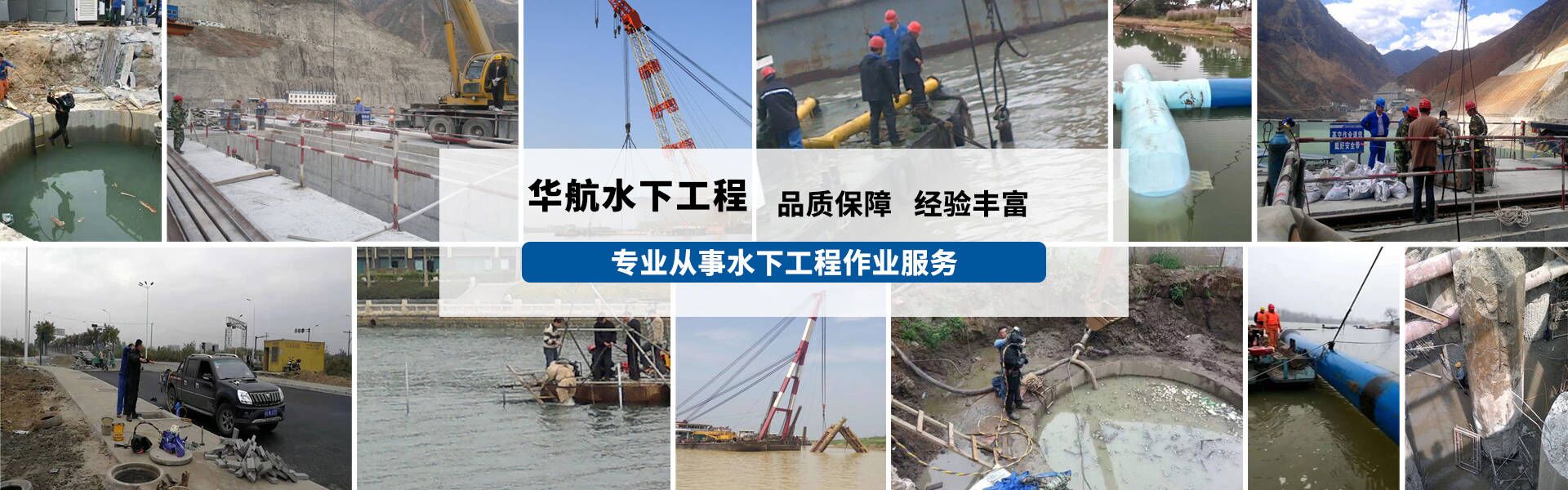


Striving with courage and perseverance, we have carved out a new horizon. Huahang Divers, Aquanauts, and Underwater Demolition Company offers underwater engineering services along rivers, coasts, and marine areas. The Salvage Team specializes in diving operations, with Huahang as a leading diving firm, boasting ample personnel, comprehensive diving equipment, and exceptional service technology. The Salvage Team excels in underwater engineering fields, utilizing advanced techniques such as underwater recovery, cutting, welding, inspection, filming, and sealing. Before divers descend, the communication operator conducts a test call to ensure the reliability of the diving equipment. During diving operations, listen attentively to the divers' communications, ensuring clear and concise dialogue. Check in with the underwater status every 2-5 minutes, and prohibit idle chatter during underwater construction to avoid disrupting the work.
Hwa Hsien Divers, Aquanauts, and Underwater Ghost Company Offers: 1. Underwater operations, sediment removal, underwater welding, underwater cutting, underwater dredging, underwater cleaning, underwater obstacle removal, underwater leak sealing, underwater filming, underwater photography, underwater mud removal, underwater leveling, reservoir sediment removal and sealing, underwater construction, underwater surveying, underwater services, underwater maintenance, underwater inspections, reservoir repairs, underwater photography, diving sediment removal, underwater exploration.
Unfavorable weather conditions for rescue operations include strong winds, thick fog, heavy rain, thunderstorms, low temperatures, and high temperatures. Adverse hydrological conditions mainly involve relatively fast river currents, a high number of passing vessels, large waves, and complex underwater riverbed environments, all of which affect recovery work and pose significant difficulties for construction and safety management. Recovery operations are conducted both on and underwater, with the complex underwater conditions posing dangers and challenges. Underwater recovery utilizes underwater electrochemical cutting, which requires high precision. Adaptability: During diving recovery operations, in the event of an emergency, the original plan or schedule may need to be adjusted or changed, which is a common occurrence during construction. From July to September each year, with hot weather, many people either for a moment of coolness or to catch fish and shrimp, will enter the river, resulting in unforeseen incidents. This leads to the annual occurrence of the term "recovery." So, is recovery only about "fishing in a vast sea"? 1. The major challenge of recovery is the difficulty in locating drowning victims and the high failure rate of rescue efforts.
Before diving, each staff member must be familiar with the underwater environment and have a detailed understanding of the structure to be repaired. They should also be well-versed in the entire repair process. Once underwater, it is crucial to have a clear understanding of the local hydrological conditions, especially the underwater environment, temperature, and flow rates. This helps staff select appropriate equipment. When performing underwater welding or destructive or reconstructive actions, proper protective measures must be taken. After completing repairs to leaks or other structures, a thorough confirmation is essential to avoid the need for a second repair. Underwater staff must be aware of the pool's structure and the conditions before divers enter the water. A final confirmation of the work completed is necessary, and these steps are indispensable.

The data shows that within a 14.66m range symmetrically around the top of the main arch ring, the bridge dimensions are reinforced, with the thick portion measuring 1.79m and the partial thickness at 75cm. The total volume of concrete for the entire main arch ring is 138.6 cubic meters, with a total weight of 332 tons. The reinforced section of the main arch ring is divided into 4 horizontal and 7 vertical sections, totaling 28 cutting units. The cutting sequence is as follows: first, cut units 1-12, then cut units 13-24, leaving units 25-28 along the bridge centerline. At this point, the main arch ring has not been fully severed longitudinally. Before cutting, all supports at the bottom of the arch must be inspected again to ensure the top of the supports align with the bottom of the main arch ring. Bridge Cutting Construction for Caisson Works: ① Cutting of the bridge deck and belly arch piers: Before cutting, calculate the confirmed overall cutting plan. Identify each section of concrete to be cut and design the parking positions for cranes. Due to the main arch ring, the sides form two cantilever structures, with the cantilever ends (i.e., the cutting points of the main arch ring) experiencing slight movements. Underwater Recovery - Underwater Cutting
Underwater cutting skills are not continuous with land cutting; underwater operations require the indispensable use of underwater cutting. The underwater environment determines the difficulty and complexity of underwater engineering, which has a common theoretical basis and application methods. Many techniques that are used on land are not suitable for underwater applications. Underwater thermal cutting is a widely used cutting method, accounting for over 90% of the total underwater cutting volume. When using thermal cutting to cut underwater, it is necessary to consider the significant consumption of the heat source itself in the surrounding medium. The main difference between underwater cutting and land cutting is that air is a dynamic mixture of gases, while water is a rather viscous and dense liquid; air is combustible, whereas water is flame-retardant. Additionally, water has a higher thermal capacity and thermal conductivity than air, making it more difficult to heat objects in water and much faster to cool them compared to air. Therefore, the larger the flame surface in contact with water, the greater the temperature difference, and the greater the heat loss. Although underwater cutting techniques are diverse, they are categorized based on their fundamental principles and cutting conditions.
It is a crucial stage in the construction process. During construction, close attention must be paid to the concrete to ensure no sawing jam occurs. If it does, the work must be halted for inspection, and a level must be used to check for significant下沉 on both sides of the main arch ring to prevent any overturning accidents. In this construction, when the main arch ring was cut, observations showed that there was a slight下沉 (about 2mm) on both sides after the cut, but it quickly stabilized. No overturning or cracking occurred in other parts of the arch ring. After the thickened section of the main arch ring was removed, the remaining sections could be cut on both sides, divided into 12 cutting units, and cut separately according to the upper and lower lines. Safety measures for construction: (1) According to highway and road administration requirements, the traffic lanes are closed, safety warning signs are established, and a traffic controller is assigned. Neon lights displaying the outline of the door opening in the shoulder lane support structure are set up to assist drivers in judging the space range for vehicle passage at night. Underwater cutting removal construction plan for bridge: Underwater bridge cutting removal technology and key discussions: During the reconstruction of these elevated bridges, it is inevitable that some parts must be removed, while ensuring that the remaining parts are unaffected and can be reused, which has become a common practice.
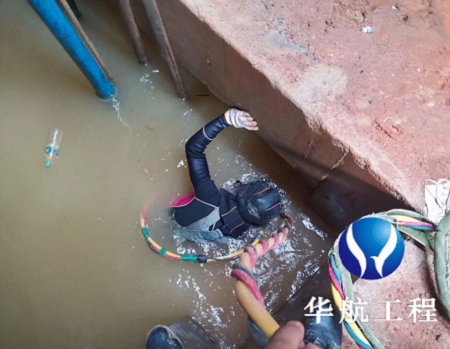
Hsin Hua Divers, Aquanauts, and Water Ghost Company must understand the methods of using signal lines and pre-arranged communication signals. It is necessary to tie signal lines in deep water, fast currents, and around pipelines, reservoirs, etc., for use in case of emergencies to transmit messages. When two or more diving recovery teams are working on the same site, they must constantly check their air supply hoses and signal lines to prevent tangling. Items and objects needed for underwater operations are delivered by rope; do not throw them. The signal line operator and the hose puller must always be vigilant about checking the tension on the signal lines and air supply hoses. Regularly inquire about the underwater operation status to prevent accidents. When two diving teams are working together, the diver who finishes their task must wait on the diving ladder until the other diver arrives before removing their diving gear. The diving air supply hoses for recovery can be selected as floating or heavy-duty depending on the working environment; use floating hoses for underwater installation and removal projects, and heavy-duty hoses for work in culverts, dams, or in deeper water with faster currents.
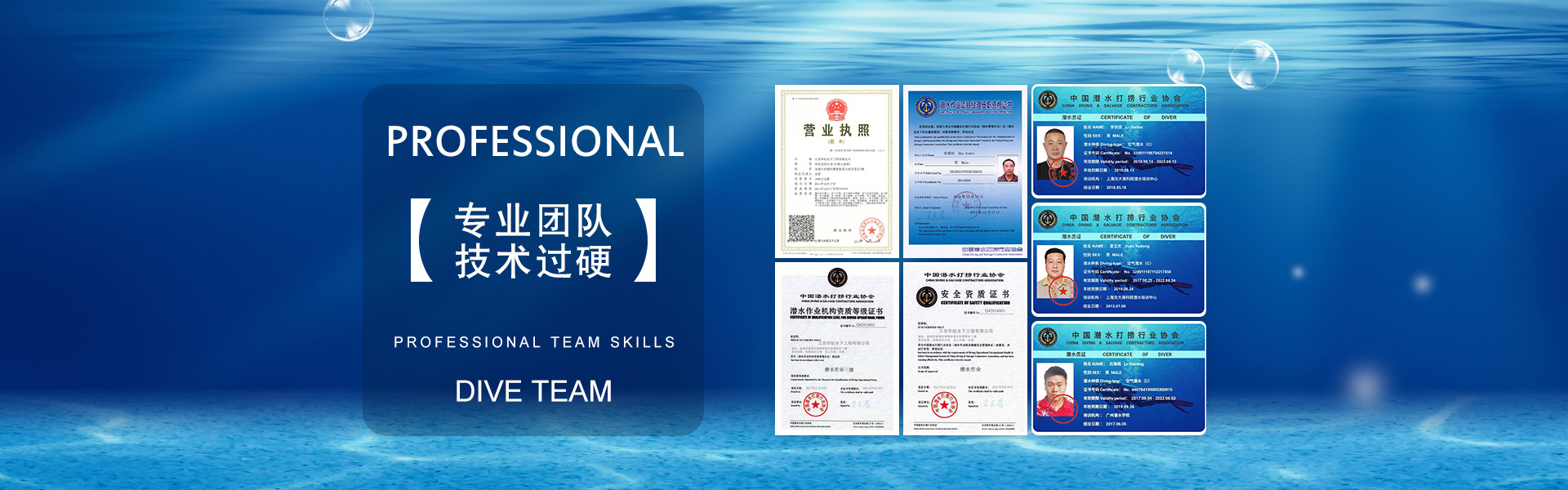
Divers must hold a diving supervisor certificate, and life support technicians must have a life support technician certificate. Personnel engaged in marine operations should possess a marine safety and rescue certificate, divers involved in non-destructive testing must have a non-destructive testing certificate, those engaged in underwater welding should have an underwater welding certificate, and personnel involved in other underwater activities (such as high-pressure water jets) should have relevant certifications. Huahang Underwater Engineering Co., Ltd. is a private enterprise. Our company has multiple construction teams, with 68 divers, 9 diving supervisors, 6 diving engineers, 2 diving technicians, and a total of 168 full-time employees. Our divers hold "Diver" certificates issued by the Shanghai Salvage Bureau, and the company owns imported diving equipment, laying a solid foundation for high-quality projects. The diving company specializes in underwater operations, including underwater installation and maintenance, underwater concrete bag construction, underwater diving and recovery, underwater track installation and modification, port and channel wharf pile reinforcement, underwater cutting and welding, municipal sewage pipeline sealing, underwater leak plugging, underwater inspections, underwater installation and cleaning of sewage treatment plant enclosures, underwater wharf and dock cofferdam repairs, underwater cutting and removal of bridge steel pipe piles, sonar underwater searches, underwater hull leak repair and emergency repairs, underwater gate inspection and maintenance, and underwater masonry of sewage pipelines. The Yangtze River and Yellow River, with their fast currents and wide search areas, require the salvage team to use sonar detection technology for recovery. Upon identifying underwater human-like shapes, divers are deployed for recovery. During underwater recovery operations, the team ensures the stable operation of machinery and equipment, instructs surface recovery personnel to wear life jackets, and sets up warning lines in the recovery area.
