
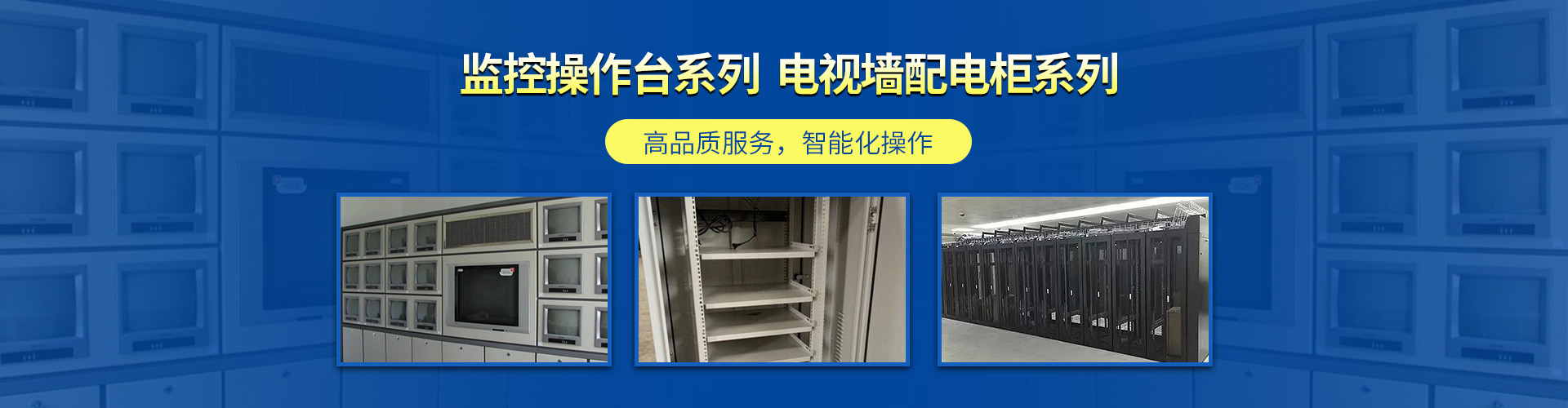


Beijing Zhiyuan Tongna Technology Co., Ltd. is a company primarily engaged in data cabinets. Adhering to the principle of "customer first, service supreme," and remembering the mission of "ensuring every customer uses high-quality products," we actively collaborate with friends from all walks of life, join hands in progress, and jointly create a brighter future.
Data Center Server Rack Installation Standards:
1. The cabinet is primarily divided into four zones from top to bottom: AC distribution unit, wiring rack, active equipment, and optical fiber terminal box.
2. Place the communication distribution unit at the top of the cabinet, in accordance with safety requirements.
3. Voice and network junction boxes are installed in an easily accessible location, placed beneath the AC distribution unit.
4. Below the patch panel is the active equipment area: Similar equipment is arranged according to its function and cable connection requirements, such as switches, routers, optical terminal units, and bridges. The three are interconnected. To prevent the crossover of signal cables and for easy maintenance of the functional areas, a good arrangement from bottom to top is optical terminal units -> bridges -> routers -> switches. Larger equipment is installed at the bottom of the cabinet and is supported by cabinet trays. Optical transceivers, due to their small size and large quantity, cannot be fixedly mounted inside the cabinet and are therefore installed on trays as well.
5. The cable terminations are placed at the bottom and also mounted on the trays.
Data cabinets are typically made of cold-rolled steel or alloys for storing computers and related control equipment, offering protection for the stored devices, shielding against electromagnetic interference, and an organized, tidy arrangement of equipment for easy maintenance in the future. Cabinets generally come in types such as server cabinets, network cabinets, and console cabinets.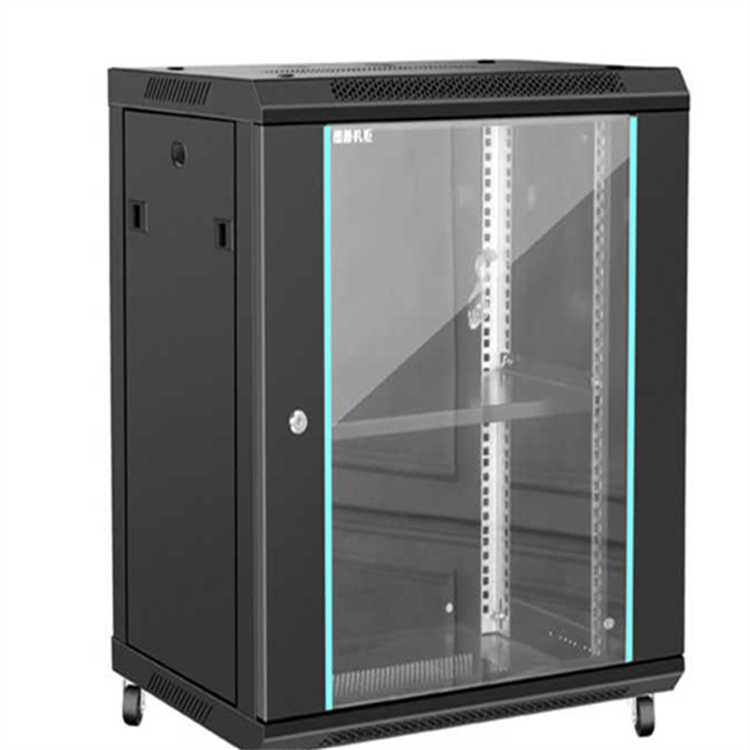 Cable management requirements within the data cabinet:
1. The laying of cables should be natural and straight, without twists, loops, or junctions, and should not be subjected to external pressure or damage.
2. Both ends of the cable should be labeled with a serial number, ensuring that the labels are clear, legible, and correctly aligned. The label material should be chosen for its durability.
3. In terms of cable allowance, for fixed-mounted cabinets, there should be no excess cable length inside the cabinet. The excess cable should be pre-installed in concealed locations, with a length between 1m and 1.5m. For movable cabinets, all cables connected to the cabinet should have at least 1m of allowance at the point of connection, and the difference in the reserved length of various cables should not exceed 0.5m.
4. There should be a surplus after the cable termination.
5. Fiber optic cables should be laid in loops with a reserved length of 3~5m, and any required lengths should be reserved according to the design specifications.
6. Lines of different voltage grades and current categories should be separated and laid out individually.
7. Cables should be introduced into the cabinet from the bottom, ascending along the rear side posts of the cabinet to the patch panel. The color coding of the individual cables inserted into the jump wire panel blocks should match the patch panel's color coding. Large pair cables should be sorted according to the standard color code combination regulations.
8. All terminal labels should be complete. After the data wiring racks and switch equipment are installed, use the label printer to affix tags: corresponding room numbers and port numbers.
9. Ensure the cable labels are correct before termination.
10. Intermediate joints are not allowed in the cables.
11. The cable termination must be secure and have good contact.
12. Cable termination should comply with design and construction operation specifications.
13. Twisted cables and connectors should match wire numbers and positions by color coding; they must not be reversed or incorrectly connected.
14. Do not use cable ties for the tail fibers, especially not too tightly; opt for a good-quality binding tape.
Currently, server racks have become an indispensable item in the computer industry, with various styles of racks visible in major data centers. As the computer industry continues to break through, the functionality represented by the racks is also increasingly significant. Server racks are generally used in network wiring rooms, floor wiring rooms, central data centers, data rooms, network rooms, control centers, rooms, and centers, etc.
Beijing Zhiyuan Tongna Technology Co., Ltd. is dedicated to providing superior products and comprehensive services, adhering to the principles of "Integrity and Innovation." We look forward to a sincere collaboration with you, co-creating a promising future.
Totem Server Cabinets, Shanghai Data Cabinet Pricing, Quality Assurance
