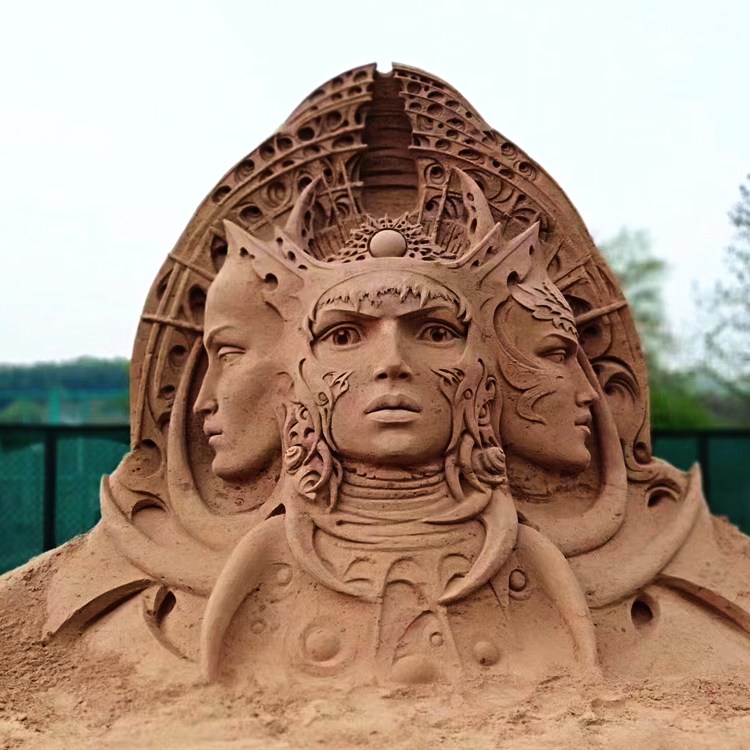


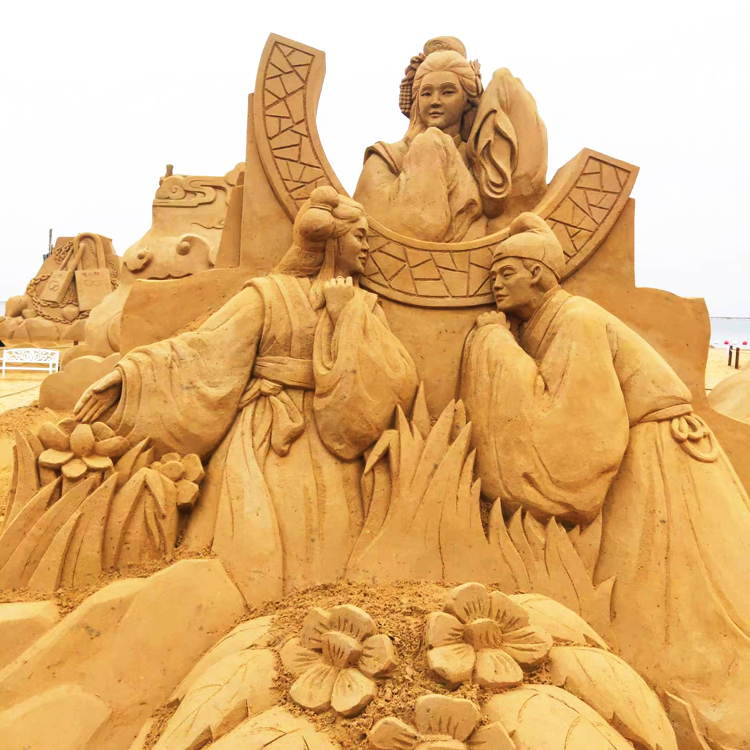
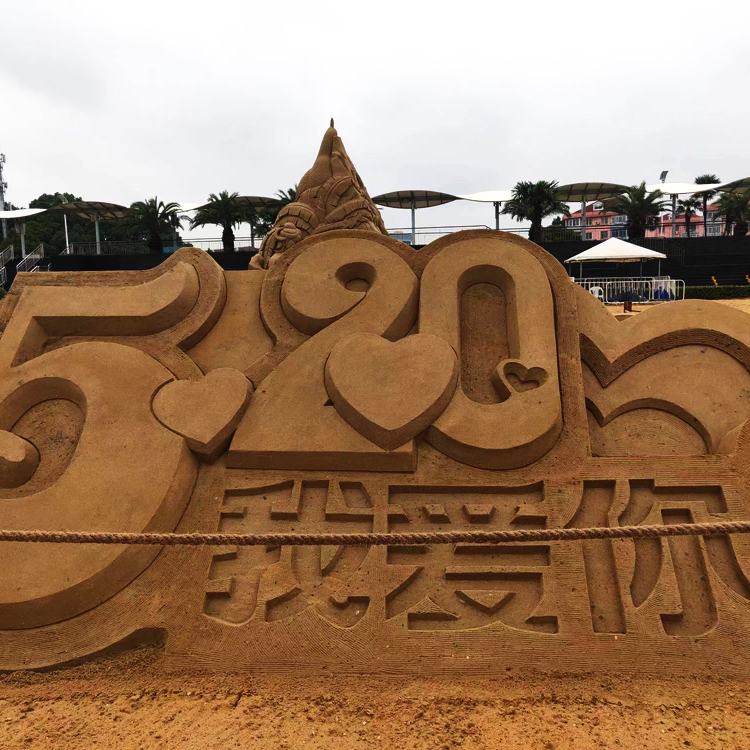
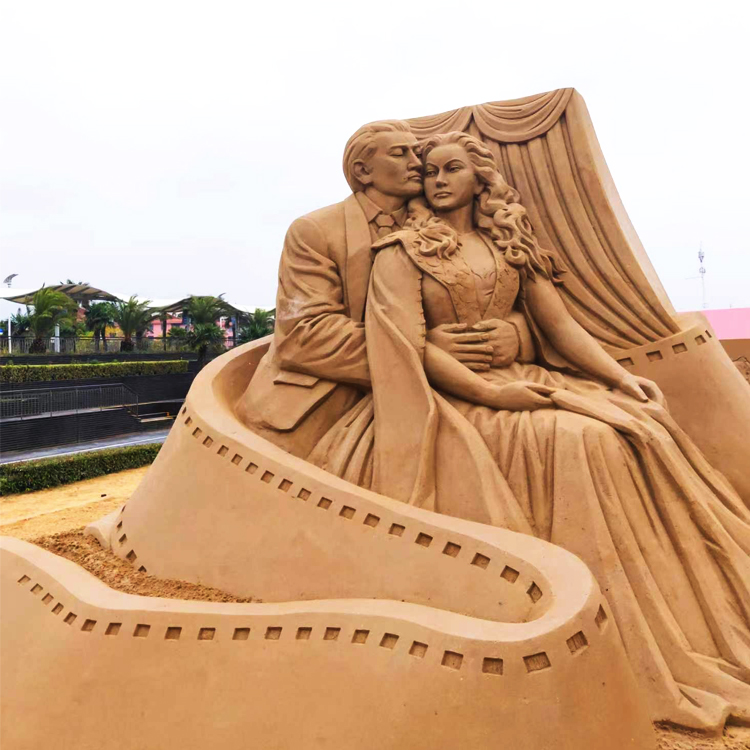
Sand sculpture is an art form created using sand as the raw material, involving techniques like stacking and carving to produce three-dimensional artworks. Here's a brief introduction:
1. Material Selection
SandGenerally, sand with uniform particles and strong adhesiveness is chosen for its ease in shaping.
ToolsShovels, carving knives, sprayers, etc., for stacking and detailing.
2. Manufacturing Steps
StackingShape the sand into the required form, compact layer by layer to ensure stability.
CarvingCarve out details with tools, such as figures and buildings.
TrimWater-jet reinforcement, patching defects, ensuring the integrity of the work.
3. Tips and Cautionary Notes
Humidity ControlSand becomes too loose when too dry and too difficult to mold when too wet. It requires an appropriate level of humidity.
Stable structureThe base should be wide, narrowing towards the top to prevent collapse.
Detail handlingCarefully crafted to ensure exquisite details.
4. Application Scenarios
Tourist AttractionsCommonly found at beaches and theme parks, attracting tourists.
Competition EventHost a sand sculpture competition to showcase artistic talent.
Educational EntertainmentGreat for family activities, fostering manual skills and creativity.
5. Environmental Protection and Maintenance
Environmental ProtectionUse natural sand to avoid contamination.
MaintainRegular water spray reinforcement to prevent erosion and damage.
Sand sculpture combines art with nature, suitable for participation by all sorts of people, showcasing creativity while offering enjoyment.