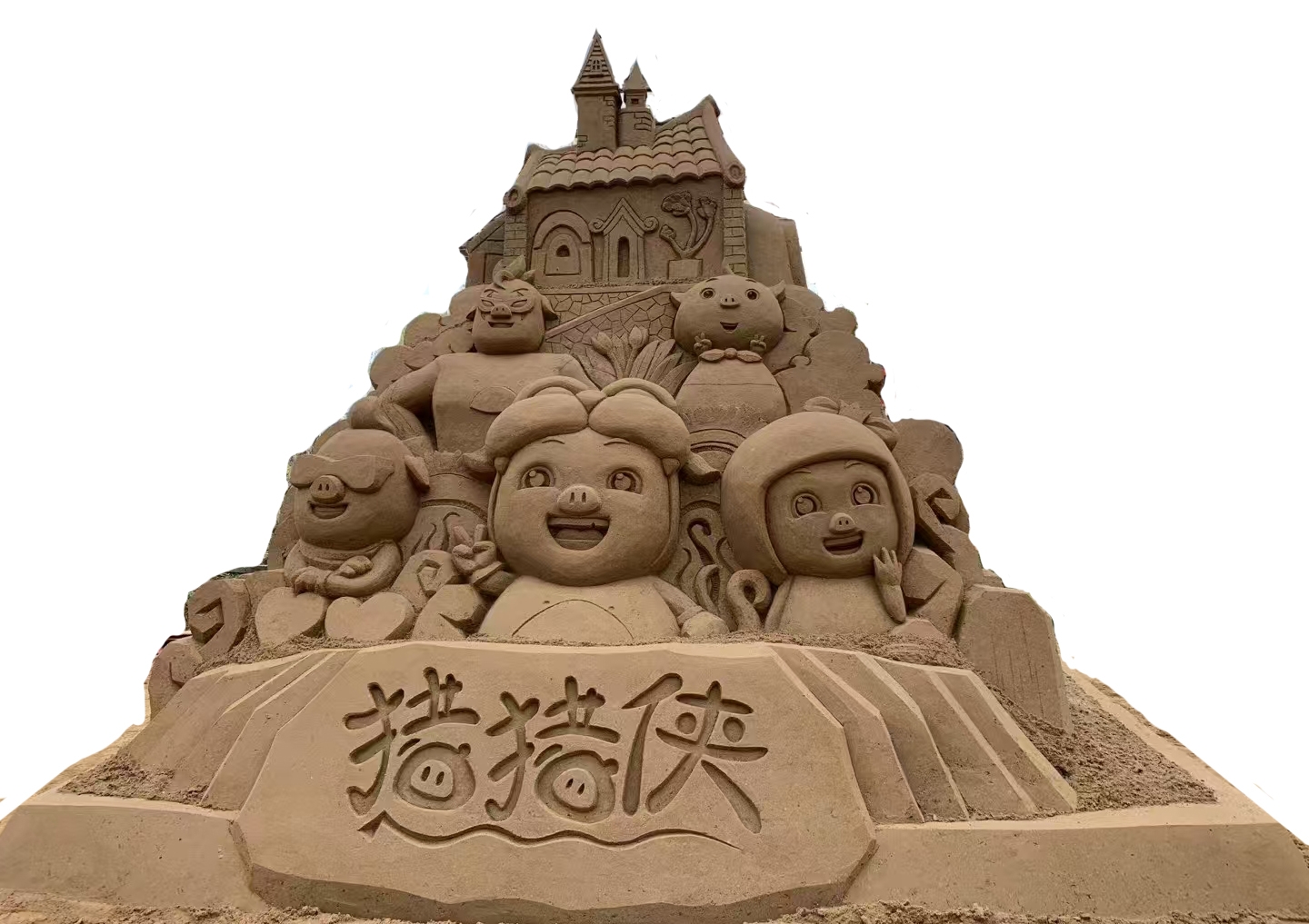


During July to November each year, many places host Sand Sculpture Festivals. These festivals combine competitions with exhibitions, setting a theme each year for participants to showcase their unique skills. At this time, dozens of sand sculptures, ranging from 5 to 10 meters tall, vividly depict wonders from around the world, attracting both domestic and international tourists.
Sand sculpture is a grand earth art form, rapidly creating various shapes through means such as piling, digging, carving, and hollowing. As early as 4,000 BCE, the Egyptians began using sand to assist in the construction of the pyramids, at which time the prototype of sand sculpture already existed. However, sand sculpture truly originated as an art form in early 20th-century America.
After nearly a century of development, sand sculpture has evolved into an eclectic art form that merges sculpture, painting, architecture, sports, and entertainment. Its true allure lies in the use of pure, natural sand and water as materials, creating captivating visual spectacles through the artists' creations. Once completed, the works are reinforced with surface glue, typically lasting for several months. As sand sculptures naturally erode over time without causing any environmental pollution, they are also known as "ephemeral art" and "earth art."