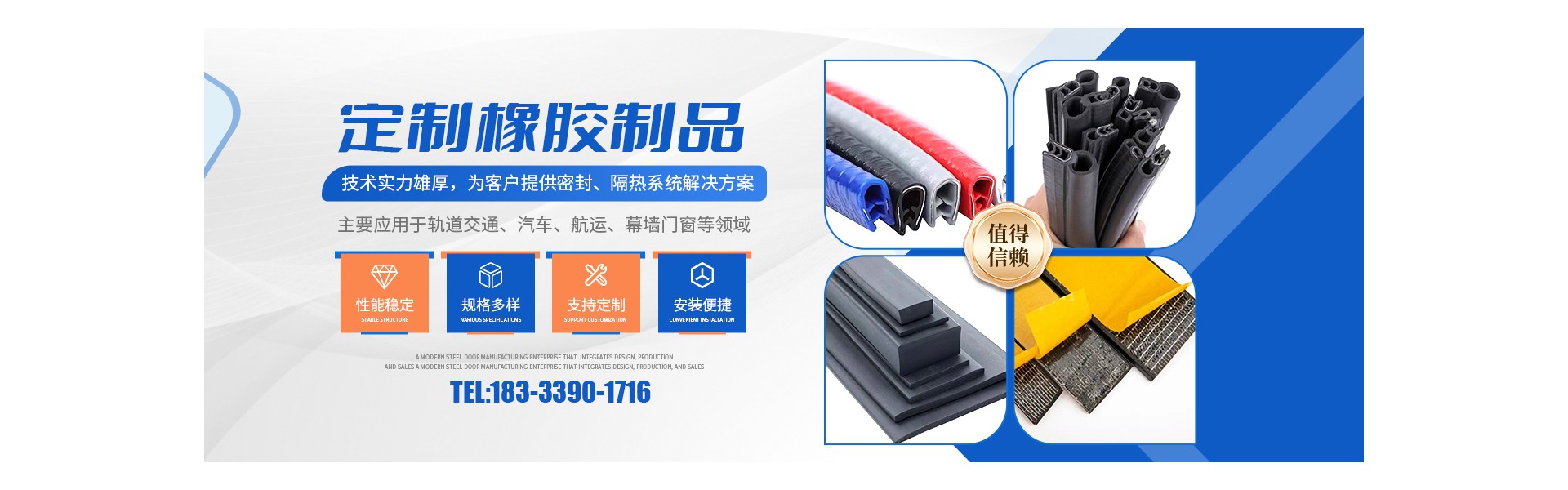
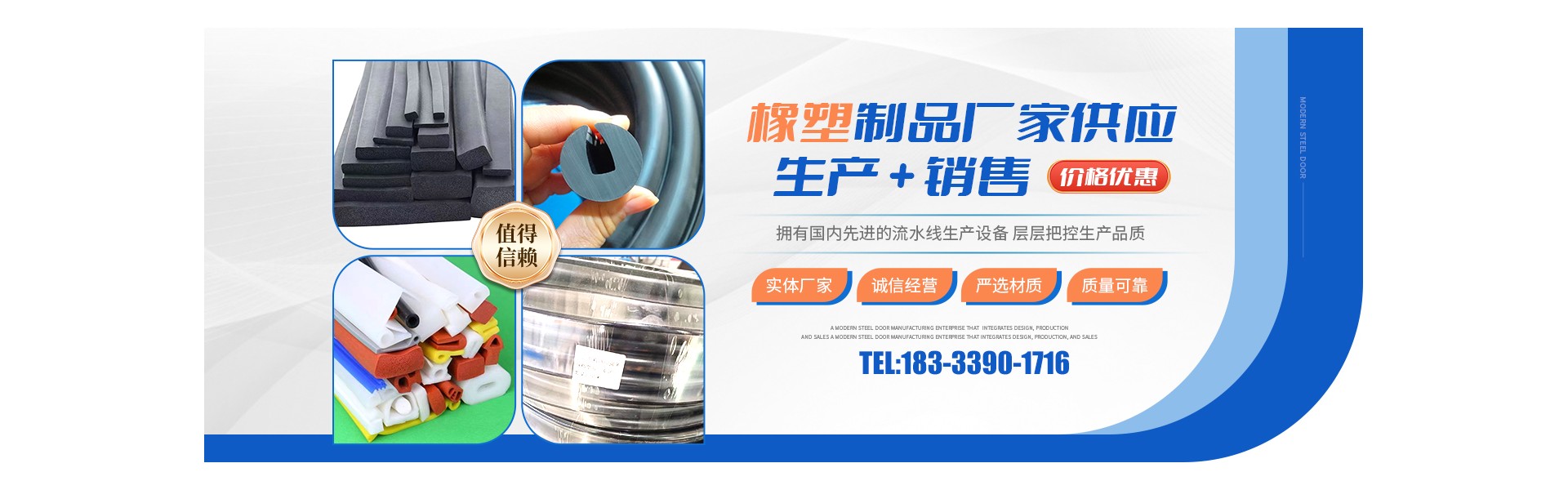
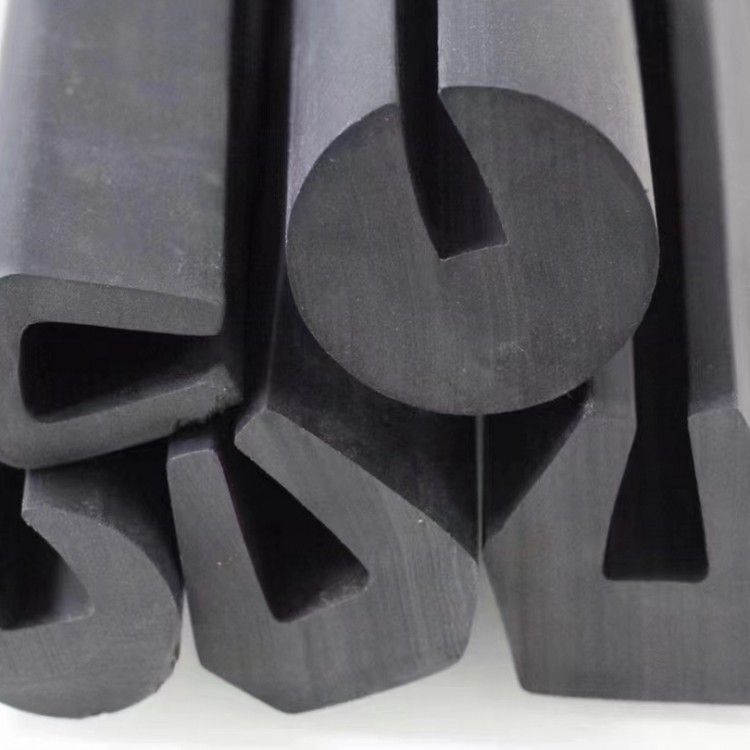
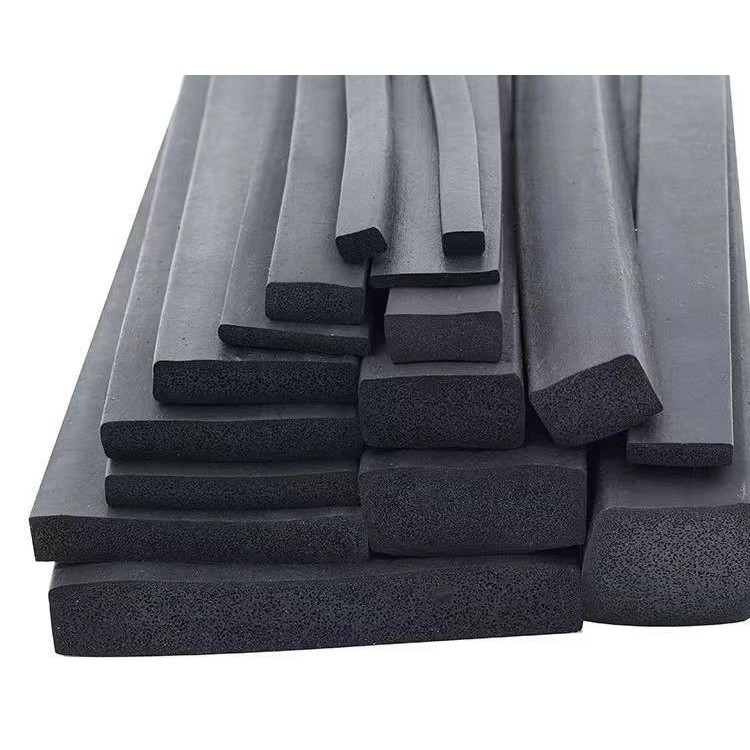
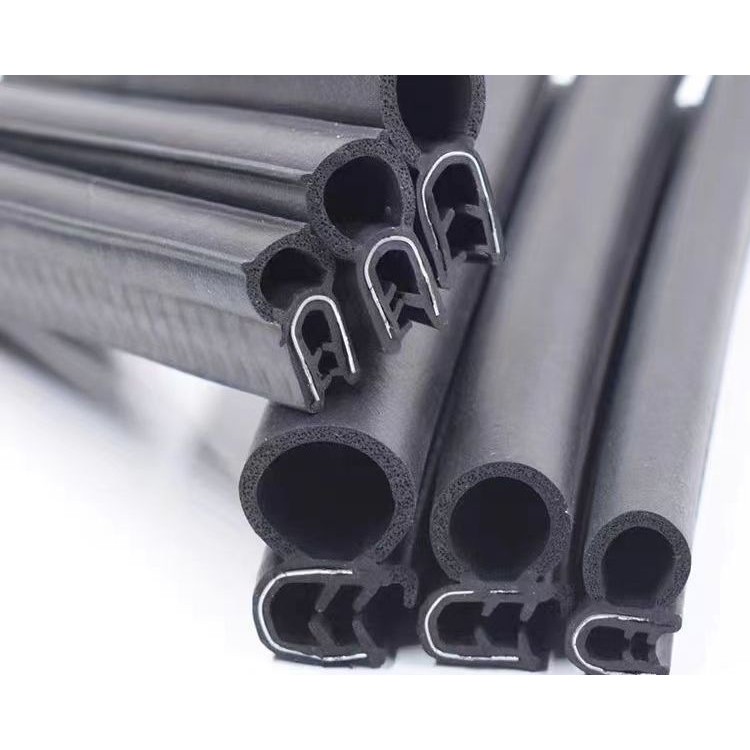
Our main products include: EPDM rubber seals, high-temperature resistant foam strips, silicone foam strips, door seals, cabinet seals, fluorine self-adhesive rubber strips, and more.
18333901716
Seals can be divided into two main categories: static seals between relatively stationary mating surfaces and dynamic seals between surfaces in relative motion.
Static seals are primarily categorized into three types: point seals, gasket seals, and contact seals. Depending on the working pressure, static seals can be further divided into medium/low-pressure and high-pressure static seals. Medium/low-pressure static seals commonly use softer materials and wider gaskets, while high-pressure static seals employ harder materials and metal gaskets with a very narrow contact width. Dynamic seals can be classified into two basic types: rotating seals and reciprocating seals. According to whether the sealing element contacts the moving parts it interacts with, they can be divided into contact seals and non-contact seals. Generally, contact seals offer better sealing properties but are limited by friction and wear, making them suitable for lower surface line speed applications. Non-contact seals have poorer sealing properties but are suitable for higher-speed applications.
Selection of Sealed Components
Basic requirements for sealing include good sealing performance, safety and reliability, long service life, and strive for compact structure, simple system, ease of manufacturing and maintenance, and low cost. Most sealing components are wearing parts, ensuring interchangeability and achieving standardization and serialization.
Types and Uses of Sealing Materials
Seal materials should meet the requirements of their sealing function. Due to the varying media being sealed and the differing operating conditions of the equipment, the adaptability of seal materials is required to be diverse. General requirements for seal materials typically include:
Material has good density, is not prone to medium leakage;
2) Possesses adequate mechanical strength and hardness;
3) Excellent compressibility and resilience, with minimal permanent deformation.
Under high temperatures, it does not soften or decompose; under low temperatures, it does not harden or become brittle.
5) Excellent corrosion resistance, capable of long-term operation in acidic, alkaline, and oily mediums; minimal changes in volume and hardness, and does not adhere to metallic surfaces.
6) Low friction coefficient, excellent wear resistance.
7) Features flexibility for sealing surfaces.
8) Excellent resistance to aging, durable for long-term use.
9) Easy to process and manufacture, affordable pricing, and easy to source materials.
Rubber is a commonly used sealing material. Apart from rubber, graphite and various types of sealing adhesives are also suitable for sealing applications.
Contact us

Service Hotline
18333901716
Company Telephone
18333901716

Address
Daxin Village, Nanside, Geshanzhuang Town, Qinghe County, Xingtai City, Hebei Province
b2b.china9.net © Zhongshang 114 Hebei Network Technology Co., Ltd.Address: Room 6009, Oriental New World Center, No.118 East Zhongshan Road, Qiaoxi District, Shijiazhuang City, Hebei ProvincePlatform Service Hotline: 4006299930