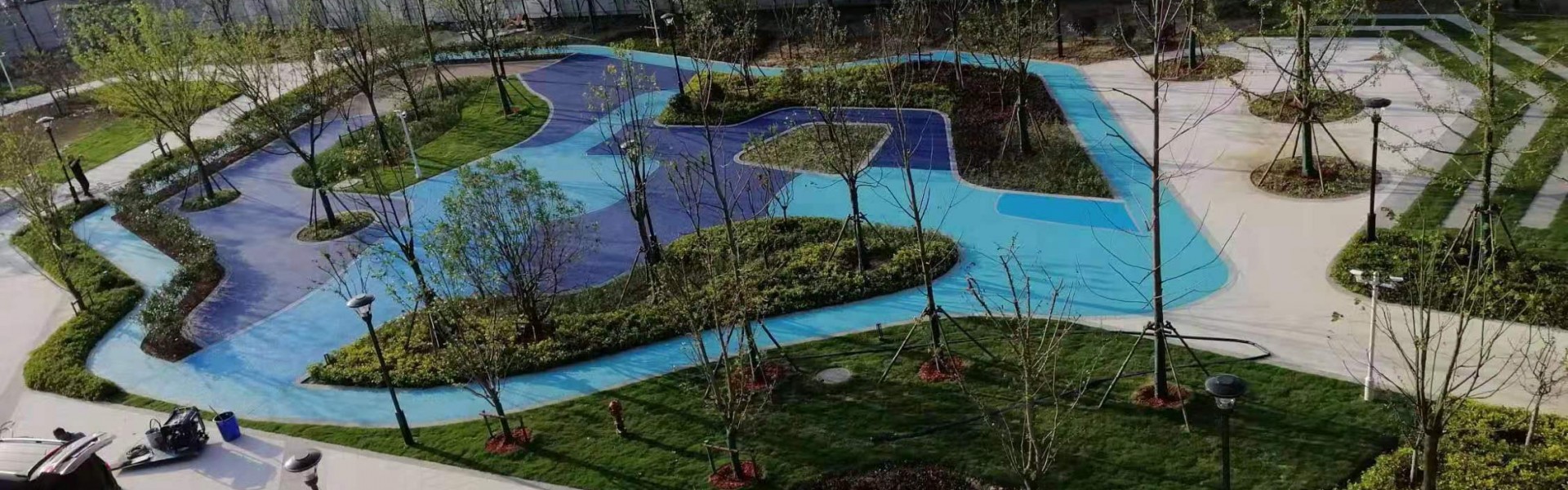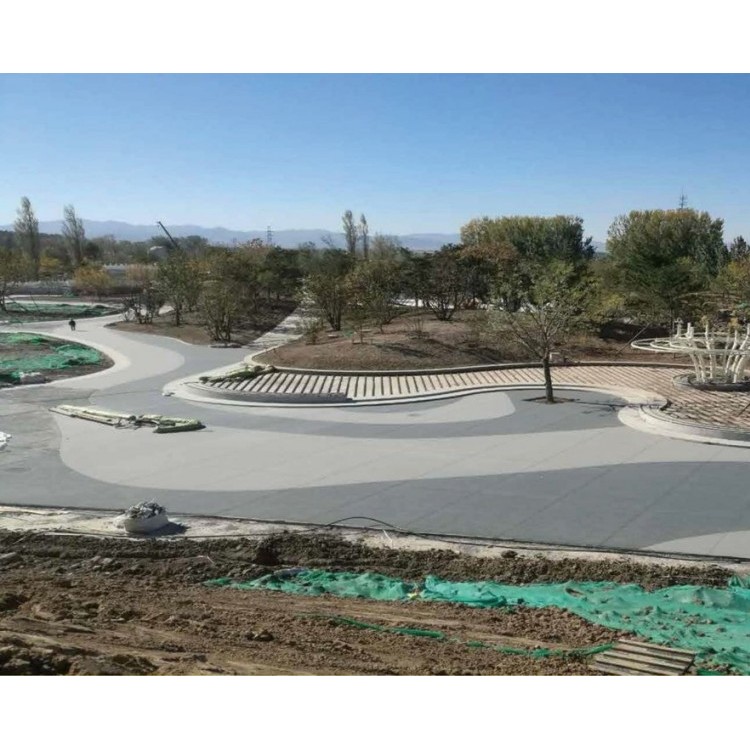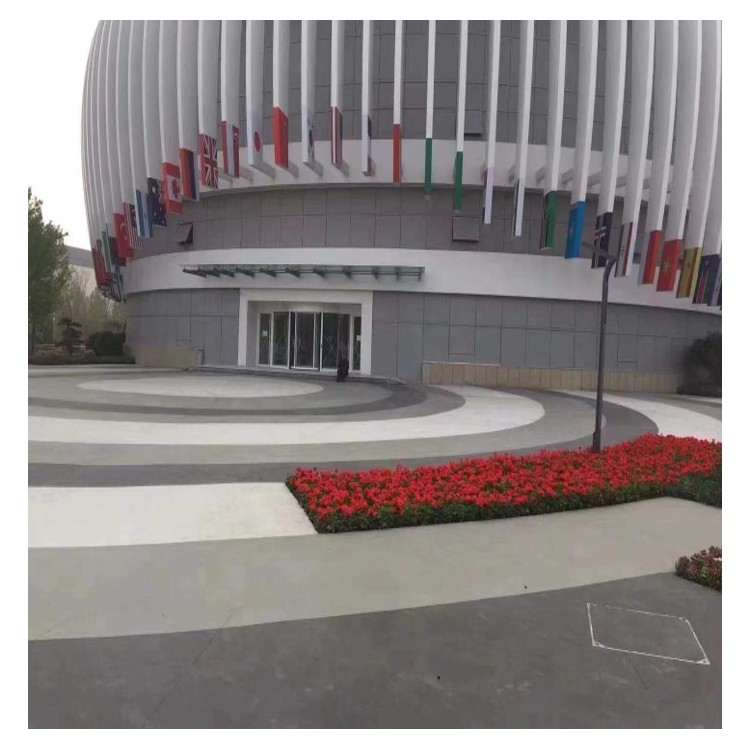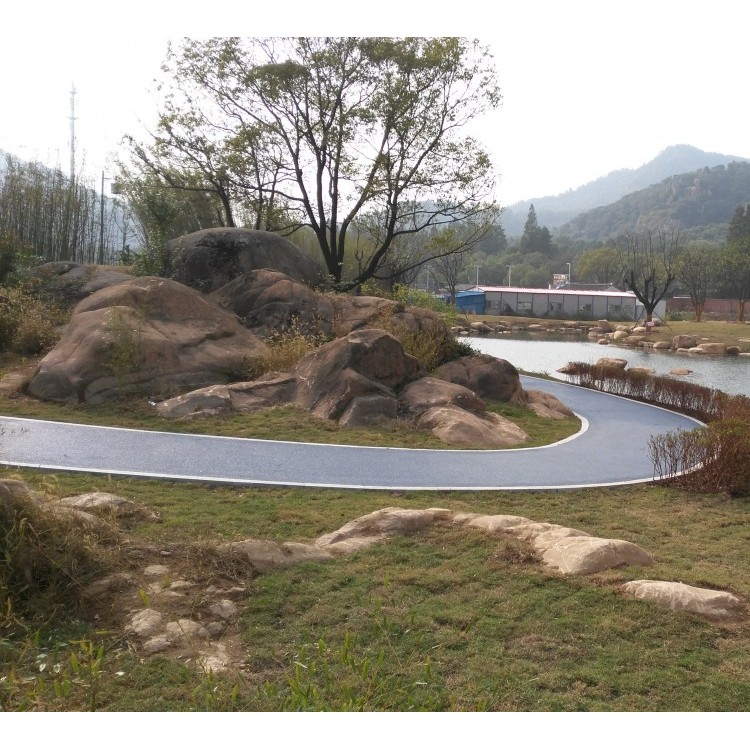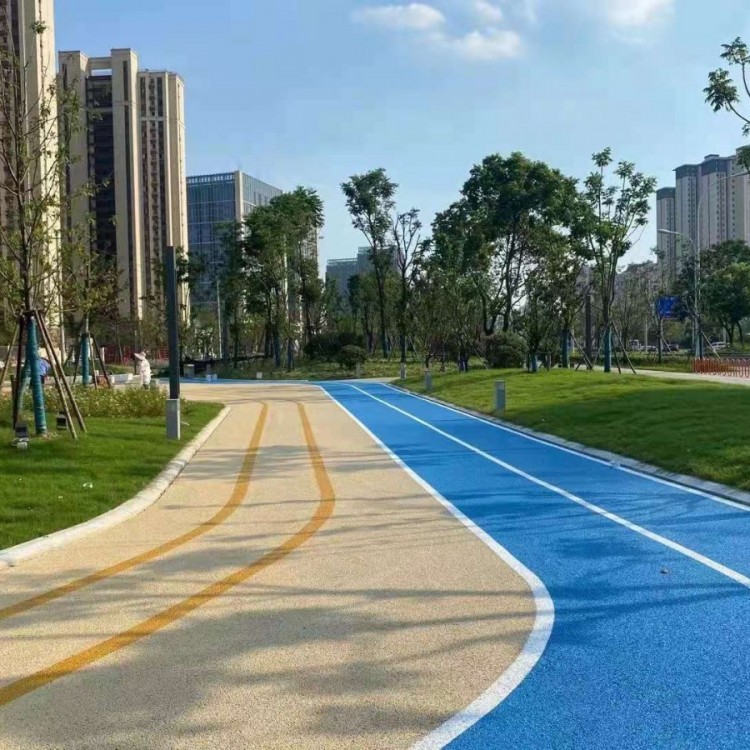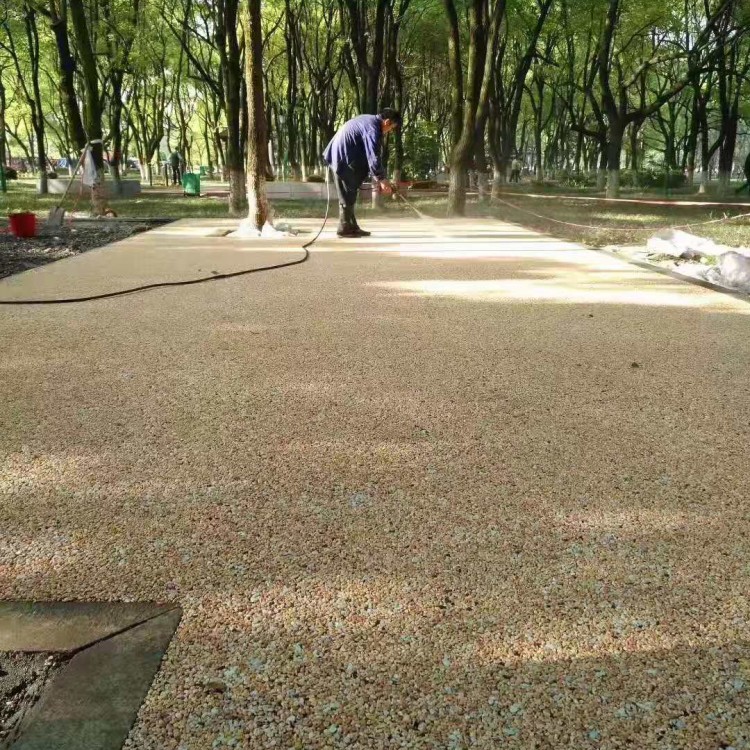
Colorful Eco-Friendly, Exposed Aggregate Permeable Pavement, Eco-Glow Permeable Pavement, Colorful Eco-Sand Filter Permeable Pavement
13057697362
Engineering Features
-- Utilizing permeable concrete artistic paving, which boasts excellent permeability, is ideal for cities with heavy pedestrian traffic. Additionally, it contributes to replenishing groundwater and helps mitigate the heat island effect by regulating the climate in the surrounding area.
-- The permeable concrete surface can be combined with artistic decorative effects to blend with the on-site environment and engineering characteristics, making it increasingly popular among large and medium-sized cities.
— Permeable concrete artistic paving has the characteristic of high strength and can also be used as a paving structure for roadways, with a strength of up to C50, suitable for vehicles and pedestrians under 30 tons.
The pervious concrete flooring offers the advantages of simple construction, easy machinery operation, and convenient cleaning and maintenance.
Our company has achieved full reuse of rainwater, saving irrigation costs for surrounding plants. The surface color can be adjusted according to requirements, making it suitable for plaza and large-scale exhibition landscape effects.
Application Scope
Flooring construction for fire lanes, scenic roads, sidewalks, and various squares and parks.
Principle of Technology
Similar to the construction of plain concrete, pervious concrete has a dense gradation with a large slump. However, pervious concrete is made only with aggregate gravel, cement, and binder materials, featuring the following technological characteristics:
1. The grading is loose, serving the purpose of permeability.
2. Zero segregation, allowing for the construction of artistic effects with various shapes and colors, either based on the site or design patterns.
3. Adding reinforcing agents and stabilizers, etc., can enhance the concrete strength grade.
4. The concrete surface with exposed aggregate is treated with a retardant to ensure the subsequent concrete meets the design strength requirements. The surface concrete is temporarily delayed in setting, allowing the exposed aggregate to be revealed after washing.
Key Construction Processes
Materials Preparation - Mixing - Material Supply - Casting - Tamping and Finishing - Surface Treatment - Cleaning - Maintenance - Sealing - Completion
Primary construction measures
Material Requirements
1) The materials have passed the acceptance according to the relevant national standards. They must be accompanied by product certification, quality assurance documents, and inspection reports. Once the materials arrive on-site, they must be approved by both the client and the supervisor before use. Workers should make full use of resources, advocate for savings, and aim for good economic benefits.
2) Various aggregate specifications must meet design requirements; the surface layer uses P.O42.5 cement, while the sub-layer uses P.C32.5 cement. The cement complies with national standards and is accompanied by inspection reports and proof of manufacturing date. Additives must also meet national standards.
Construction personnel requirements
Construction technicians must hold the corresponding qualification certificates and must be licensed before starting work. They must be familiar with the design plans and understand the construction process requirements.
Construction technicians must adhere to the requirements of the design drawings and may not arbitrarily alter the design or add or subtract design content. If modifications or changes to the design are necessary, consent from the designers must be obtained, and alterations must be made in accordance with the "Design Change Notice" issued by the design unit. Changes to obvious errors, after being reviewed by the on-site technical supervisor, are permitted, but the design unit should be notified promptly.
3. Permeable subgrade paving
The mixed material is spread over the base layer, leveled with a trowel; the base layer is compacted using a hand-operated compactor; the surface layer is also leveled with a trowel and supplemented with additional material in areas of insufficient density; the surface is then finished with a concrete smoothing machine, with manual finishing near the side stones; avoid laying too large an area at once, and do not rush to the next work area before the previous mixed material is finished to prevent obvious jointing; strictly control the construction time for the permeable base and surface layers to ensure their bonding strength;预留 expansion joints according to the design requirements and construction plan before the permeable concrete pouring, each joint treated as a settlement joint with a width of 15mm.
4. Exposed Aggregate Concrete Paving Construction Process
The aggregate cleaner must be applied after the permeable paving is laid, compacted, and the surface is finished. The cleaner should be sprayed using an air pump; it should not be pre-mixed and must be mixed on-site during the surface finishing process. Pour the cleaner into a funnel and apply it to the surface one section at a time. Ensure full coverage of the cleaner; a second application may be needed if necessary. After spraying, immediately cover the surface with plastic film, then add a colored tarpaulin for a second layer, especially in windy conditions, and secure the film with heavy objects to prevent any surface exposure to the air. After covering, a designated person records the time. The supervisor monitors the surface cement condition based on the on-site temperature and humidity, observing at regular intervals to ensure proper washing time, typically 36 hours after the cleaner is applied. Cleaning should be done with a high-pressure water jet, in a sequential manner, lifting a section of the plastic film, cleaning it, and then moving to the next section without removing the entire film at once. After cleaning, re-cover the surface with the plastic film for maintenance; do not use the same film that was used before applying the cleaner.
Sealant
Clean the permeable concrete joints with a wire brush to remove dirt and debris, ensuring the joints remain dry (components cured to the required age in the prefabrication yard typically meet this requirement); fill the joints with polyurethane soft rubber, which is gray in color; apply double-sided tape to the permeable concrete joints for protective treatment, preventing contamination of the surrounding permeable concrete flooring during the operation; ensure the polyurethane soft rubber filling does not exceed the surface of the permeable concrete; use a flat tool to smooth and level the polyurethane soft rubber surface, and lightly dampen the tool during the smoothing process to maintain lubrication.
6. Maintenance
Watering frequency is to be controlled based on on-site temperature and humidity conditions, ensuring the permeable concrete remains moist. No watering is allowed when the average daily temperature is below 4°C; the water for curing permeable concrete should be the same as that used for mixing.
The permeable concrete should be covered with plastic sheeting for maintenance, ensuring the entire surface is securely covered, and the plastic sheeting should maintain condensation inside.
7. Sealed
Before sealing the permeable concrete surface, the surface must be cleaned and dried; the sealant must be applied evenly with no noticeable color variation.
Cautionary Notes
When the ambient temperature is near 0℃, construction is prohibited; maintain consistent particle size for enhanced aesthetics; screening and cleaning should be performed as necessary. Confirm the construction area and prepare materials reasonably; solidifier materials should be weighed as needed and not pre-mixed; the solidifier ratio is 2%-5%. Adjust the amount of solidifier based on actual field operations to meet specific needs; after completion of construction, ensure that no one enters the area for at least seven days.
When ground humidity is severe, sealing construction should not be carried out; sprinkle water on the base aggregates before laying permeable concrete; the cleaning agent should be mixed during the surface finishing stage to avoid the surface mortar drying and solidifying due to extended mixing time.
Utilize high-pressure water hoses for rinsing, ensuring the direction of the jet aligns with the cleaning sequence. Do not contaminate the cleaned surface with the砂浆 from the surface being rinsed. Should the product at the site show signs of flaking during rinsing, immediately halt the cleaning process and continue with film covering and maintenance.
The construction cement used is 42.5 ordinary portland cement, while the detergent mixture utilizes 32.5 composite portland cement.
Contact us

Service Hotline
13057697362
Company Telephone
13057697362

Address
251 Yanzhuang Road, Qixia District, Nanjing, Room 2706, Building A, Jinguang Mansion
b2b.china9.net © Zhongshang 114 Hebei Network Technology Co., Ltd.Address: Room 6009, Oriental New World Center, No.118 East Zhongshan Road, Qiaoxi District, Shijiazhuang City, Hebei ProvincePlatform Service Hotline: 4006299930