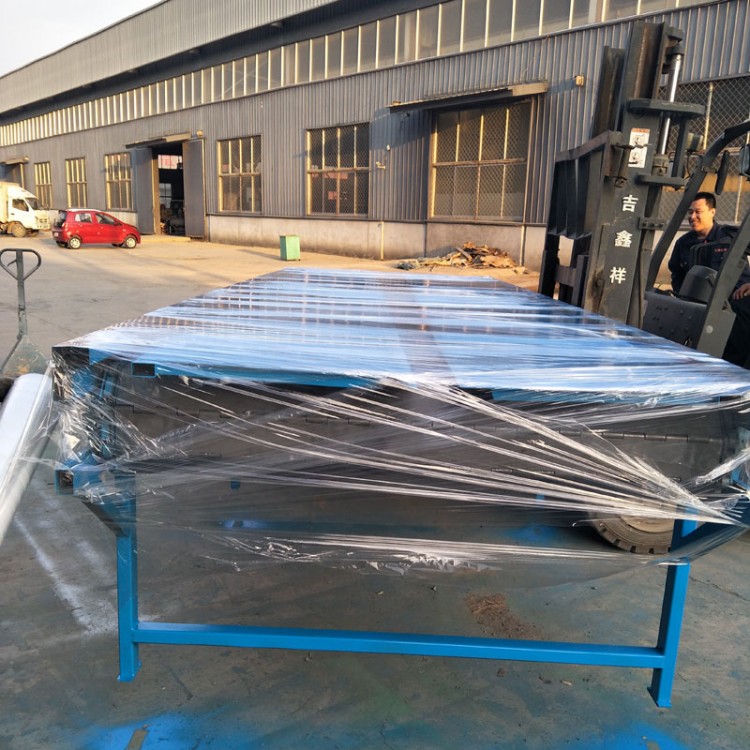
Belt Conveyors, Mesh Conveyors, Chain Plate Conveyors, Gl...

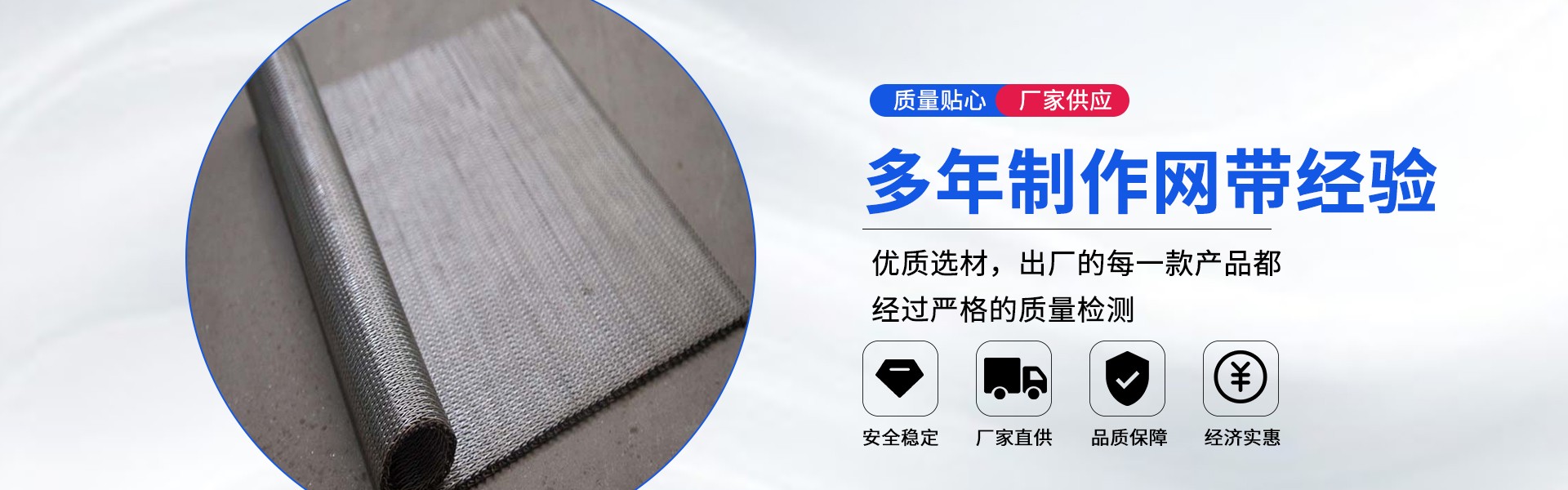
The stainless steel belt of a food-grade conveyor is a critical component, accounting for 30% to 50% of the total equipment cost. During operation, the stainless steel belt is subjected to highly complex loads, including both longitudinal tensile stresses and bending stresses as it passes through drums and idlers. Most damage to stainless steel belts manifests as wear on the working surface and edges, caused by impacts from large, sharp materials, leading to punctures, tears, and剥离. The proper selection of stainless steel belts is crucial for conveyor design. The choice of stainless steel belts is based on the conveyor's layout, the material being conveyed, and operating conditions. Making a rational selection of stainless steel belts is not only vital for the conveyor's conveying tasks but also influences the design of mechanical components such as drums, idlers, and drive units.
1. Requirements for stainless steel conveyor belts
1) To achieve the required transmission power for conveying materials over the specified distance, as well as allowing for low-load operational elongation under load conditions, there must be sufficient tensile strength and modulus of elasticity.
2) Ensure good load-bearing support and sufficient width to accommodate the types and volumes of materials required for transportation.
3) Be flexible, aiming to bend around the drum in the length direction, and if necessary, form a groove in the transverse direction.
4) Ensure dimensional stability for smooth operation of the stainless steel conveyor belt.
5) The covering glue on the bearing surface must withstand the load impact of the bearing object and help restore elasticity. During transmission, the covering glue should have sufficient friction with the roller.
6) The components exhibit good cohesion, preventing delamination.
7) Excellent tear and damage resistance.
8) Capable of forming a ring shape.
For stainless steel conveyor belts used for critical applications, it is essential to analyze the full operating conditions to propose performance requirements.
2. Considerations for Stainless Steel Mesh Belt Design
To conduct a comprehensive analysis of the conveyor system, it is necessary to consider the following design details to determine the technical specifications of the stainless steel belt technology:
Delivered Materials
Generally, one must consider the general characteristics, density, and large particle size of materials; in special cases, additional considerations include the presence of oil or chemicals, the high temperature of hot materials, and flame-retardant requirements.
2) High carrying capacity or the required high transmission capacity, bandwidth, belt speed, etc.
3) Conveyor Line Layout - The distance between the head and tail drums along the conveyor path; the height of elevation or descent, or the elevation of the top and bottom of any upward or downward inclined conveyor sections; the angle of inclination for all upward or downward inclined conveyor sections; the locations and radii of all vertical curves.
4) Drive Unit - Single or double roller drive. For double roller drive, the total motor power distribution on the transmission roller: angle of the stainless steel conveyor belt wrapped around the transmission roller; drive unit location; roller surface, smooth or coated; type of coated surface; the adopted starting method
5) Roller Diameter - The roller diameter should be determined based on the actual requirements of the stainless steel mesh conveyor belt.
6) When considering the tensioning device, factors such as its type, position, and tensioning stroke must be taken into account.
7) Roller Type, Roller Diameter, Groove Angle: Roller Spacing, including the length of the transition sections at the head and tail.
8) Feeding Device Configuration: Number of chute; Free-fall height of block material to the stainless steel belt; Length of feeding channel; Impact of buffer roller or bracket; Angle between feeding and belt.
9) Expected low operating temperature for use in cold climates.
10) The stainless steel conveyor belt joint design and cleaning method adopted.


b2b.china9.net © Zhongshang 114 Hebei Network Technology Co., Ltd.Address: Room 6009, Oriental New World Center, No.118 East Zhongshan Road, Qiaoxi District, Shijiazhuang City, Hebei ProvincePlatform Service Hotline: 4006299930