Focused on the production and research and development of...


Product Recommendation
Magnetic混凝sed precipitation technologyRevolutionary Concrete Clarification Technology
Introduction to Magnetic Coagulation Sedimentation Technology
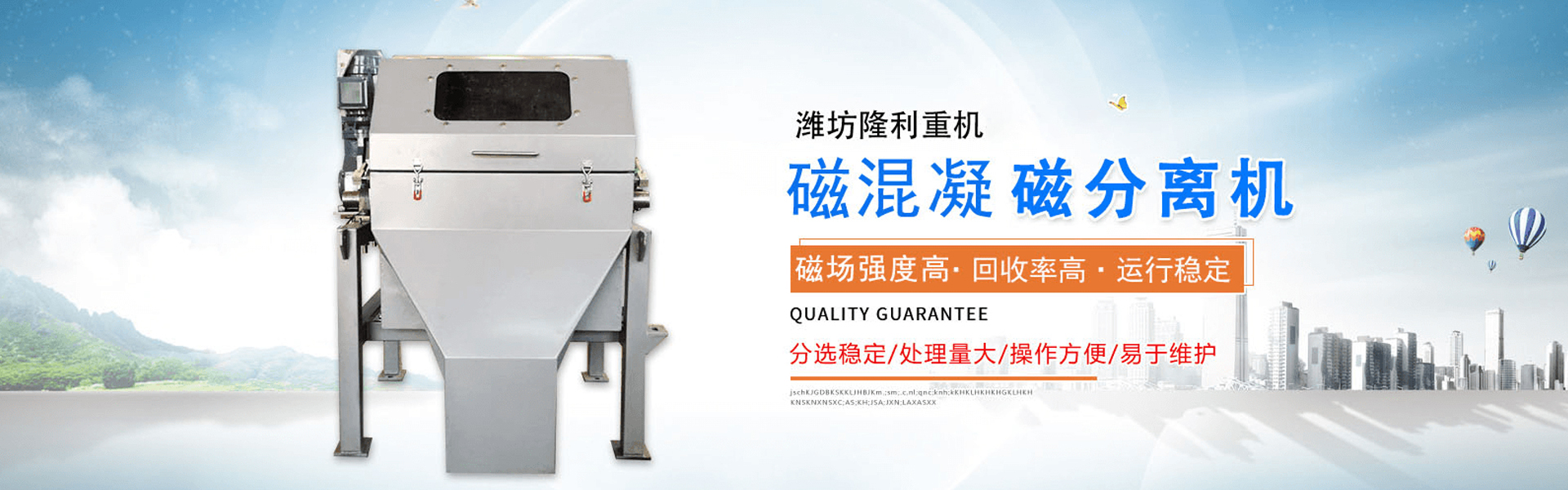
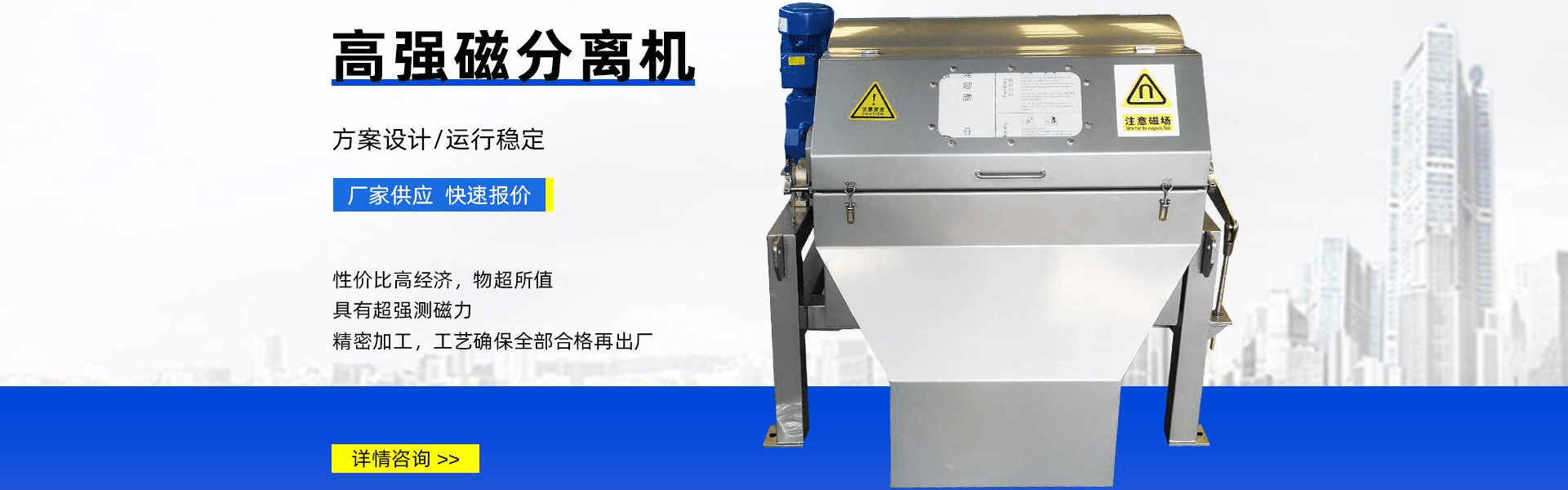
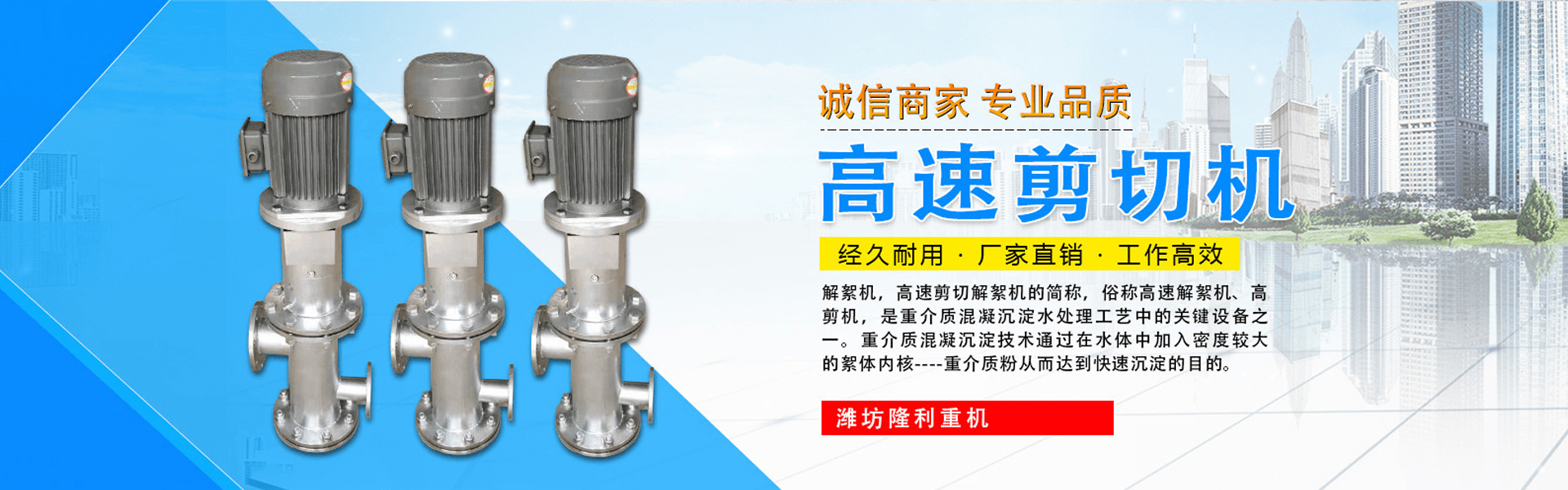
Magnetic coagulation sedimentation technology involves simultaneously incorporating a magnetic density into the traditional coagulation sedimentation process.From April 8th to May 1st, the magnetite enhances the coagulation process by binding with pollutants, creating a more effective flocculation. This results in denser and stronger flocs, enabling faster sedimentation. The沉降 speed of the magnetic floc clusters can reach over 40 m/h. The magnetite is then recovered and recycled using high-shear mixers and magnet separator traps (magnetic separators).
The entire process has a short dwell time, thus affecting onlyMost pollutants within TP have a very low chance of undergoing reverse dissolution. Additionally, the magnetite and flocculants added to the system exhibit excellent adsorption properties for bacteria, viruses, oil, and various fine particles. Consequently, the removal efficiency of these pollutants is superior to traditional processes, with particularly remarkable phosphorus removal effects. Simultaneously, due to its high-speed sedimentation performance, it boasts numerous advantages over traditional methods, such as faster speed, higher efficiency, smaller land occupation, and lower investment. Magnetic coagulation sedimentation technology is a revolutionary new technique.
Magnetic coagulation sedimentation technology originated in the United States. Previously, the practical application of this technology in water treatment projects was limited due to the unresolved issue of magnetic powder recovery. Now, this technical challenge has been successfully addressed, highlighting the technological and economic advantages of the magnetic coagulation sedimentation process. As a result, it has gained increasingly widespread application both domestically and internationally. Currently, in China, the engineering application of this technology in urban wastewater treatment, reclaimed water reuse, river sedimentation treatment, high-phosphorus wastewater treatment, paper mill wastewater treatment, and oilfield wastewater treatment has gradually been implemented, yielding favorable results.
Magnetic concrete precipitation process
Untreated wastewater first enters the treatment facility.The 1st stage mixing tank receives PAC flocculant, which is thoroughly mixed with the contents before entering the 2nd stage mixing tank. Here, it combines with recycled magnetic powder and回流sludge for flocculation. The mixture then proceeds to the 3rd stage mixing tank, where it reacts with the added flocculant PAM to form larger floc particles. These particles are then rapidly settled in the sedimentation tank, with the clarified water flowing into the next treatment process or being discharged directly in compliance with standards.
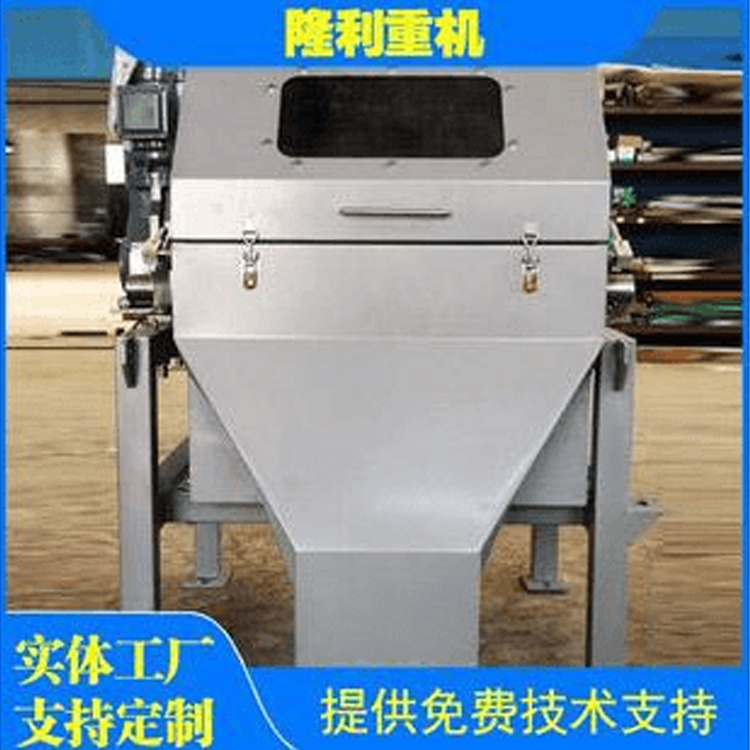
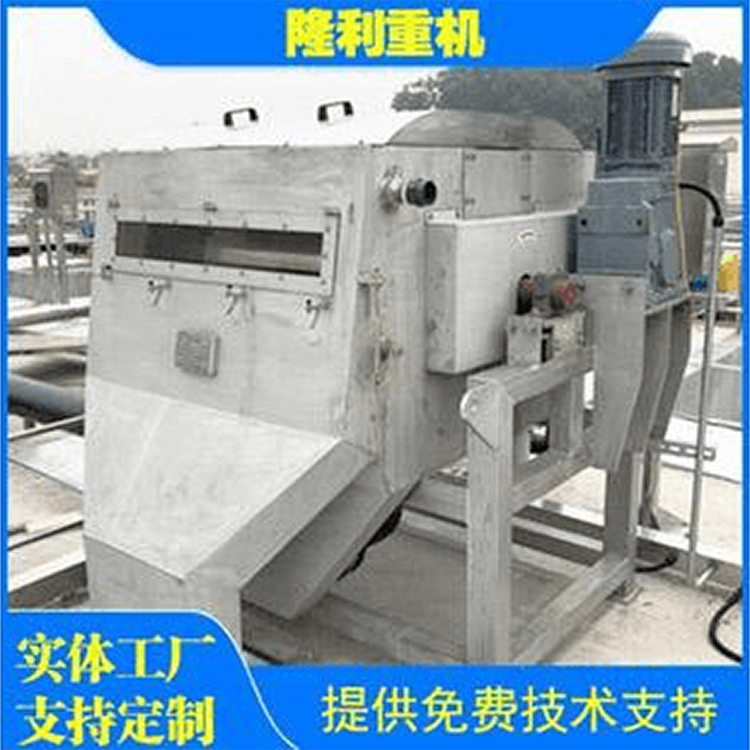
Sludge settled in the sedimentation pond has been partially recycled via the sludge return pump.The 2nd-grade mixed pool continues to participate in the reaction, while another portion is subjected to sludge stripping by a high-shear machine and then enters the magnetic separator for magnetic powder recovery. The recovered magnetic powder is reintroduced into the 2nd-grade mixed pool for further reaction. The remaining sludge is then sent to the subsequent sludge treatment system. The dosing room-prepared PAC and PAM solutions are transported to each dosing point by the dosing pump. PAC is added to the 1st-grade mixed pool, and PAM is added to the 3rd-grade mixed pool.
Section 3: Application Fields
Wastewater Sector: In additionSS, Total Phosphorus; excluding particulate matter and some colloidal COD
(Specifically including: wastewater treatment plant upgrading; advanced phosphorus and suspended solids removal; river black and臭 water treatment; heavy metal wastewater treatment; oil-containing wastewater treatment)
Water Treatment Industry: Phosphorus and Algae Removal, Softening
Section IV: Process Features
High sedimentation rate, capable of achieving a high sedimentation speed of up to 40m/h.
2. High surface load, up to 20 m³/㎡h ~ 40 m³/㎡h.
3. Short stay time, from water in to water out can be as low as 20 minutes.
4. Effectively reduces land area requirements, with sedimentation pond coverage as low as 1/20 of conventional processes.
5. High-efficiency phosphorus removal, with effluent Total Phosphorus (TP) as low as 0.05 mg/L.
6. High transparency with turbidity < 1 NTU.
7. High SS removal rate, effluent < 2 mg/L.
8. Magnetic Powder Recovery Utilization,Low operating costs.
9. Efficiently optimize dosing of chemicals, reducing operational costs; in some cases, this can save up to 15% in dosing volume.
The system is compact (also available as a portable processing unit) and features automated control with simple operation.


b2b.china9.net © Zhongshang 114 Hebei Network Technology Co., Ltd.Address: Room 6009, Oriental New World Center, No.118 East Zhongshan Road, Qiaoxi District, Shijiazhuang City, Hebei ProvincePlatform Service Hotline: 4006299930