


- AllProduct Category
-
Soundproof Room, Quiet Room
Medical Audiometry Room / Pure Tone Audiometry Room
Acoustic Chamber, Soundproof Room
Soundproof Enclosure
Soundproof Enclosure


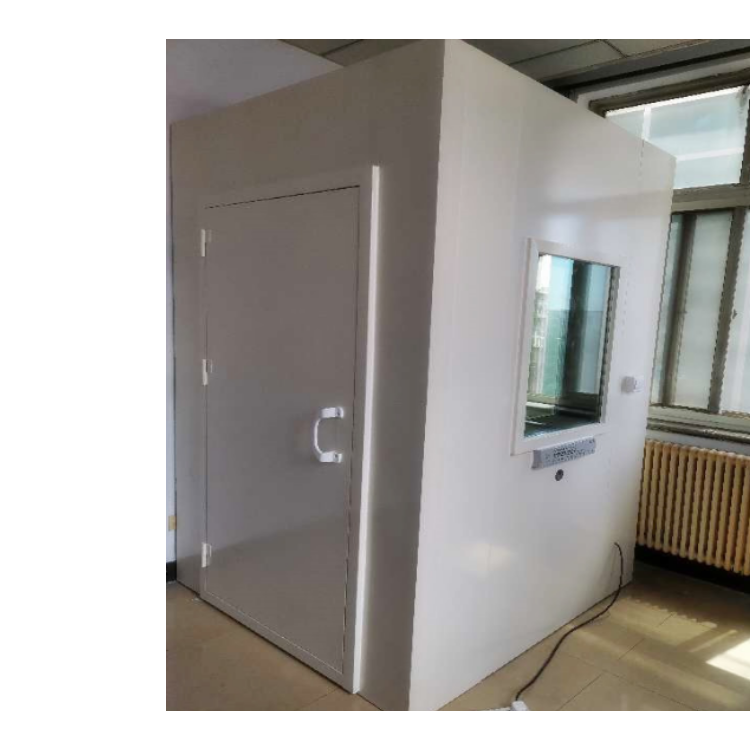


详情描述
Introduction to Half-Soundproof Room:
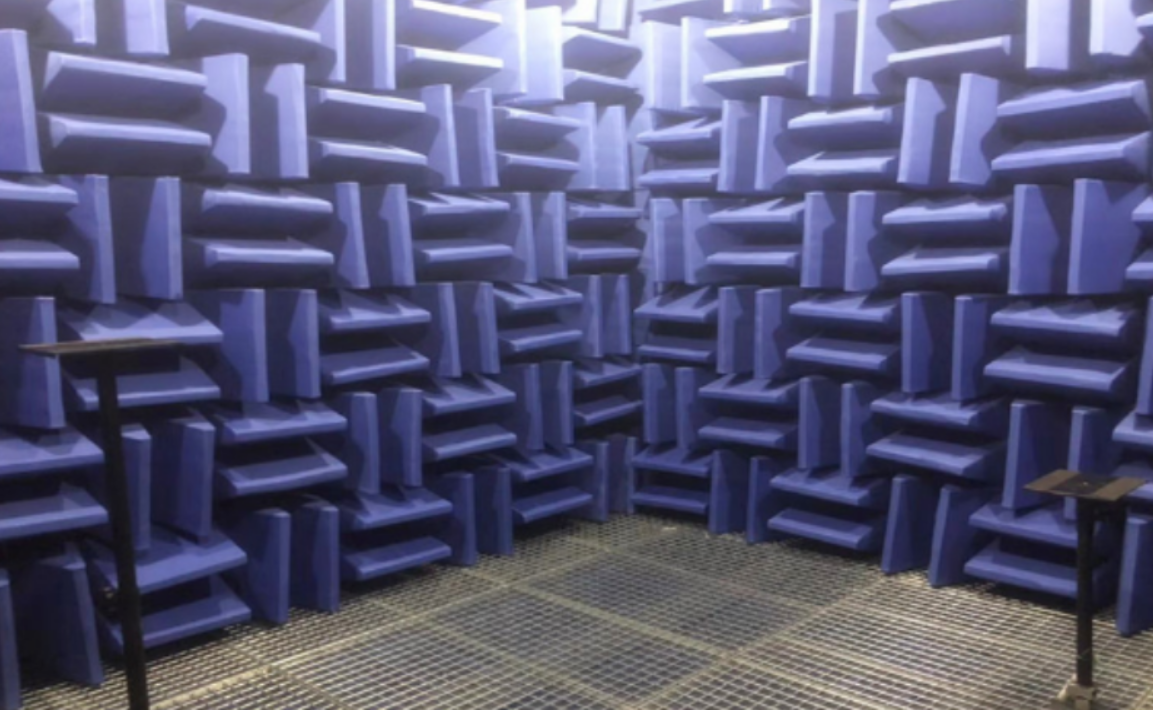
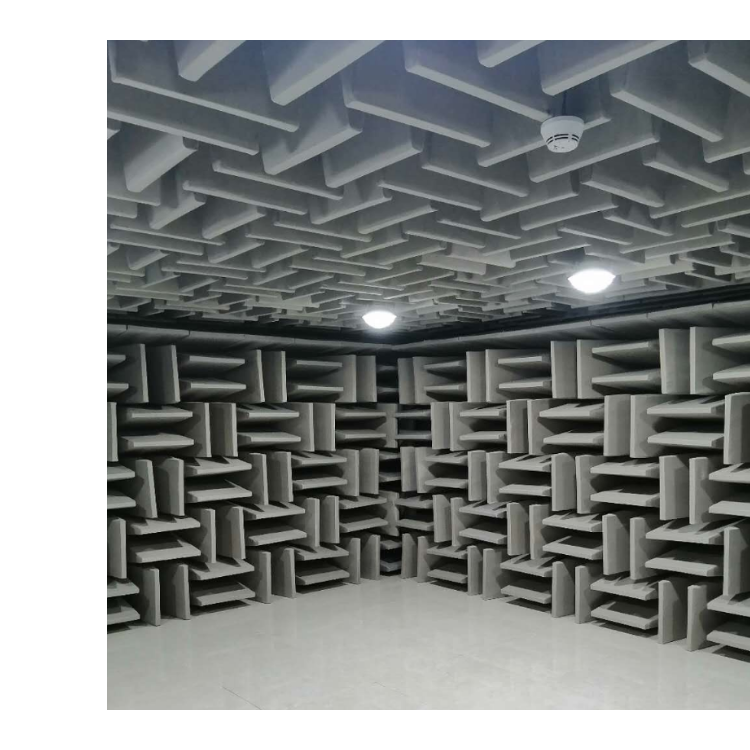
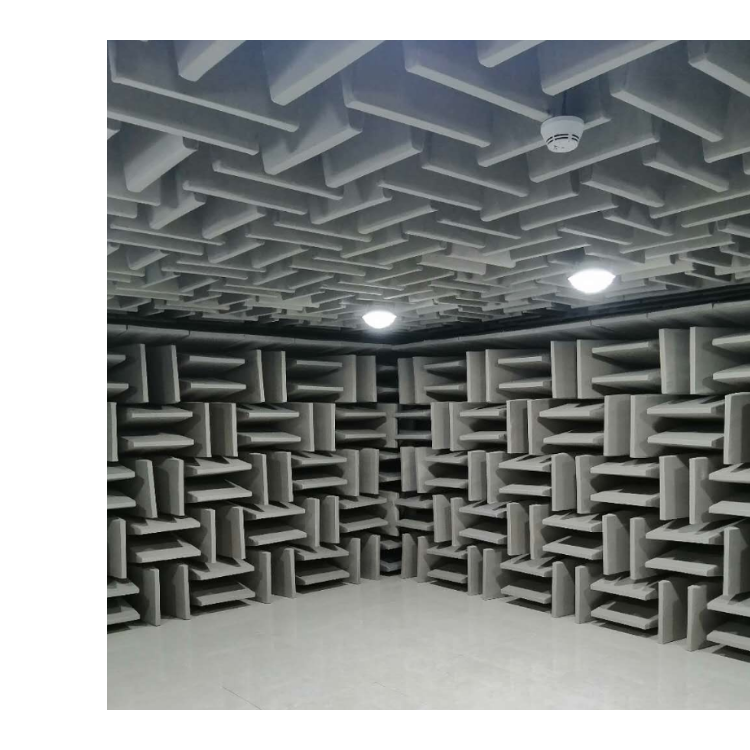
A half-anechoic chamber is a room with a free-field sound, meaning it has only direct sound without reflections, though in reality, the reflections within a half-anechoic chamber are kept as minimal as possible. To achieve the effect of a free-field, the six surfaces of the room must have a high absorption coefficient, which should be greater than 0.99 within the operating frequency range. Typically, sound-absorbing wedges are placed on all six surfaces, with ground-mounted wedges secured by steel rope mesh.
Another structure is the semi-soundproof chamber, differing in that the ground is not treated with sound-absorbing materials but instead is covered with tiles or terrazzo to create a reflective surface. This sound-dampening structure is equivalent to half the size of a soundproof chamber that is twice as tall, hence the name semi-soundproof chamber.
A half-anechoic chamber is an essential experimental site for acoustic experiments and noise testing. Its role is to provide a low-noise testing environment for a free field or semi-free field space. The primary function of an anechoic chamber.
Provide an acoustic free-field environment
2. Low-noise Test Environment
Freely available space:
The primary function of the semi-soundproof military equipment is to provide a free-field or semi-free-field space for acoustic testing. A free-field refers to the scenario where sound waves propagate in an infinite space without any reflecting bodies or surfaces.
In nature, a free-field space involves suspending a sound source in the air, far from any reflective surfaces, allowing sound waves to propagate freely at angles up to 30 degrees. A semi-free-field space is one where there is a full reflective surface within the free space, confining the sound waves to propagate freely only within a 10-degree hemispherical direction. Common semi-free-field spaces include large outdoor parking lots with concrete surfaces, outdoor basketball courts, and airports, etc.
The propagation of waves in free or semi-free space is defined physically as specific.
1. The sound pressure of a point source decreases with distance, which is known as the inverse square law of sound energy.
2. The sound pressure level is equal to the sound intensity level under normal temperature and pressure. This is the theoretical basis for measuring sound power in a semi-anechoic chamber.
Background Noise:
Large outdoor parking lots with cement surfaces, outdoor basketball courts, airstrips, etc., can also provide semi-open spaces, but measurements can be affected by background noise. Imagine, the noise of a refrigerator is at 30B(A) while the environmental background noise is at 45B(AN); it's impossible to measure the refrigerator's noise. Therefore, an acoustic chamber
Another feature is to provide a low background noise environment to meet the requirements of the testing environment.
In accordance with the national standard GB6882-86 "Determination of Sound Power Levels of Acoustic Noise Sources - Precision Method in Anechoic and Semi-anechoic Chambers," within the test frequency range, the background
The noise level is at least 6dB lower than the sound pressure level of the measured source, and up to 15dB lower.
Acoustic specifications of a semi-anechoic chamber:
1. The background noise in the anechoic chamber. The measured background noise is the sum of the instrument's inherent noise and the anechoic chamber's inherent noise.
2. Cut-off Frequency
Acoustic chambers are designed to simulate free field or semi-free field spaces indoors, hence the requirement for wall sound absorption coefficients of 99% or higher. The reflective coefficient for semi-free field surfaces should be above 95%. It is impossible to design an absorber that achieves 100% absorption across the full frequency band (20Hz-20,000Hz) because standard materials are ineffective for high-frequency sound
Long waves are easily absorbed, while low-frequency absorption is related to the thickness of the material (or the length of the spike). The cutoff rate refers to the point at which, above this frequency, the wall's sound absorption peak can ensure a 9% absorption coefficient. In practical engineering, the (semi-)free field space refers to the (semi-)free field within the noise reduction chamber for sound waves above the cutoff frequency.
Field space, the lower the cutoff frequency, the greater the required length of the horn. Generally speaking, the horn length is applicable to the 1/4 wavelength theory.
3. Meets the requirements of International Standard ISO 3745 and National Standard GB 6882-86 (Determination of Sound Power Levels of Noise Sources - Precision Method in Anechoic and Semi-anechoic Rooms).