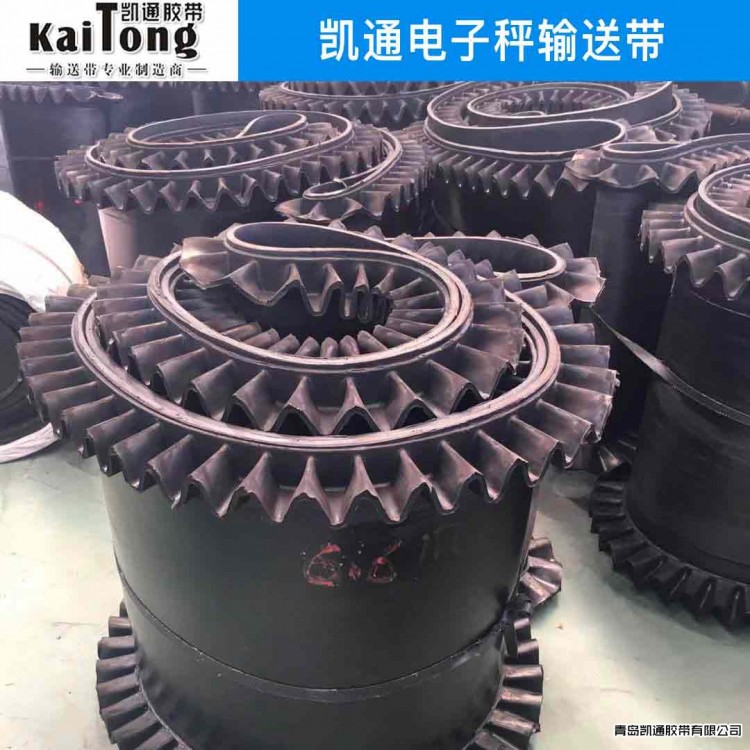
Abrasion-resistant conveyor belts, high-temperature-resis...

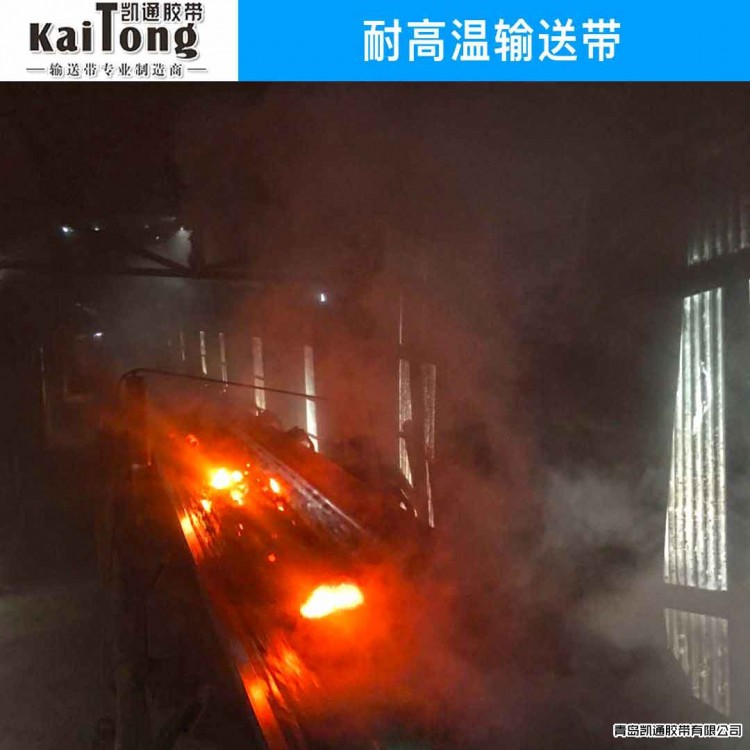
Thermal-resistant conveyor belts, as the name suggests, are a type of conveyor belt designed for use in high-temperature environments. Widely used in industries such as steel, cement, and chemicals, their main structure consists of a high-temperature resistance burning layer, a transition layer, an organic insulation layer, a strong layer, and a thermal-resistant layer.
Feature:The adhesive encounters a micro-porous carbonization layer upon exposure to high temperatures, which is resistant to burning and can prevent the further transmission of heat into the tape body, thereby reducing the internal strength of the tape. During the operation of the tape body, this carbonization layer develops irregular fine cracks, which are then cooled.
Heat-resistant conveyor belts are primarily used for transporting high-temperature materials such as sintered ore, hot coke, clinker, and hot castings.Based on the primary manifestations of heat resistance and the different heat resistance levels, ethylene propylene diene monomer (EPDM) or styrene butadiene rubber (SBR) are used as cover rubbers, while high-strength, high-permeability polyester canvas or cotton canvas are used as the reinforcing layer. Heat-resistant glass fabric can be added between the cover rubber and the frame layer to extend the service life of the heat-resistant belt. According to customer requirements, the belts can be manufactured in a ring shape. The heat-resistant conveyor belt consists of multiple layers of rubber, cotton canvas (polyester cotton fabric), covered with heat-resistant or heat-resistant rubber on both sides, bonded together through high-temperature vulcanization. It is suitable for conveying hot coking coal, cement, slag, and hot castings at temperatures below 175°C.
Ways to Enhance the Efficiency of Heat-Resistant Conveyor Belts
The diameter of the drive roller on the conveyor belt and its relationship with the belt's layers, as well as the matching of the drive and redirecting rollers, and the requirements for the roller groove angle should be selected rationally according to the design specifications of the conveyor.
2. The feeding direction should align with the conveyor belt's movement direction. To reduce the impact on the conveyor belt during material descent, a chute should be used to minimize the material drop distance. For the feeding section of the conveyor belt, the spacing between idlers should be shortened, and buffer idlers should be employed to prevent material leakage. The conveyor belt should be equipped with soft, moderate挡料板 to avoid overly rigid挡料板 that could scratch the conveyor belt's surface.
3. Prevent the conveyor belt from starting under load.
4. Belt deviation occurred; timely corrective measures should be taken.
5. It is not advisable to connect conveyer belts of different types, specifications, or layers together; their joints are best sealed using adhesive methods.
6. The type, structure, specifications, and number of layers of the conveyor belt should be selected rationally based on the operating conditions.
7. Belt conveyors should generally not operate at speeds exceeding 2.5 m/s. For materials with large particle sizes and high abrasiveness, as well as those using fixed buckets for unloading, low speeds are recommended.
8. During the operation of the conveyor, if there are missing idlers, they should be added and repaired promptly; if idlers are covered by materials, it may cause poor rotation, so prevent material from getting stuck between the roller and the belt. Pay attention to the lubrication of the moving parts of the conveyor belt, but avoid oiling the belt.
9. To prevent the conveyor belt from being blocked by frames, pillars, or bulky materials, avoid abrasion and tearing. When local damage to the conveyor belt is detected, promptly repair it with artificial cotton to prevent further expansion.


b2b.china9.net © Zhongshang 114 Hebei Network Technology Co., Ltd.Address: Room 6009, Oriental New World Center, No.118 East Zhongshan Road, Qiaoxi District, Shijiazhuang City, Hebei ProvincePlatform Service Hotline: 4006299930