


- AllProduct Category
-
Fully Automatic Softening Water Equipment
Disk Filter
Fiber Disc Filter
Screw Press
Shallow Filter
Medication Equipment Series
Wastewater Series
Deoxygenator
Suction Mud Machines, Grating Series
Aeration Series
Eco-Friendly Accessories Line





详情描述
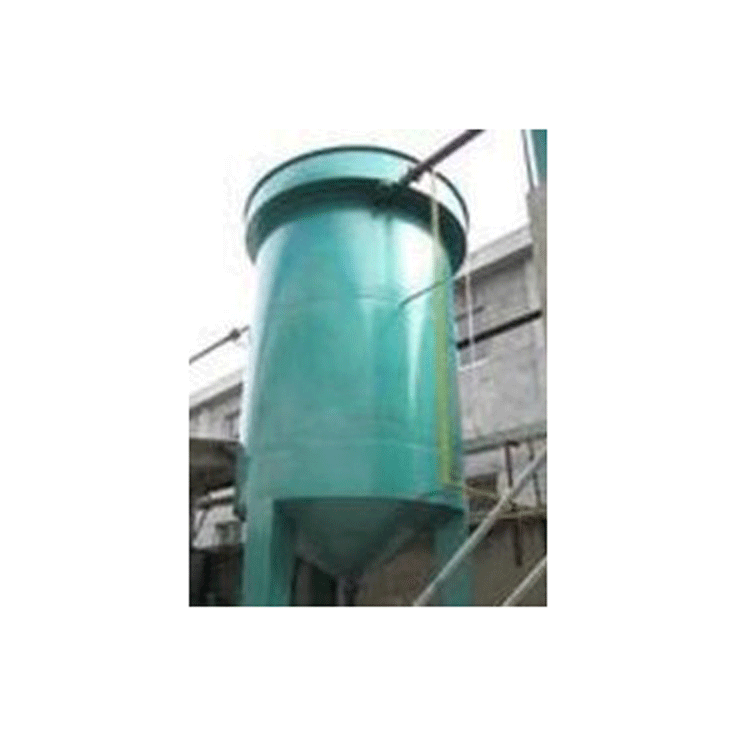
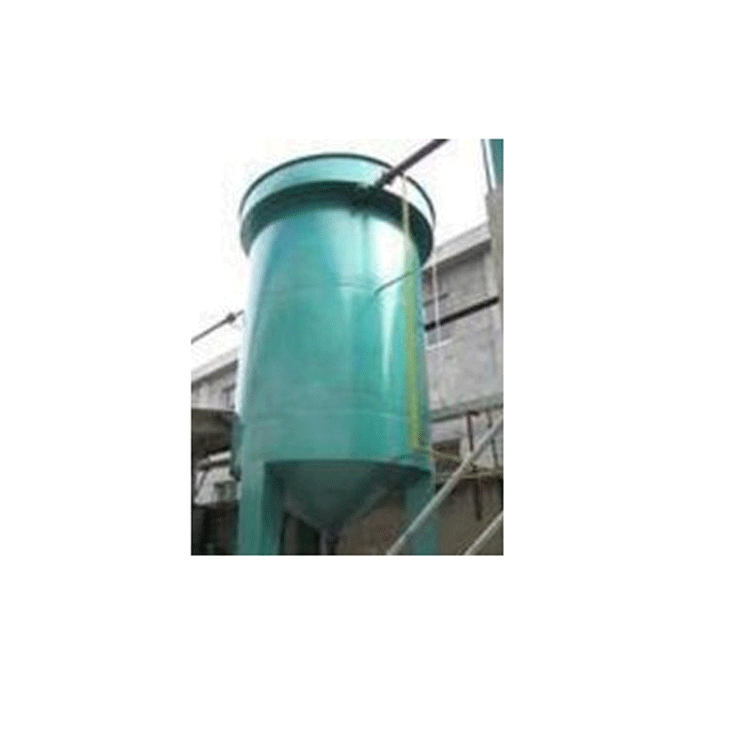
Vertical Flow Sedimentation Tank
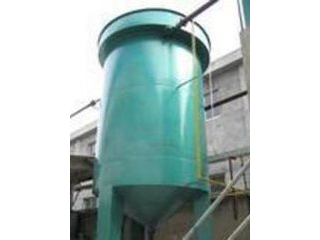
Vertical Flow Sedimentation Tank Introduction
Vertical flow sedimentation tank, also known as a vertical sedimentation tank, is a sedimentation tank where the wastewater flows vertically within the tank. The tank's planar shape is circular or square, with water entering from the center of the tank through an intake pipe from top to bottom (the velocity in the pipe should be less than 30 mm/s). Below the pipe, an umbrella-shaped baffle is installed to evenly distribute the wastewater in the tank and allow it to rise slowly across the entire water cross-section (typically 0.5-0.7 mm/s for domestic wastewater, with sedimentation time of 1-1.5 hours), where suspended solids settle into the conical sludge sump at the bottom. Clarified water overflows from the tank's perimeter through an overflow weir. Baffles and float sludge channels are placed before the weir to retain floating solids and maintain water quality. One side of the tank is equipped with a sludge discharge pipe (diameter greater than 200 mm) to periodically expel sludge using hydrostatic pressure. The advantages of the vertical flow sedimentation tank include a small footprint, easy sludge removal, but it has the drawback of being deep, difficult to construct, and expensive. It is commonly used in wastewater treatment plants with a flow rate less than 20,000 m3/day. The theoretical basis is that in a vertical flow sedimentation tank, the water flow direction is opposite to the particle sedimentation direction, and the retention rate is equal to the upward water flow speed. Particles rising at the sedimentation speed remain suspended in the mixture to form a suspended layer, intercepting and filtering rising particles. Therefore, the efficiency of the vertical flow sedimentation tank is higher than that of the horizontal flow sedimentation tank.
Operating Principle
The Working Principle of Vertical Flow Sedimentation Tanks: In a vertical flow sedimentation tank, wastewater flows vertically downward at a velocity v. The suspended particles in the wastewater exhibit three types of movement: 1. When the settling velocity u of the particle is greater than v, the particle will settle downward at a rate of u-v, thereby being removed; 2. When u equals v, the particle is in a random state, neither sinking nor rising; 3. When u is less than v, the particle will not settle and will be carried away by the upward flowing water.
Structure
The design of the vertical flow sedimentation tank: The horizontal plane of the vertical flow sedimentation tank can be circular, square, or polygonal. To ensure uniform water distribution within the tank, the diameter should not be too large, generally between 4-7 meters, not exceeding 10 meters. To reduce the total height of the tank, a multi-chamber sludge discharge method can be employed in the sludge zone. The ratio of the diameter to the effective water depth of the vertical flow sedimentation tank is usually not more than 3.
询价单


