


- AllProduct Category
-
Fully Automatic Softening Water Equipment
Disk Filter
Fiber Disc Filter
Screw Press
Shallow Filter
Medication Equipment Series
Wastewater Series
Deoxygenator
Suction Mud Machines, Grating Series
Aeration Series
Eco-Friendly Accessories Line





详情描述
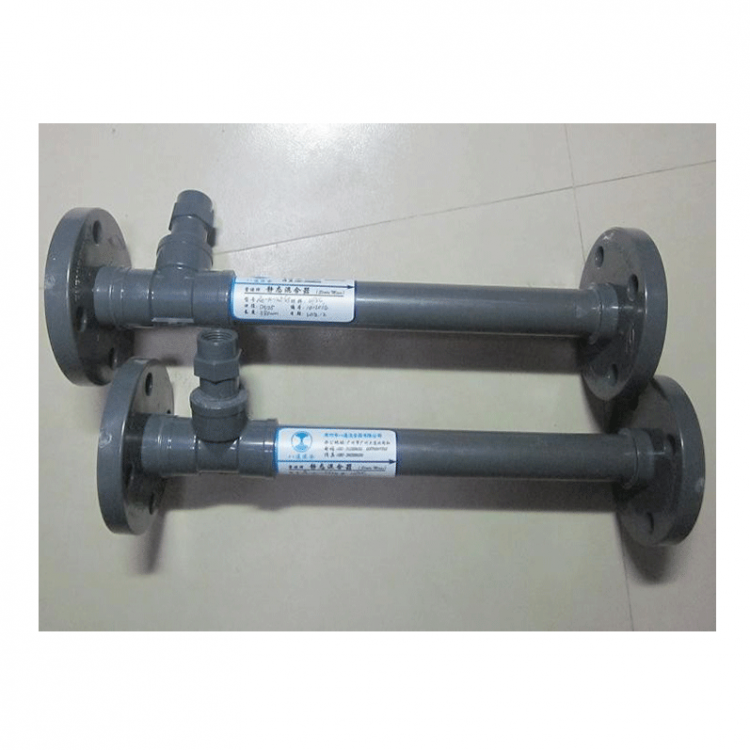
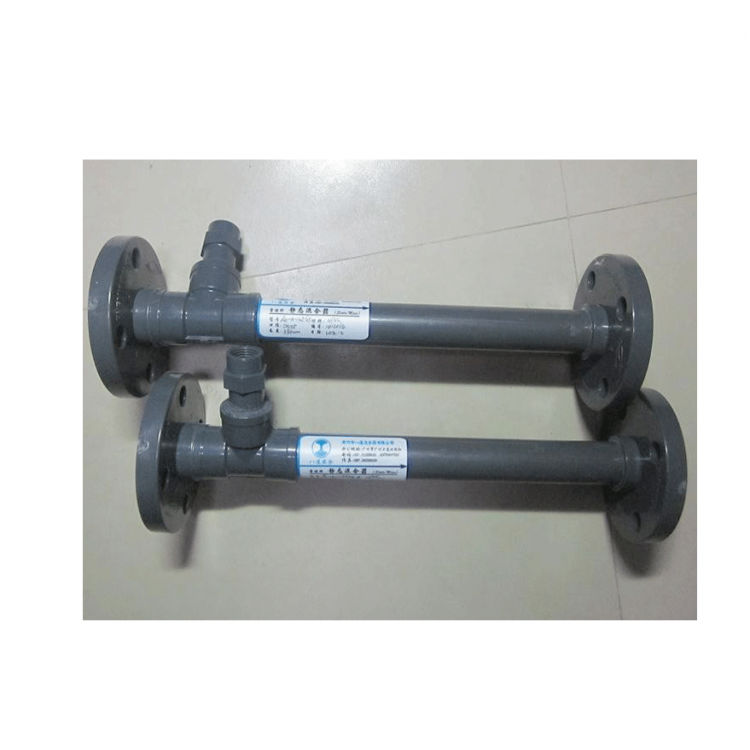
Pipe mixer

Product Introduction
Pipe mixers, also known as tubular static mixers, are applicable in water supply, drainage, and environmental protection projects for dosing various coagulants, flocculants, ozone, liquid chlorine, and acid-base neutralization, as well as gas-water mixing. They are equipment designed for instant mixing of water with various chemicals, featuring rapid mixing, simple structure, and compact size. Without external power, water flowing through the pipe mixer generates分流, cross-mixing, and reverse vortex effects, quickly and evenly distributing the added chemicals throughout the water body, achieving instant mixing. The mixing efficiency reaches up to 90-95%, potentially saving chemical usage by about 20-30%, which is of great significance for improving water treatment effectiveness and conserving energy.
Construction Principle
Pipe mixers are typically composed of three mixing units (additional units can be added based on the properties of the mixing medium). Each mixing unit consists of a fixed helical blade twisted 180° (or a 90° cross-blade), available in left-handed and right-handed options. The rotating direction of the helical blades in adjacent units is opposite, with a 90° misalignment. To facilitate installation, the glass fiber reinforced plastic cylinder is designed in two semicircular sections, both ends connected with flanges. The gaps between the cylinder sections are bonded with epoxy resin, ensuring tight seals. The manufacturing process for pipe mixers made of other materials may vary.
The spiral blades of the pipeline mixer are stationary; the movement is generated by the material or medium being mixed. The fluid passes through it, producing a pressure drop without requiring external energy. It primarily involves flow segmentation, radial mixing, and reverse rotation. The two media continuously and vigorously intermix and diffuse, achieving the goal of mixing.
Application Range
1. Add various coagulants and flocculants for mixing during urban domestic water and industrial water supply treatment.
2. Add various coagulants and flocculants for mixing during the treatment of urban domestic wastewater and industrial wastewater.
3. Disinfection treatment with gas-water mixing, addition of liquid chlorine, ozone, and other chemicals in water supply and drainage, and environmental protection engineering.
4. Acid and alkali neutralization mixing in industrial wastewater.
5. Mixed and homogenized treatment of various industrial wastewater types.
Design Parameters
1. Pipe mixers are selected based on economic flow rates, typically ranging from 0.9 to 1.2 m/s, with flow rates up to 1.5 m/s for diameters over 500mm. When possible, increasing the diameter by 50 to 100mm can reduce head loss.
2. The basic assembly of pipeline mixers is generally considered in three sections, with a head loss of approximately 0.4 to 0.6 meters. The number of sections can also be increased or decreased based on the mixing medium.
3. Water pressure inside the pipe mixer is considered at 0.1 MPa, but can also be adjusted for equipment processing based on actual pressure.
Product Installation
1. Pipe mixers can be installed without directional restrictions, allowing for horizontal, vertical, or any other combination of orientations.
2. When pipeline mixers are installed on overhead pipelines, they must be secured with pipeline supports; buried pipelines can be installed in maintenance wells.
3. The pipeline for adding chemicals is designed by the user, and can be installed according to the national water supply and drainage standard drawings. However, the flow velocity in the pipe should be greater than 1.0 m/s, and the pressure in the pipe should be less than 0.2 MPa (FRP material).
4. The addition points of various chemicals should be at the front of the pipeline mixer mixing unit, and more than 0.3 meters.
询价单


