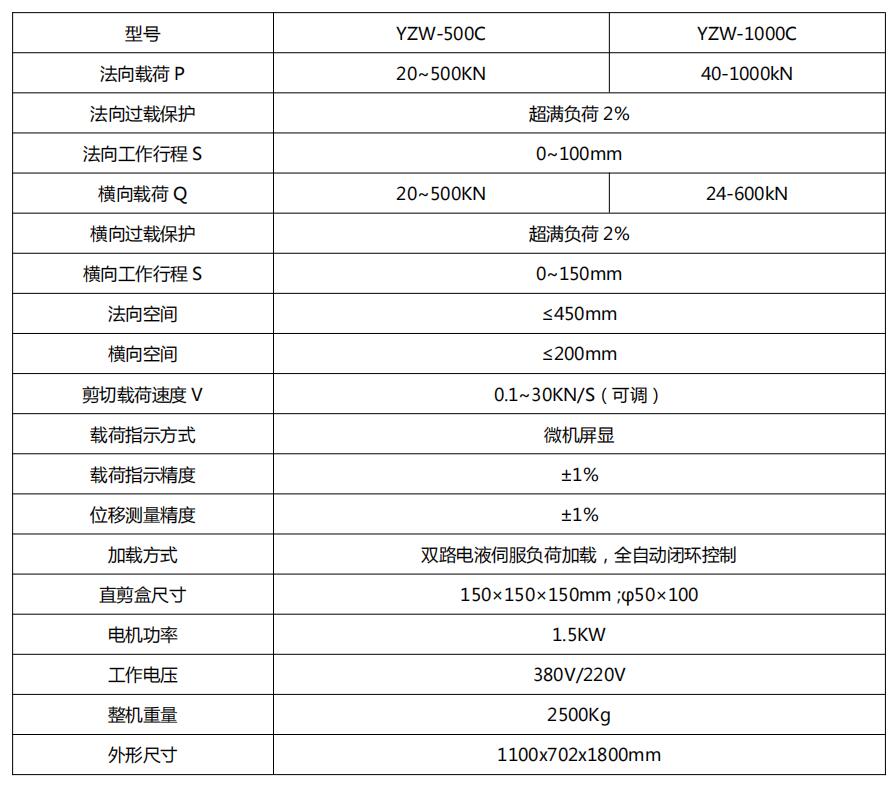
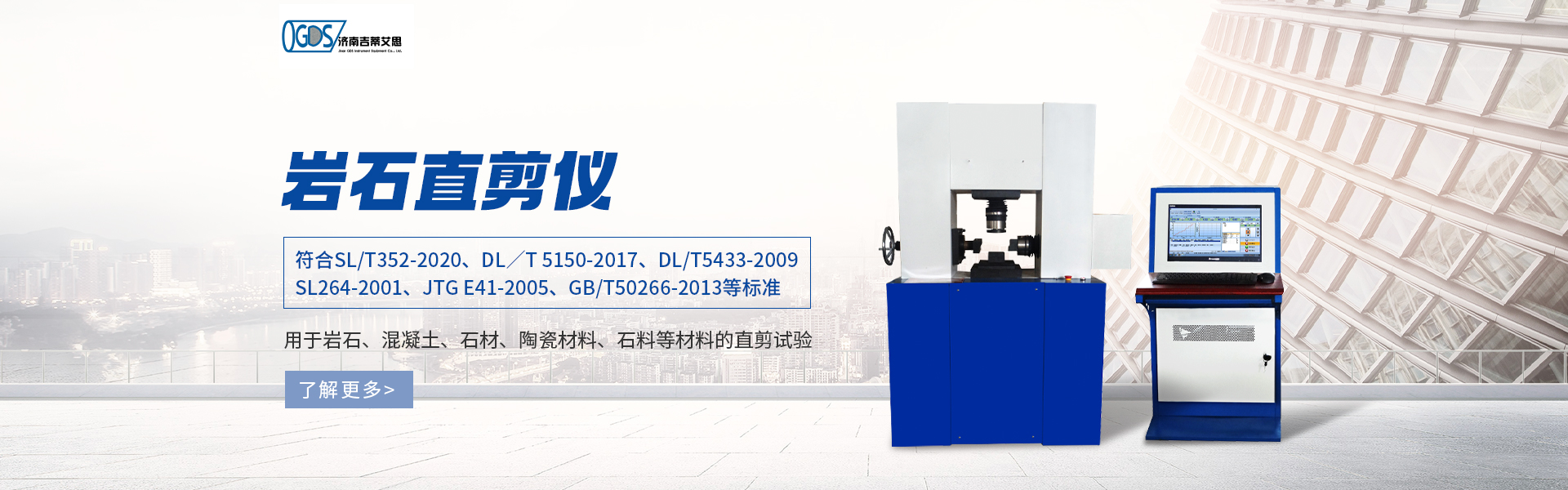


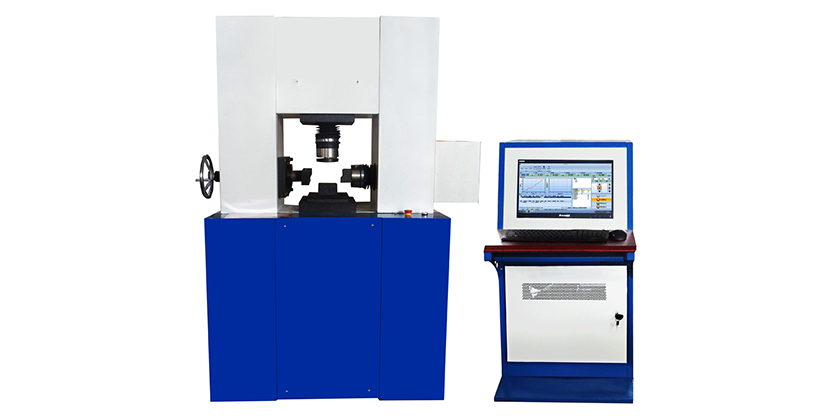
The YZW-C series microcomputer-controlled electro-hydraulic servo concrete direct shear tester is developed in accordance with the national industry standards SL 352-2006 "Code for Tests on Hydraulic Concrete" and DL/T 5150-2017 "Code for Tests on Hydraulic Concrete". This testing machine, based on existing products both domestically and internationally, incorporates dual-channel electro-hydraulic servo technology for loading (also capable of independently using a single vertical or horizontal load channel to complete uniaxial loading tests), dual-sensor technology, microcomputer control, and software processing to develop a new generation of concrete testing equipment. It is suitable for direct shear tests on rock structural surfaces (such as joint surfaces, bedding planes, slice planes, and fissure surfaces), the rock itself, and the bonding surfaces between concrete or mortar and rock, as well as for shear strength tests at the interface between concrete and other materials.
The control unit of this machine is composed of a computer and a servo hydraulic pump control system, featuring dual-channel closed-loop control for both (normal @ horizontal) stress and (normal @ horizontal) displacement. It can perform multi-level holding and multi-level shearing tests during the testing process. With the addition of auxiliary tools, the independent and open-type testing system further expands the multifunctionality of this equipment. The instrument has a compact design, attractive appearance, simple maintenance, and easy operation. The entire testing process can be automatically controlled by a microcomputer under WIN7/10. It is an original domestic design with internationally advanced standards. It is used for water conservancy and hydropower (geological) surveys, colleges and universities, and other scientific research institutions.
Key Features
Fully digital closed-loop control system and software features
1. The fully digital closed-loop control system consists of a master unit, a slave unit, and signal acquisition templates. The master and slave units are connected via a universal RJ45 cable (Ethernet cable) for communication. The control method using the master and slave units directly controls the hydraulic system for normal operation. Ensures system safety and long-term stable loading for testing. Features force and displacement collection capabilities, as well as emergency stop functions.
2. Sensor online calibration with automatic correction. The software features an automatic zeroing system for displacement and force values, eliminating inconsistencies due to human reading errors.
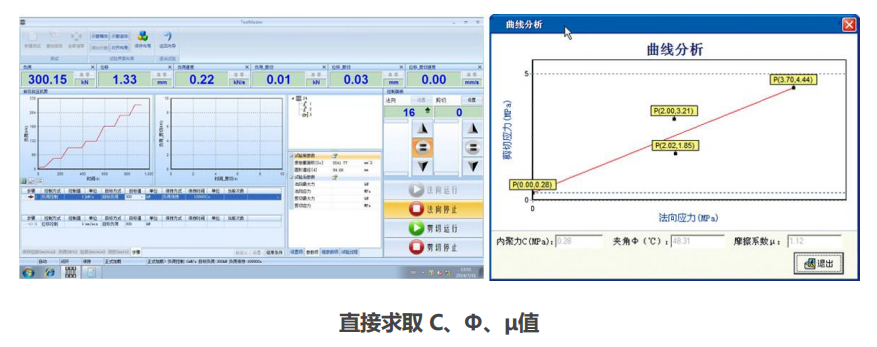
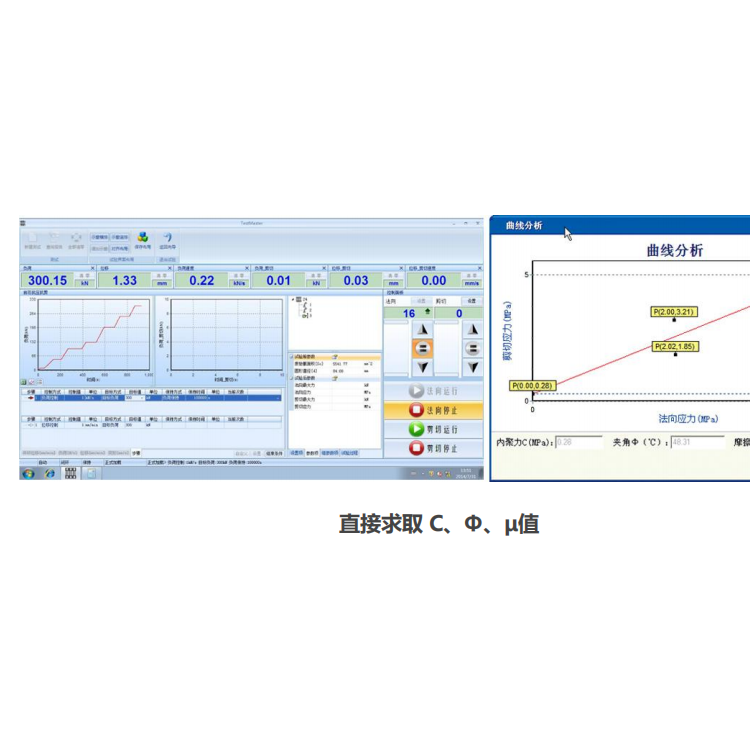
3. Computer screen display: Parameters such as speed, force value, displacement, etc., are all displayed on the computer. Real-time display of the current normal and shear force values, peak values, test process information, and current displacement, with automatic analysis and calculation in the database. The test process records the test curve in real-time, displays and saves it, with high-speed sampling; directly calculates the values of C, Φ, and μ.
4. Users can set control system parameters according to different experimental models. The parameters such as area, height, and environmental temperature for each test group can be changed or filled out based on actual conditions.
5. System Security Protection Settings. Overload protection is in place; if the force or displacement exceeds the rated theoretical value of the testing machine, the system will automatically unload and stop the test.
6. System Control Method: Force control or displacement control. Capable of controlling the test process, allowing for the selection of load levels, load steps, load amplitude, and load rate.
7. Software Functionality: Highly customizable. The testing process can be edited on-site by the operator according to actual conditions, simple and convenient. To accommodate various ever-changing requirements or to run non-standard experiments, the software utilizes an open software architecture. You just need to tailor it to your specific testing needs. After setting the loading path, load objects, and control objects, the superior machine automatically downloads and runs the loading process on the sub-machine, fulfilling your set testing requirements.
8. Display and print related curves of historical test data. Reports can include: shear stress-shear displacement curve, shear stress-normal displacement, shear stress-normal stress curve. It can simultaneously display stress-strain, force-time, force-displacement, and other curves, with the ability to arbitrarily extract feature points on the curves. The data and report processing features provide users with a specialized report editing tool for graphic layout, featuring flexible operation and ease of learning. It facilitates the printing of test curves and values.
9. Storage of Test Data. Test data can be saved in commonly used formats as per the user's requirements, such as: text format, EXCEL, ACCESS, etc.