



详情描述
Product Introduction:
In recent years, the extensive application and proven effectiveness of geosynthetic materials in civil engineering, particularly in flood control and emergency rescue projects, have garnered great attention from engineers. Normative technical requirements have been established for the application of geosynthetic materials, covering aspects such as seepage prevention, filtration control, drainage, reinforcement, and protection, significantly speeding up the promotion and application of new materials.
Properties of Composite Geomembrane:
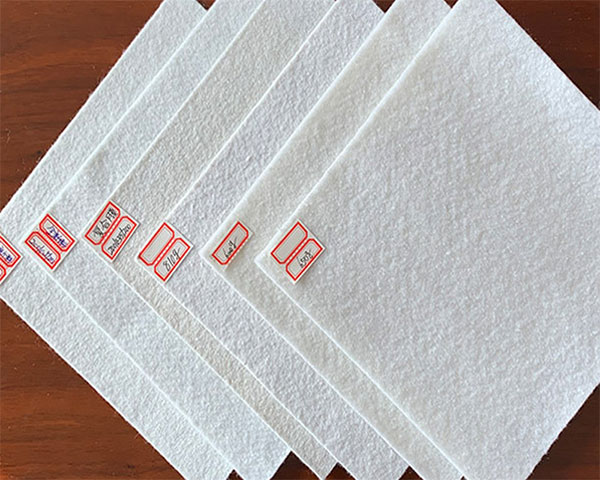
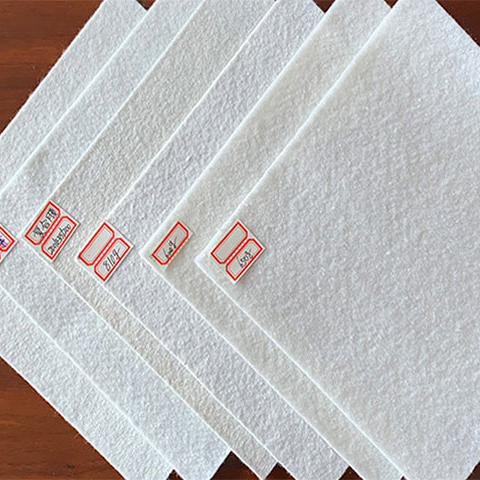
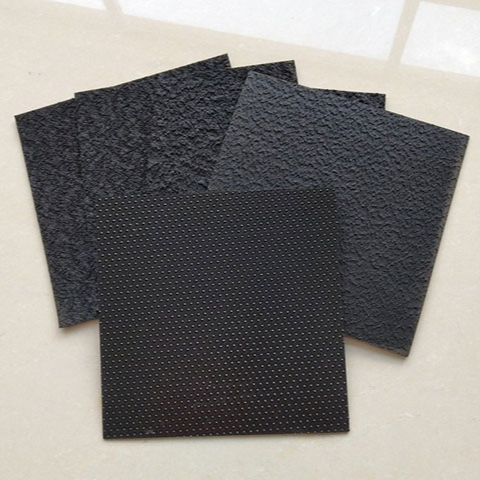
High tensile, tear-resistant, and burst-resistant mechanical properties; products feature high strength, excellent elongation, large deformation wood volume, good resistance to acids and alkalis, corrosion resistance, aging resistance, and excellent impermeability. Suitable for civil engineering needs such as waterproofing, isolation, reinforcement, and crack prevention in water conservancy, municipal, construction, transportation, subway, tunnel, and infrastructure projects. Made with high polymer materials and added anti-aging agents during the production process, they can be used in unconventional temperature environments and are commonly used for waterproofing treatment of embankments, drainage ditches, and for preventing pollution in waste disposal sites.
Composite geomembrane construction:
Surface Preparation: The base must be thoroughly cleaned, as this is crucial for ensuring the waterproofing effect. Especially for debris like sharp stones and roots, they must be completely removed. The base should not have any local unevenness. The cleaned surface should be compacted with a tamper or tamping board to ensure it is dense and level.
2. Composite Geomembrane Laying
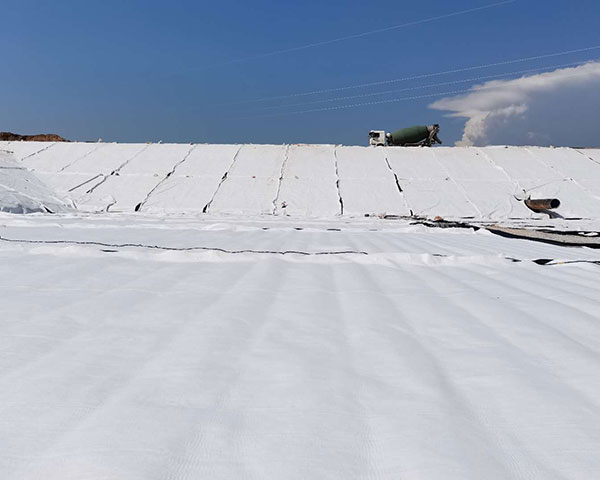
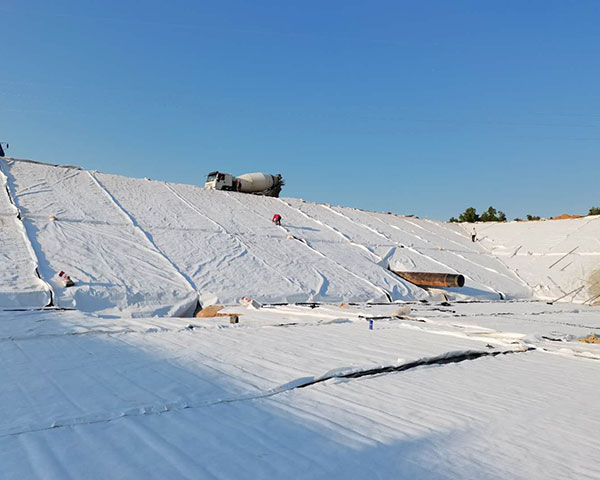
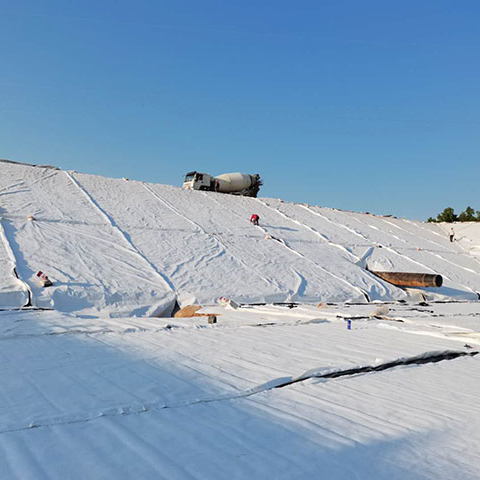
When laying the film, always install it from bottom to top. Ensure the film is flat and tightly bonded between layers and with the base surface, but avoid stretching it too tightly; it should be slightly loose. Do not leave any air bubbles under the film. Since it's prone to be blown by the north wind before the protective layer is laid, the area of the film laid at one time should not be too large. Cover the protective layer soil while laying the film.
3. Composite Geomembrane Welding
The joint treatment of composite geomembranes is a critical process, directly affecting the anti-seepage effect. Common joint methods include: ①Overlap: the overlap width should be greater than 15cm; ②Hot welding: suitable for the geomembrane base material later on, with a weld overlap width of not less than 5cm. ③Adhesive bonding (easier to delaminate in long-term immersion environments, with relatively poor anti-seepage effect).
4. Protective Layer and Face Guard
The protective layer soil material must be sieved through, with no large particles allowed, as they can easily puncture the geotextile membrane. The soil material must be compacted densely with a tamper. When backfilling the protective layer and constructing the stone facing, it must be gently placed to avoid damaging the geotextile membrane.
5. Perimeter Boundary Treatment
The edge junction treatment requires a tight connection between the geotextile membrane and the surrounding soil, sealing off the infiltration entry points, intercepting lateral leakage paths, and preventing water from seeping into the bottom of the geotextile membrane to form bubbles. This could cause the membrane to burst when the water level drops. Therefore, it is necessary to excavate a water intercepting trench around the edges and bury the geotextile membrane inside it.
Composite geomembrane, construction and technical requirements for 1-bias-1-membrane and 2-bias-1-membrane.