




- AllProduct Category
-
Distillation Tower
Scraper Evaporator Series
Membrane Evaporator Series
MVR Evaporation Equipment
Complete System Engineering Set
Crystallizer Series
Wastewater Treatment System
Reactor Mixing Equipment
Heat Exchanger Condenser Equipment
Dry Dispersal Equipment
Tanks/Fermentation Extraction Filtration Equipment
Concentrating Evaporation Equipment




详情描述
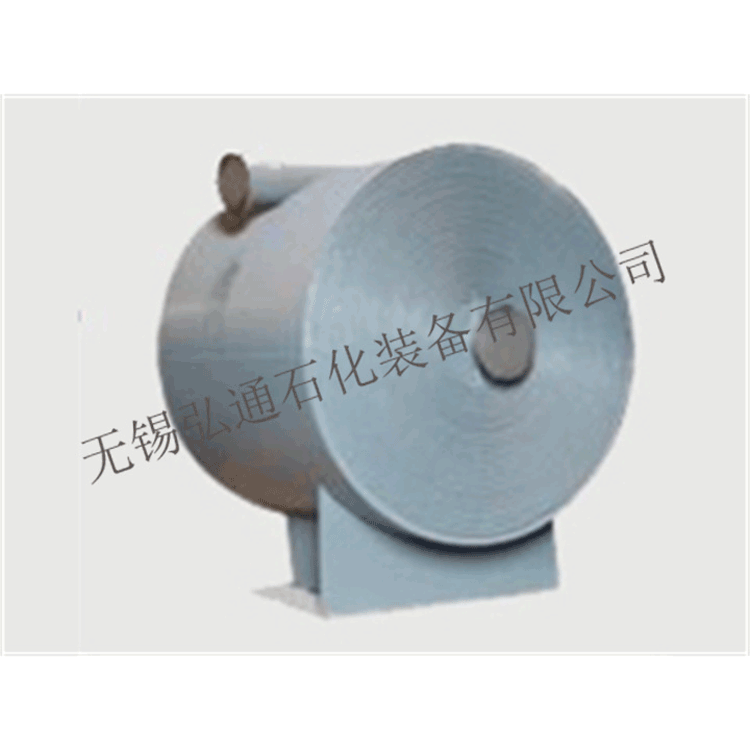
Spiral Plate Heat Exchanger

Product Overview
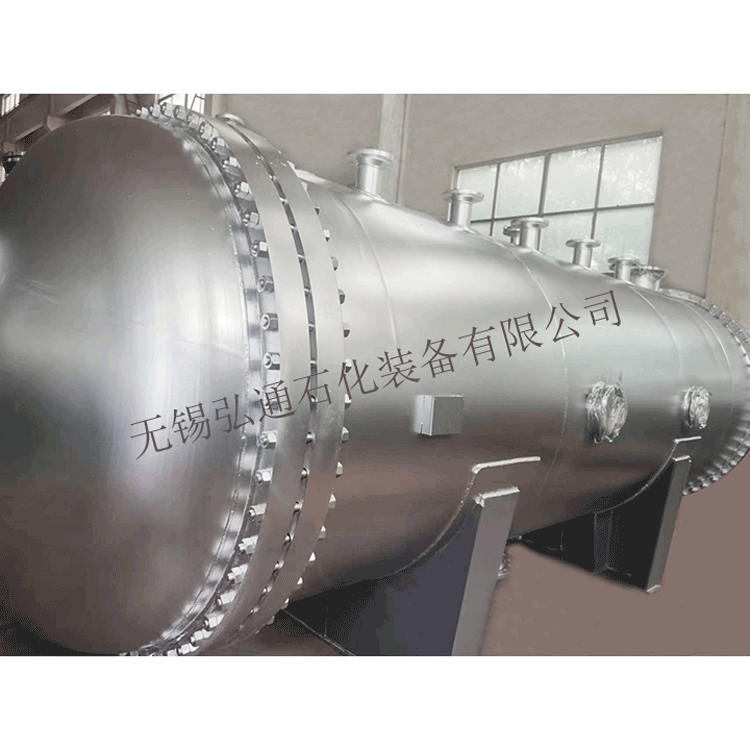
Spiral plate heat exchangers are a type of heat exchange equipment suitable for vapor-vapor, vapor-liquid, and liquid-liquid heat transfer. They are used in industries such as chemicals, petroleum, solvents, food, light industry, textiles, metallurgy, rolling steel, and coking. They can be categorized into non-disassemblable (Type I) spiral plate heat exchangers and disassemblable (Type II, Type III) spiral plate heat exchangers according to their structural forms.
Spiral-plate heat exchanger is a kind of high efficient heat exchanger device which is applicable to vapor-vapor, vapor - liquid, liquid – liquid heat transfer to liquid. It is suitable for chemical, oil, solvents, pharmaceutical, food, light industry, textile, metallurgy, steel rolling, coking and other industries. It can be divided into non-detachable type (Ⅰ) and detachable type (Ⅱ, Ⅲ) spiral plate heat exchangers according to the structural form.
Structure and Performance
1. This equipment is suitable for liquid-liquid, gas-gas, and gas-liquid heat transfer, which can be used in steam condensation and liquid evaporation heat transfer. It is applicable to various industrial sectors such as chemicals, petrochemicals, machinery, electricity, light industry, and textiles.
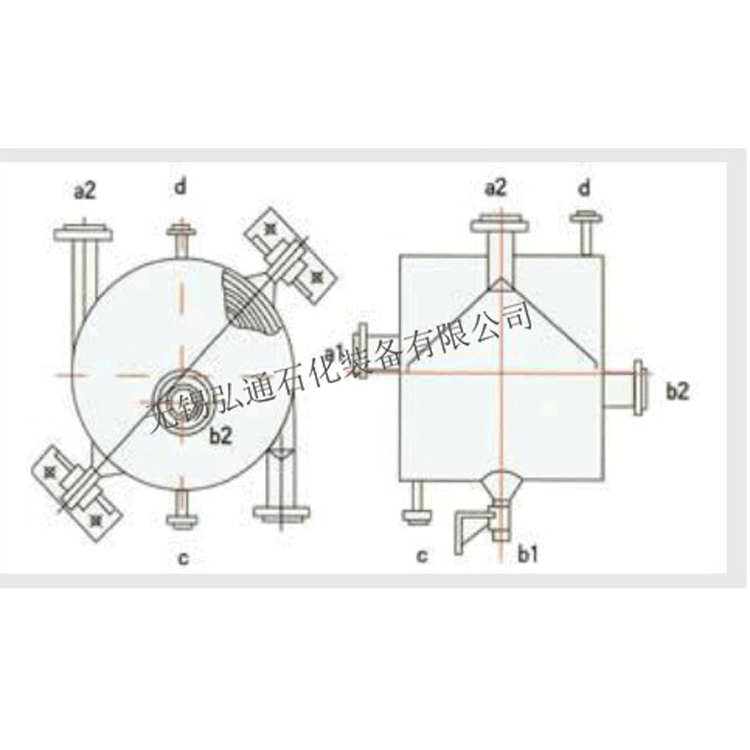
2. This equipment is formed from two steel plates rolled into two even spiral channels, allowing for full counter-current flow with two heat transfer cutoffs. It is suitable for heat transfer with small temperature differences, facilitates the recovery of low-temperature heat sources, and can accurately control the outlet temperature.
3. The transition on the housing is tangential, with minimal local resistance. The helical passage has a uniform curvature, and there is no significant direction change of the fluid within the equipment. The total resistance is low, thus allowing for an increased design flow rate, which enhances its heat transfer capability.
4. The ends of the helical channel are welded and sealed, offering excellent sealing performance and reliable structure.
5. Not easy to repair, especially difficult to fix when internal panels are problematic. Some factories remove all welds at both ends of the equipment, then reflatten the panels and weld them back before rolling them again. This process consumes an excessive amount of labor, and it's important to choose spiral plate heat exchangers for their corrosion resistance.
6. Mechanical cleaning is not recommended. Production practice has proven that spiral plate heat exchangers are less prone to clogging compared to conventional tube bundle heat exchangers. Particularly, suspended particles like silt and small shells are not easily deposited within the spiral channels. The analysis of the reasons includes: Firstly, because it is a single-channel where impurities can settle, but once a recirculating flow is formed, it is easily flushed away. Secondly, there are no dead corners in the spiral channels, making it easy for impurities to be washed out.
7. Due to the presence of spacer columns supporting the channel spacing within the helical channel, there must be no fibrous impurities (cotton yarn, straw sticks, leaves, etc.) entering the interior of the heat exchanger.
Maintain strict control of the cooling water outlet temperature below the scaling temperature.
9. The commonly used cleaning methods include steam blowing and alkali washing. Steam should be blown into the inlet to expel impurities from the equipment, and many manufacturers believe this to be an effective approach.
1. this equipment is suitable for liquid - liquid, gas-gas, gas - liquid convection heat transfer which can be used for vapor condensation and liquid evaporation heat transfer. Therefore it is applicable in chemical industry, petroleum, medicine, machinery, electric power, light industry and textile industries, etc.
2. this equipment is composed by two pieces of steel plates to form two uniform spiral channels. Two heat transfer cut-off ways may realize fully reversed flow which is applicable for heat transfer with small temperature differential. Therefore it is easy for low temperature heat source recycling and accurate outlet temperature control.
3. the connection pipe on the shell is of tangential structure with small partial resistance. The curvature of spiral channel is even and the fluid has no large direction change inside the equipment. Therefore the total resistance is small which may increase design flow speed and realize higher heat transfer ability.
4. The end surface of spiral channel is sealed by welding, therefore the sealing performance is good with reliable structure.
5. It is not easy for inspection and repairing, especially when problems occur on inner plate. Some factories will cut off the weld joints at two ends of the equipment and spread the plate for welding repairing before rolling. However, this may takes a lot of time. Therefore corrosion proof is important when use spiral plate heat exchanger.
6. Mechanical cleaning is not allowed. It is proved by production practice that compared with general tube type heat exchanger, it is not easy to be blocked, especially, by the silt, small shell and other suspended particles and impurities which are not easy to be settled down in the spiral channel. The reasons are: 1. these impurities are settled down in single-direction channel and the impurities will be flushed away once rotating flow is formed. 2. There’s no dead corner inside the spiral channel, therefore the impurities are easy to be flushed away.
7. There are spacing columns inside the spiral channel to support distance in the channel, therefore fiber shaped impurities (cotton yarn, grass stick and leaves, etc.) are not allowed to enter inner part of the heat exchanger.
8. Temperature of cooling water outlet shall be strictly controlled below the scaling temperature.
9. The commonly used cleaning method is steam blowing off or alkaline cleaning. Steam blowing is to blow the impurities out of the equipment which is a effective method believed by many factories.
Product Advantages
Spiral plate heat exchangers are suitable for industries such as chemicals, petrochemicals, solvents, food processing, light industry, textiles, metallurgy, steel rolling, and coking.
The non-separable spiral plate heat exchanger is designed according to standard basic parameters and dimensions, featuring simple manufacturing, low cost, compact size, and excellent heat transfer performance. However, it also has its drawbacks, such as the inability to be mechanically cleaned and difficulty in repair when damaged. The selector should choose the specific equipment based on the actual situation of the project for effective use.
The spiral plate heat exchanger is suitable for chemical, petroleum, solvent, pharmaceutical, food, light industry, textile, metallurgy, steel rolling, coking and other industries.
The non detachable spiral plate heat exchanger is designed according to the basic parameters and dimensions of the standard. It has the advantages of simple manufacturing, low cost, small size and good heat transfer performance, but it also has its disadvantages, such as not being able to carry out mechanical cleaning, and it is difficult to repair when broken. The user should select specific equipment according to the actual situation of the project to make it effective.
询价单


