



- AllProduct Category
-
Distillation Tower
Scraper Evaporator Series
Membrane Evaporator Series
MVR Evaporation Equipment
Complete System Engineering Set
Crystallizer Series
Wastewater Treatment System
Reactor Mixing Equipment
Heat Exchanger Condenser Equipment
Dry Dispersal Equipment
Tanks/Fermentation Extraction Filtration Equipment
Concentrating Evaporation Equipment




详情描述
Wastewater Treatment System
Dispersed new rural wastewater and sewage energy-saving treatment system business, river management business
Energy saving treatment system for new type of distributed rural sewage and wastewater and river way management business.
Composite Anaerobic One-University Filter Pool & Artificial Wetland Joint Process
Compound anaerobic--- filtration tank of Shanghai Jiaotong University--- combined artificial wetland process.

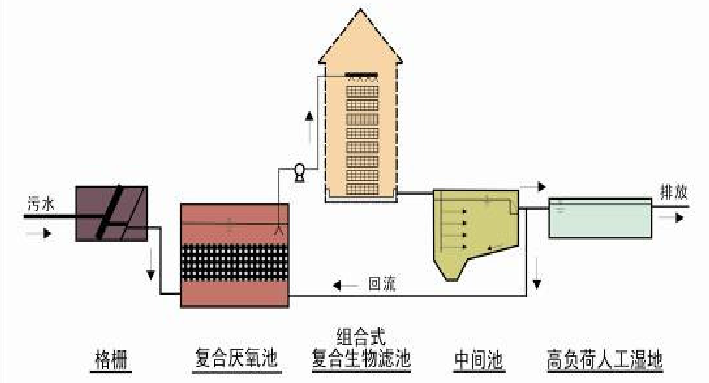
Modular Design: Utilizing modular construction techniques, it can be flexibly assembled according to the required water treatment capacity, suitable for a wide range of treatment volumes (10m³/d to 2000m³/d).
Non-clogging: The modular design overcomes the drawback of traditional filter beds that are prone to clogging, ensuring long-term stable operation.
High pollution treatment efficiency and effectiveness: Composite filter material enhances the system's treatment performance; the organic matter volumetric loading can reach up to 2kg/m3.d.
Footprint small: 60 m3/d treatment capacity, equipment footprint approximately 28 m2, plus constructed wetland area approximately 250 m2, one-third of traditional constructed wetland technology.
Investment savings and low operating costs: Compared to traditional biochemical treatment processes, the cost per ton of water can be saved by more than 1/3; operating costs are generally not more than 0.15 yuan/m³.
Low energy consumption: Utilizes natural ventilation, no aeration required, only one hydraulic lift needed, with an approximate energy consumption of 0.1 kW/h per ton of water.
Simple and convenient management: The system operates automatically, requiring no dedicated management, just regular checks.
Low noise, odorless, and environmentally friendly: The appearance design is elegant and harmonious with the surrounding environment.
Ideal for on-site treatment and reuse of rural domestic wastewater with significant fluctuations in water quality and quantity, as well as wastewater from tourist attractions, scenic water bodies, and lakes.
Modular design: Utilizes modular construction technology, allowing for flexible assembly based on water treatment volume. Suitable for a wide range of sewage treatment capacities (10m3/d to 2000 m3/d).
No blockage: combined structure which overcomes easy blockage problems of traditional filtration tank and enables long-time running in a stable manner.
Small floor occupation: treatment volume of 60m3/d with equipment floor area about 28m. The constructed wetland area is about 250m2 which is only 1/3 compared with traditional constructed wetland area.
Low investment and running cost: compared with traditional biochemical treatment process, more than 1/3 engineering cost can be saved for 1 ton of water. The running cost will not exceed RMB 0.15 /m3 in general.
Low energy consumption: natural ventilation is adopted with no requirements for aeration. only one time of hydraulic hoisting is required which may save about 0.1kW/h energy for 1 ton of water.
Easy and convenient management: automatic running of the system which does not require management by special person. only regular inspection is required.
Low noise, no smell and environmental-friendly: beautiful appearance design which is harmonious with the environment.
It is applicable for on-site treatment and reuse of rural domestic sewage, sewage of tourist attraction, landscape water and lake water with large change in volume and quality.
Direct Operation Cost
(1) Electricity cost: Primarily for a submersible pump, taking a treatment volume of 60 m3/d as an example, the pump power is 150W, with electricity priced at 0.6 yuan per kilowatt-hour, the cost to lift one ton of water is 0.04 yuan.
(2) Labor Cost: The system does not require dedicated maintenance personnel. Only a part-time employee is needed for regular inspections and cleaning, with a monthly salary of 150 RMB and a water charge of 0.08 RMB per ton.
(3) From the above two points, it can be seen that the direct operating cost for treating one ton of water does not exceed 0.15 yuan.
(1) Electricity cost: mainly for a submersible sewage pump, let’s take a pump with treatment volume of 60 m3 /d as example, the pump power is 150 w. Hoisting cost of a ton of water is RMB 0.04 calculated based on RMB 0.6/kilowatt-hour..
(2) Labor cost: no maintenance by special person is required for the system, it only needs a part-time worker to perform regular inspection and cleaning. The wage for part-time worker is RMB 150 a month and cost for a ton of water is RMB 0.08.
(3) based on the said two items, the direct running cost for treatment of a ton of water will not exceed RMB 0.15.
Management
1. Equipped with PLC automatic control and fault auto-alarm, the system operates without the need for dedicated management; only routine inspections are required. The operation management is simple, ensuring the system can run stably for a long period.
2. Processing scale for less than 200 households, commonly equipped with a 150W capacity, using 220V household power. Low power consumption, with low operating costs. A maintenance check for the pump is required every 2-5 years.
3. Average equipment lifespan is 20 years, with new parts mainly including sewage pump repairs and replacements, and filter media regeneration, which requires regeneration or replacement every 10 years.
1. PLC automatic control is adopted with automatic fault alarming. The system can run with no special personnel for management, instead only regular inspection is required. Operation management is extremely simple and the system can run for a long time in a stable manner.
2. The installed capacity is 150W in general for treatment scale lower than 200 families. 220V electricity for civil use is adopted. It is of small electricity cost and low running cost. Inspection once every 2 to 5 years is needed for the pump.
3. The average service life of the equipment is 20 years. Renewal of the components includes maintenance & replacement of submersible pump and regeneration of filtration materials. The filtration materials shall be regenerated or renewed every 10 years.
Dredging
An annual cleaning of the sedimentation in the sedimentation pond and settling pond is required. The sludge removed is then reused or transported after being treated in a harmless manner, such as composting or drying.
The accumulated sludge inside the water collection tank and sedimentation tank shall be cleaned once a year. The removed sludge shall be reused or shipped out after harmless treatment, such as composting and airing, etc.
Service Model
For treatment capacities below 60m3/d (for 200 households), the equipment model is recommended. For capacities above 60m3/d, a site construction model is suggested if conditions permit.
Our team focuses on market demands, continuously researching and developing new technologies and products for decentralized village and town wastewater treatment. We offer professional services in engineering consultation, design, construction, debugging, and maintenance.
Equipment model is preferred for treatment scale lower than 60m3/d (200 families); station mode is recommended if applicable for treatment volume over 60m3/d.
Our team centering on market demand, constantly research and develop new technology and products related with distributed rural domestic sewage treatment and provide services including professional engineering consultation, design, construction, commissioning and maintenance, etc.
Technical Support
The team will provide lifetime technical support at no cost for the operation and maintenance of village and town sewage treatment stations built using the "Jiaotong Filter Pool" technology.
Our team will provide life-long technical support for free for running and maintenance of domestic treatment station established in countries and towns with technology of "filtration tank of Shanghai Jiaotong University".
Application Areas of Nanobubble Water Dialysis Technology
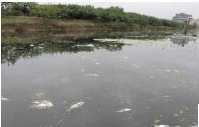
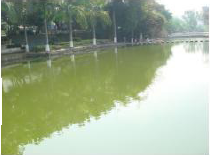
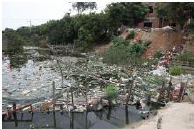
River Blackening and Odor Control Treatment Landscape Waterbody Restoration Industrial Wastewater Treatment
Treatment of malodorous river Landscape Water Body Restoration Industrial Wastewater Treatment
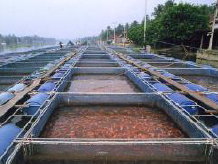
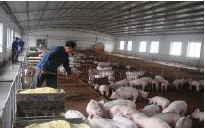
High-end AquacultureAgricultural wastewater treatment
High-End Aquaculture Aquaculture Wastewater Treatment
Nanobubble Water Dialysis Technology
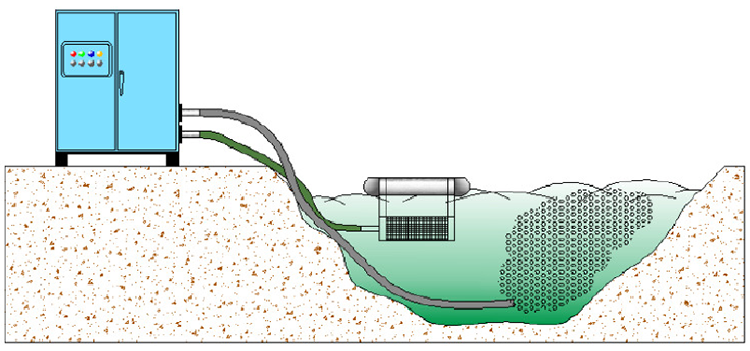
Principle Diagram for Nanobubble Water Dialysis
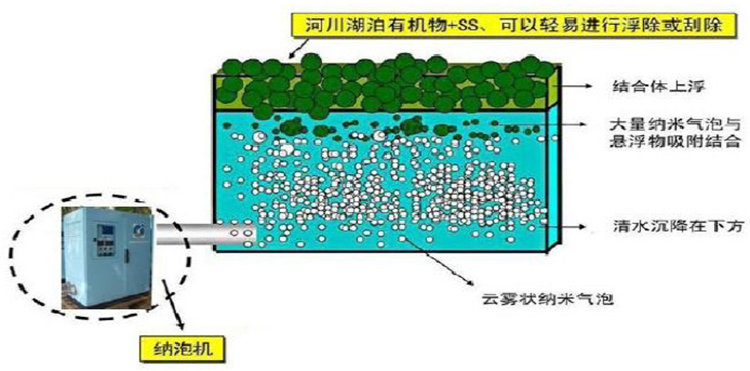
Nanobubble Water Dialysis Technology Working Principle
1. Rapid and sustained increase in dissolved oxygen in water bodies, enhancing aerobic biological activity.
2. Generates a large number of negative oxygen ions, killing anaerobic bacteria and algae in the water body.
3. Negative-charged nano bubble flocs float upwards, dissolving solids and chemicals.
4. Negative ions degrade water body sediment, cutting off the root cause of the black and臭 (smelly) water.
5. Establish an ecological chain to achieve self-repair of the water body.
The working principle of the nanobubble water dialysis technology
1. increase the dissolved oxygen concentration and aerobic biological activity in a fast and persistent manner in order to improve activity of aerobic organism;
2. produce large amount of negative oxygen ion, kill anaerobic bacteria and algae in water;
3. nanobubble with negative charge will make solid solubility and chemical substances flocculate and go up;
4. anion may degrade sediment in water body and cut off the black smelly water source;
5. form eco-system and complete self-repairing of water body.
Nano bubbles possess a strong surface tension, continuously contracting in water until they reach a certain size and then disappear, dissolving into the water body. This is the reason for their powerful oxygen solubility. Moreover, during the contraction process, as the bubble shrinks, the internal pressure of the bubble increases rapidly in an inverse proportion, keeping the gas inside in a super-high-pressure state. This super-high-pressure state combined with the super-high-temperature effect is a significant factor in the generation of ultrasonic properties in nano bubbles. Consequently, they can effectively carry out oxidation reactions over a long duration and kill bacteria.
The surface of nanobubble has strong tension which may constantly shrink in the water to a certain degree and then disappear in the water body which is the reason of its strong oxygen dissolving ability. The bubble becomes smaller during shrinking process and the air pressure inside the bubble increases quickly in inverse proportion which make the gas inside the bubble under super-high pressure. This super high pressure together with super high temperature effect is the may reason for nanobubble to produce ultrasonic wave. Therefore long-time and effective oxidation reaction and bacteria killing is available.
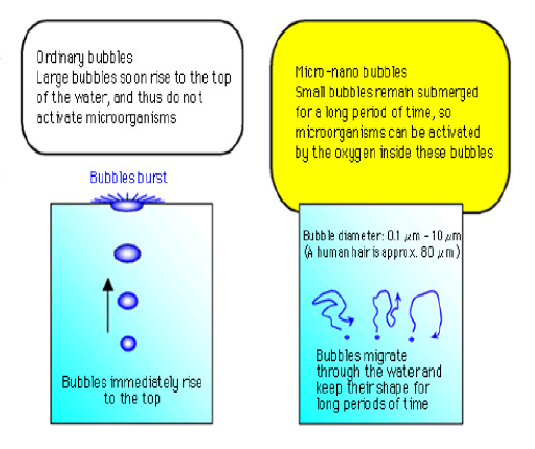

Nano-bubbles carry a negative charge on their surface, making it difficult for them to merge into a single entity. They produce dense and fine bubbles in water, unlike conventional bubbles that fuse and expand before bursting. Moreover, they can adsorb positively charged substances in the water. Utilizing the surface charge's adsorption properties on water particles, organic suspended matter in the water can be fixed and separated, creating a flocculation effect. This characteristic is crucial for its exceptional separation efficiency in water treatment.
Negative charge exits on nanbubble surface, so it's difficult for two bubbles becoming one. Thick and fine bubbles will form in water which will not become one and break as normal bubbles. Instead, these thick and fine bubbles may absorb substances with positive charge in the water. By this absorption ability of surface charge on fine particles in water, the organic suspended substances in the water body will be fixed and separated which result in flocculation effect which is the key property for its super separation function in water treatment.
Comparison of Nanobubble Technology with Traditional Aeration Techniques
Comparison between nanobubbles patent technology and the traditional aeration technology

Advantages of Nanobubble Technology:
(1) Low processing costs: Compared to traditional methods such as aeration, sedimentation, and filtration, it consumes less energy, is highly efficient, requires no civil engineering facilities, and offers the advantage of low processing costs.
(2) No secondary pollution: No need for flocculant addition, chemical oxidizing agents, ensuring no secondary pollution.
(3) Flexibility: The equipment has low site requirements and can be flexibly adapted to various terrains such as enclosed lakes, open bays, and rivers.
(4) Comprehensiveness: Degradates water body sediment and cuts off the root cause of water body blackening and臭ening.
Advantages of nanobubbles patent technology:
(1) Low treatment cost: compared with traditional aeration, sedimentation, filtration and other traditional methods, it is of low cost and high efficiency without any civil construction facilities and with low treatment cost.
(2) No secondary pollution, no need to add flocculant, chemical oxidant and no secondary pollution.
(3) Flexibility: low requirements for site, capable of flexible treatments for closed lakes, open type water bay and rivers as well as many other kinds of landforms
(4) Thoroughness: degradation of sediment in water body and cut off sources of malodorous water body.
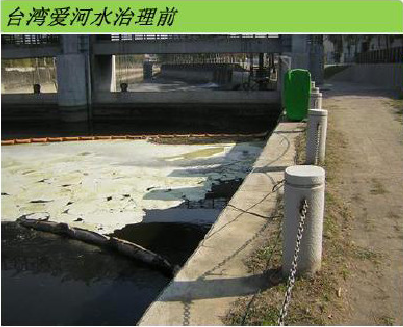
Water Quality Comparison Before and After Governance
Water quality comparison before and after treatment
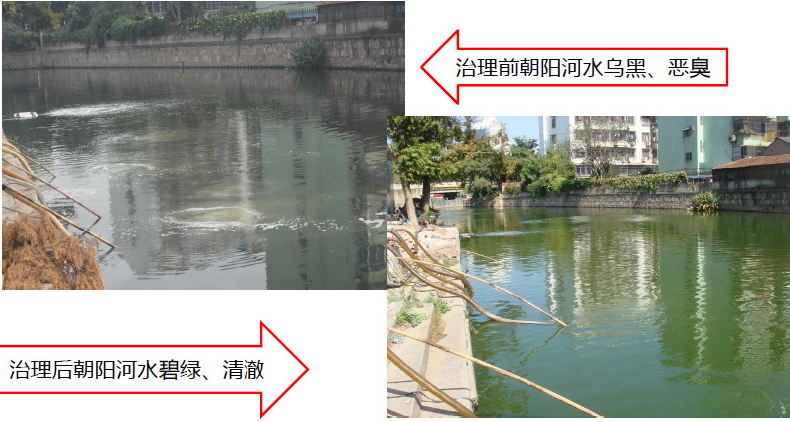
Shenzhen Vocational Technical College Water Dialysis Project
Water Body Dialysis Project by Shenzhen Polytechnic
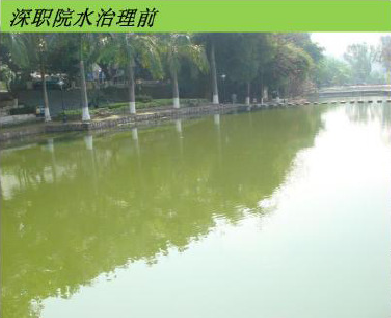
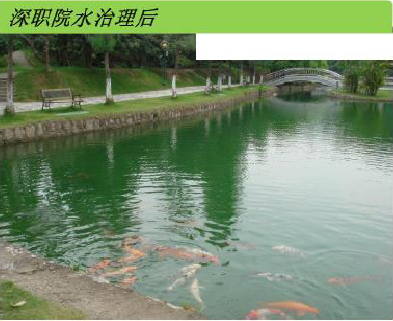
Shenzhen OCT Yanxi Lake Waterbody Dialysis Project
Water Dialysis Project of Yanxi Lake at Shenzhen OCT


Taiwan Ai River Water Filtration Project
Water Dialysis project of Ai River in Taiwan
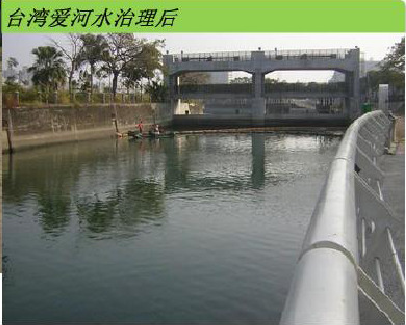
Dissolved oxygen augmentation is a critical breakthrough in the ecological management of eutrophic water bodies, such as rivers and lakes. Utilizing nanobubble water ecological dialysis technology, high oxygen dissolving rates can rapidly boost the dissolved oxygen content in water, meeting the oxygen demands of microorganisms for degrading organic pollutants. This creates the necessary conditions to activate and strengthen the aquatic ecological chain (comprising microorganisms, aquatic plants, plankton, fish, etc.).ntent of dissolving oxygen and meet oxygen consumption requirements for degradation of organic pollutants by microorganism and create necessary conditions for activating and strengthening eco-system of water body (comprised by microorganism, aquatic organism, zooplankton and fish, etc.)

询价单


