
 Equipment asset allocation, disposal, sale, and upgrade改造
 Overall Equipment Effectiveness (OEE)
 Equipment Statistics, Data Analysis, Efficiency Enhancement
 Single-item, single-code scanning for repair management
 Equipment procurement, inspection, supplier management
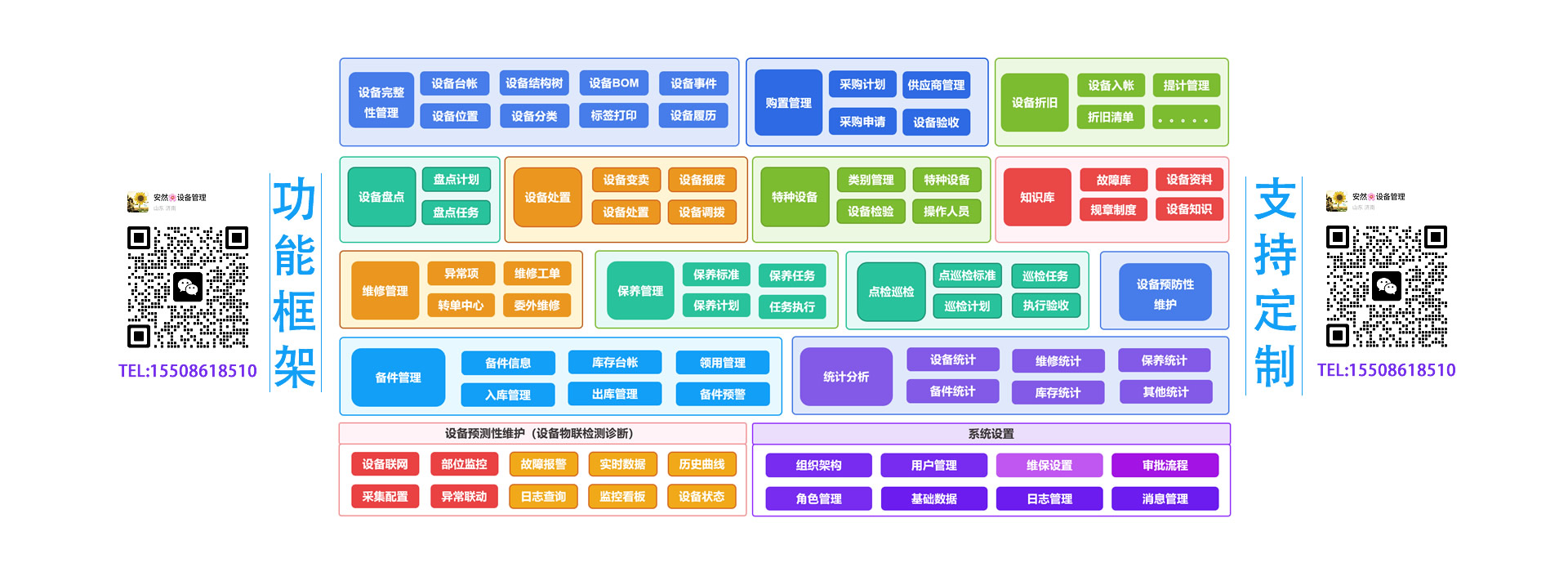
 One-Item-One-Code Scanning Repair Management System Software
 Equipment Assets, Equipment Inventory Management
Product Details




产品Price Negotiable
最小起订Quantity: 供货总Quantity:


Maintenance Method |
|
Operating System |
Supports Android, Apple, HarmonyOS |
Supportable Equipment |
Mobile phones, computers, tablets, mobile PDAs, patrol instruments, etc. |
Support Platforms |
DingTalk, WeChat Work, Feishu |
Domestic production |
Domestic software, independently controllable, meets the requirements of information creation |
System Features |
Supports domestic operating systems such as Kylin and UnitedOS, as well as domestic databases like Dameng and GaussDB |
Maintenance Plan, Maintenance Task, Temporary Maintenance, Historical Traceback Equipment maintenance refers to preventive maintenance aimed at ensuring that equipment remains in good working condition during operation, reducing the occurrence of malfunctions, and improving equipment reliability and lifespan. In the Qizhi Equipment Life Cycle Management System, the equipment maintenance feature not only includes the creation of maintenance plans but also automatically generates maintenance tasks based on the plan cycle and monitors the execution of these tasks. This not only helps to lower maintenance costs but also guarantees the continuity and efficiency of production. The equipment maintenance feature of the full lifecycle equipment management system integrates the stages of planning maintenance schedules, automatically generating maintenance tasks, and monitoring task execution, providing enterprises with a comprehensive maintenance solution. It not only streamlines the maintenance process but also enhances the standardization and reliability of maintenance, substantially improving equipment management and operations for the enterprise. Maintenance plan cycle, can be flexibly set for maintenance frequency based on "time + cycle" Maintenance Content: Inspection, Cleaning, Lubrication, Replacement of Parts Operation Standards: Flexible setting of maintenance standards, selectable according to standard templates Can set whether acceptance is required and who is responsible for the acceptance. Schedule start and end dates; generate maintenance tasks regularly within the planned cycle. Through a maintenance schedule for equipment, you can plan and organize maintenance work, ensuring that the equipment remains in good condition during operation, enhancing its reliability, lifespan, and safety. The system automatically generates maintenance tasks on a cyclical basis according to the maintenance plan. Tasks will be automatically assigned to the relevant responsible person, with real-time reminders. Once the task work order is completed, it will undergo review and acceptance. Issues identified during the task process can generate relevant maintenance work orders Historical Record: The system will save the execution records of each maintenance task, forming a complete maintenance history. By effectively executing maintenance tasks, companies can ensure that equipment operates in good condition, reduce the risk of breakdowns, and enhance equipment availability and production efficiency. A comprehensive equipment lifecycle management system can assist businesses in standardizing and optimizing the execution of maintenance tasks, thereby improving the efficiency and quality of maintenance work. Audit & Verification: To ensure the quality of maintenance work, the system provides a method for auditing and verifying maintenance activities. Supports signatures, photos, videos, or detailed descriptions. Flexible Settings: As each device operates in different environments and frequencies, the execution standards should be flexible. The system allows for modifications or adjustments to standard items as needed. Clear steps and guidance: Execution standards can be detailed down to each operation, including required tools, safety measures, checkpoints, and potential fault diagnosis. Consistency and standardization, with execution standards ensuring each maintenance task is carried out to the same specifications. Quality Assurance: Standardized procedures ensure the quality and effectiveness of maintenance work, minimizing the risk of errors. Efficiency Enhancement: Maintenance staff can perform maintenance tasks more efficiently, saving time and resources. Safety: Ensures maintenance activities are conducted in compliance with safety requirements, reducing the risk of safety incidents caused by improper operation. Maintenance task execution standards are a set of regulations and guidelines to be followed during equipment maintenance, designed to ensure the quality, consistency, and reliability of maintenance activities. Execution standards can be established based on the characteristics of the equipment, maintenance content, and industry standards to ensure the effective execution of maintenance work. Inspection Process:Conduct a systematic inspection of the equipment, including the appearance, component connections, and fasteners. Cleaning Requirements:Clean the surface, components, and internal areas of equipment to ensure it remains clean and tidy. Lubrication requirements:Lubricate the lubrication points as per the equipment manual or manufacturer's recommendations to ensure normal operation of the equipment. Parts replacement:Replace worn or aging parts based on maintenance schedules and equipment usage. Fastener inspection:Inspect fasteners on the equipment to ensure they are in proper condition and prevent loosening. Electrical Inspection:Inspect electrical connections, wires, and electronic components to ensure the safety and proper operation of the electrical system. Equipment Adjustment:Adjustments to the equipment can be made as needed to ensure all parameters and metrics meet requirements. Replacement Parts:Potential spare parts required during equipment replacement, ensuring timely supply and replacement of the parts. Security Inspection:Ensure maintenance activities comply with safety standards and do not pose a risk to maintenance personnel or equipment. Record Requirements:During maintenance, record detailed information such as the execution of each step, time, and materials used. Understand Equipment:Understand the equipment's characteristics, usage, and manufacturer's requirements to provide a foundation for establishing standards. Reference Standard:Refer to industry standards, equipment manuals, manufacturer recommendations, etc., to understand the standard maintenance procedures. Establishing Standards:Establish specific maintenance task execution standards based on the equipment characteristics and maintenance content. Review and Verification:After formulation, an internal review and verification are required to ensure the accuracy and rationality of the standards. Trainer:Communicate the standards to the maintenance staff to ensure they understand and adhere to the execution standards. Implement Monitoring:During the maintenance task execution, continuously monitor the performance of the maintenance staff to ensure the implementation of standards. Equipment Maintenance
Significantly reduce scheduling and dispatch supervision tasks
Maintenance tasks are automatically generated at scheduled frequencies and cycles according to the plan, and are automatically associated with the responsible party.
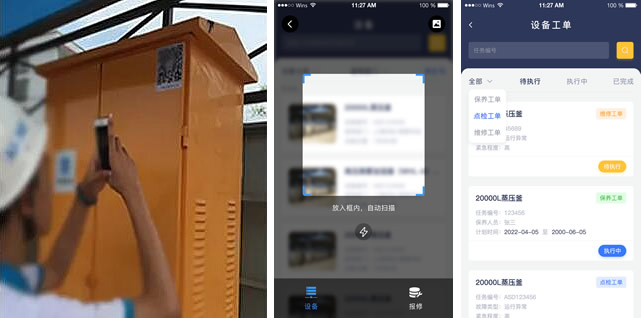
Maintenance Plan

Maintenance Tasks

Compliance Standards
Maintenance task execution standards content:
Establishing Steps for Maintenance Task Execution Standards:

Phone Consultation