


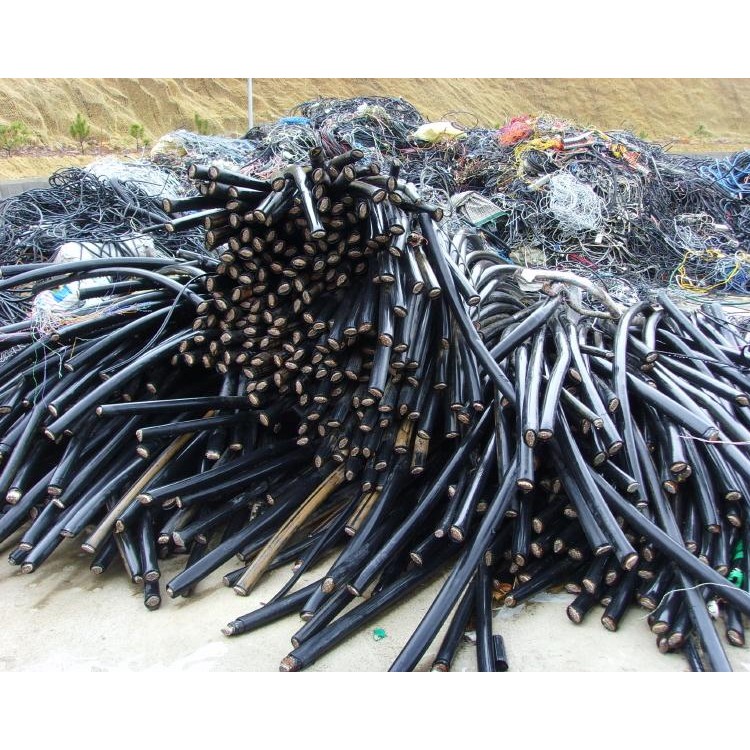

The company has been purchasing a variety of waste cables such as wire cables, high and low voltage cables, and other networking cables in the long term and in surrounding areas. Adhering to the business philosophy of 'Integrity and Reputation First,' we have established long-term cooperative relationships with manufacturers and institutions in and around the area, thanks to our excellent business reputation.
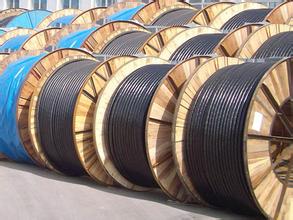
1. Common electrical accessories for recycling:
Cable terminal junction boxes, methods for handling waste electrical wires and cables, connecting pipes and terminal connectors, intermediate cable junction boxes, steel plate wiring grooves, cable trays, etc.
2. Recycled Cable Trays
Typical industrial and mining enterprises use overhead power cables for indoor and outdoor installations, as well as cable recycling methods for control cables. These are also suitable for indoor and outdoor installations in departments such as telecommunications and broadcasting.
3. Divided by usage, they can be categorized as:
Bare conductors, insulated wires, heat-resistant wires, power cables, control cables, methods for recycling old cables and wires, shielded wires, communication cables, radio frequency cables, etc.
4. Recycled Cable Intermediate Joints
A device that connects conductors, insulation shielding layers, and protective layers of cables to facilitate the connection of cable lines, the method of handling waste electrical wires and cables is called a cable intermediate joint.
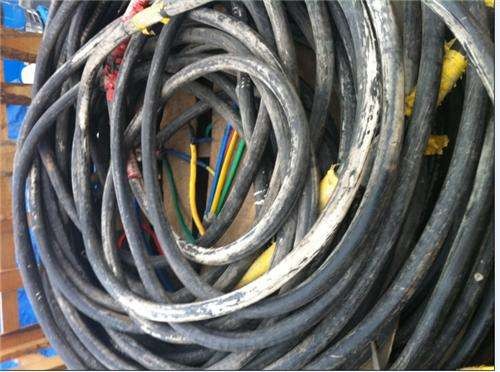
Waste Cable Utilization Methods:
1. Hand-peeling method:
The method employs manual peeling, which is inefficient, costly, and provides poor working conditions for the workers.
2. Incineration Method:
Incineration is a traditional method that involves burning the plastic sheath of waste cables, followed by the recovery of copper. However, it produces extremely severe smoke pollution. Moreover, during the incineration process, the surface of the copper wires becomes heavily oxidized, reducing the metal recovery rate. This method has been strictly prohibited by various countries.
3. Mechanical Peeling Method
The cable stripping machine is used for processing, which still requires manual operation, falls under semi-mechanization, involves high labor intensity, and has low efficiency; it is only suitable for handling thick cables.
4. Chemical Method:
The chemical method for treating waste cables was proposed in the 1990s, with some countries conducting research on it. China also carried out research during the "8th Five-Year Plan" period. A major drawback of this method is that the waste liquid produced cannot be processed, posing significant environmental impact, hence it is rarely used.
5. Cryogenic method:
This method was also proposed in the 1990s, using liquid nitrogen as a refrigerant to make the waste cables脆 at low temperatures. After破碎 and vibration, the plastic sheath is separated from the copper wire segments. China also initiated research on this method during the "8th Five-Year Plan" period. However, the drawback is that the cost is high, making it difficult to industrialize production.
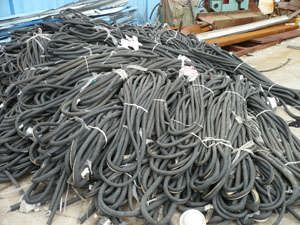
The Scrap Cable Recycling Co., Ltd. was established in 2017 and had expanded to major cities within the province by 2015, now emerging as a large-scale and comprehensive recycling enterprise. Over the past 8 years, we have earned the trust of numerous clients through our principles of reasonable pricing, honesty, responsibility, contract-orientation, and strong business credibility.
