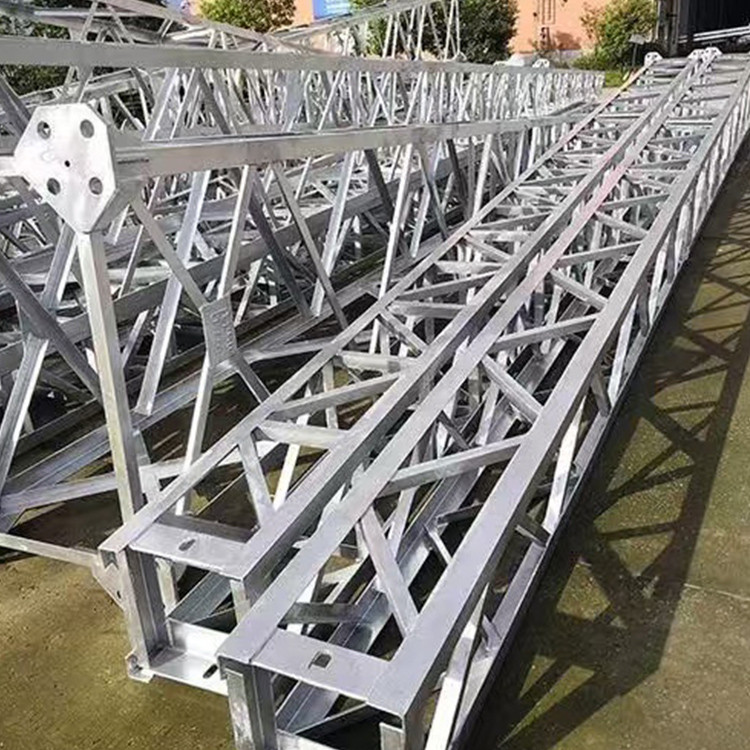
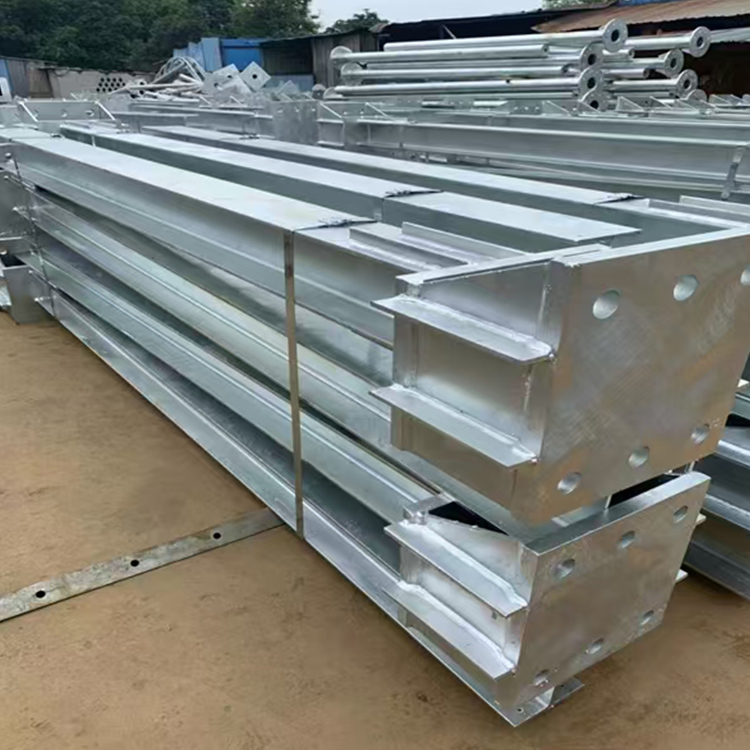
Hot-dip galvanized, galvanized, structural steel galvanizing, galvanized corrosion protection, corrosion protection, hanging galvanizing, suspended galvanizing, steel galvanizing, profile galvanizing
13910318682
Zinc is a silvery-white metal with a faint bluish hue, boasting a density of 7.14 grams per cubic centimeter and a melting point of 419.5 degrees Celsius. At room temperature, it is brittle; it softens between 100 to 150 degrees Celsius; and becomes brittle again once it surpasses 200 degrees Celsius. Chemically reactive, zinc forms a thin, dense basic zinc carbonate film on its surface in ambient air, which prevents further oxidation. Above 225 degrees Celsius, zinc undergoes intense oxidation.
Zinc is difficult to burn in air, emitting a strong white light in oxygen. Its flame test produces a blue-green flame, due to the zinc oxide layer on its surface, which releases white smoke upon combustion. The main component of the white smoke is zinc oxide, which not only prevents the zinc from burning but also refracts the flame color to create a pale glow, hence why burning zinc blocks in a lab do not produce a blue-green flame. Zinc dissolves easily in acids and can displace metals like gold, silver, and copper from solutions. The oxide layer of zinc has a high melting point, but the metal itself has a low melting point, which is why when zinc sheets are heated over an alcohol lamp, they melt and soften without dropping, thanks to the protective oxide layer. Zinc is a commonly used non-ferrous metal, being the last of the seven ancient non-ferrous metals—copper, tin, lead, gold, silver, mercury, and zinc—to be refined and the fourth most common metal, after iron, aluminum, and copper. Zinc can be alloyed with various non-ferrous metals, primarily with copper, tin, and lead to form brasses, and can also be combined with aluminum, magnesium, and copper to form die-cast alloys. Zinc is mainly used in industries such as steel, metallurgy, machinery, electrical, and light industry.
The above article provides a brief introduction to the chemical explanation and industrial applications of zinc. Zinc has active chemical properties and, in the air at room temperature, forms a thin and dense basic zinc carbonate film on its surface, which can prevent further oxidation. This effectively extends the lifespan of items and enhances their resistance to acids, bases, and corrosion. It can be considered a type of industrial surface treatment for product protection.
Contact us

Service Hotline
13910318682
Company Telephone
13910318682

Address
16A Building, 5th Floor, 024, Guanghua Road, Tongzhou Industrial Development Zone, Zhangjiawan Town, Tongzhou District
b2b.china9.net © Zhongshang 114 Hebei Network Technology Co., Ltd.Address: Room 6009, Oriental New World Center, No.118 East Zhongshan Road, Qiaoxi District, Shijiazhuang City, Hebei ProvincePlatform Service Hotline: 4006299930