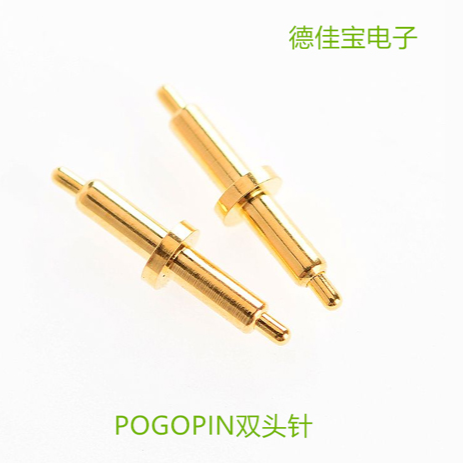
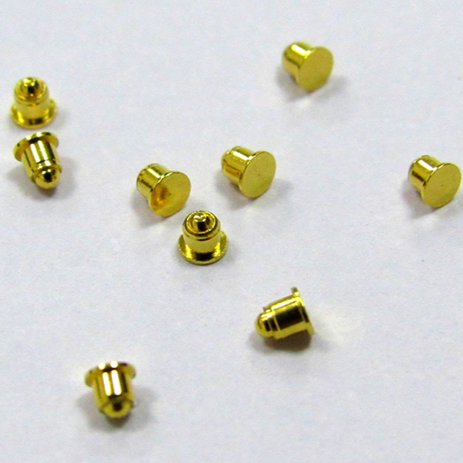
Primarily engaged in the sales of mobile phone BGA testin...


Product Recommendation
Huawei recently achieved the first global 5G VoNR call in the China 5G Enhanced Technology R&D Test, organized by the IMT-2020 (5G) Promotion Group. This signifies that the 5G industry chain is mature, and domestic operators are ready for trial commercial deployment.
According to reports, this call was made over a 5G network established by Huawei under the unified organization of the IMT-2020 (5G) Promotion Group. Two Mate 20 X (5G) phones (probes) were located at the Beijing Information and Communication Research Institute and the Yanting Lake Campus of the University of Chinese Academy of Sciences in Huairou District, respectively, with a distance of over 60 kilometers between them. Such a long-distance test will be more closely aligned with real commercial scenarios.
From on-site practical testing, the two Mate 20 X (5G) smartphones (probes) have made numerous voice and video calls with high connection rates. The voice quality during calls is clear, and the video calls display smooth imagery. The success of this test (probe) also marks a global achievement in VoNR calls over 5G SA networks, including both voice and video.
Basic Voice Solution Unimpeded Under 5G Networks
The successful testing of Huawei's products has further propelled the trial commercialization of 5G networks by domestic operators. This test was based on VoNR calls under the 5G SA network, which serves as the fundamental voice solution for this network. It will bear the brunt of basic voice communication under future 5G networks, and is of great importance to operators (one of the basic services provided by telecommunications operators).
Additionally, this 5G VoNR call utilized Huawei's end-to-end 5G commercial products, including the 5G wireless access network, core network, bearer network, as well as 5G chips and terminals. The 5G VoNR service is carried through the 5G new radio, which accesses the IMS (IP Multimedia Subsystem) to provide 5G voice call services, verifying the interoperability of the 5G new radio and key 5G technologies, and achieving interconnectivity between terminals and networks under the new radio standard.
Be mindful that this test also confirms that Huawei's Kirin 980 + Balong 5000 5G terminal solution is ready for commercial use. The Huawei Mate 20X 5G phone is equipped with the Balong 5000 5G modem. The Balong 5000 5G modem is one of the fastest in the industry, supporting both SA and NSA network architectures and 2G/3G/4G/5G full-mode network technologies. It supports peak download speeds of up to 4.6Gbps in the Sub-6GHz band, 6.5Gbps in mmWave band, and can achieve up to 7.5Gbps with 5G NR+LTE dual connectivity in operation.
The three major carriers are getting closer to the trial commercial use of their 5G networks.
For the three major telecom operators, Huawei, ZTE, and others have already completed the three-phase testing of IMT-2020 (5G) together with the operators. Starting in March this year, the operators, along with smartphone manufacturers, have conducted tests on the corresponding terminals. The first batch of 5G terminals include Huawei Mate 20 X (5G), ZTE AXON 10 (5G), OPPO Reno (5G), vivo NEX (5G), Xiaomi MIX 3 (5G), and Nubia mini (5G).
Beginning in January of this year, three major carriers have established 5G network trial networks in numerous cities. Sixteen provinces and municipalities, including Henan, Anhui, Fujian, Hebei, Jiangxi, Shandong, Jiangsu, Guizhou, Tianjin, Guangxi, Hubei, Liaoning, Beijing, Shanghai, Sichuan, and Guangdong, have successfully made 5G calls. Therefore, from a broader perspective, the first batch of friendly internal testing for the trial commercial use of 5G is basically ready.
Currently, within the 5th ring of cities like Beijing and Shanghai, numerous 5G base stations have been installed, ensuring a normal 5G network experience in certain areas. Of course, areas without coverage rely on 4G networks as a foundation. This is a pioneering experience, and operators are continuously expanding coverage. Compared to the NSA-based 5G commercial services in the US and South Korea, China Mobile, China Unicom, and China Telecom are adopting a mixed NSA/SA network model based on (5G+NR) as their development strategy. This is the correct path to deploying 5G network infrastructure.
On May 17th, operators may launch a limited-scale 5G network experience.
From the information provided by terminal manufacturers, the initial trial commercial deployment of 5G networks by the three major operators is primarily focused on the four cities of Beijing, Shanghai, Guangzhou, and Shenzhen, and is conducted on a small scale, inviting only a select group of users eager to be among the first to try it out. Should everything proceed smoothly, the scope will then be expanded (both in terms of trial cities and user numbers).
Regarding the trial commercial launch of 5G networks, industry sources from terminal manufacturers suggest it may commence on May 17th, the start of Telecommunications Day. Of course, this depends on whether the Ministry of Industry and Information Technology (MIIT) will issue the trial commercial license for 5G networks ahead of schedule. If there is a delay, the launch might be pushed back to June. However, from the efforts of all parties involved, there is still hope to start the trial commercial launch of 5G networks on Telecommunications Day.
Prior to this, the three major telecom operators have commenced their 5G-friendly customer recruitment drives, with these newly acquired users set to become the first group to experience the domestic 5G network. As the testing progresses, the scope of trial commercialization will gradually expand. Following the previous roadmap, operators are scheduled to begin trial commercialization of 5G networks in selected cities by the third quarter of this year.


b2b.china9.net © Zhongshang 114 Hebei Network Technology Co., Ltd.Address: Room 6009, Oriental New World Center, No.118 East Zhongshan Road, Qiaoxi District, Shijiazhuang City, Hebei ProvincePlatform Service Hotline: 4006299930