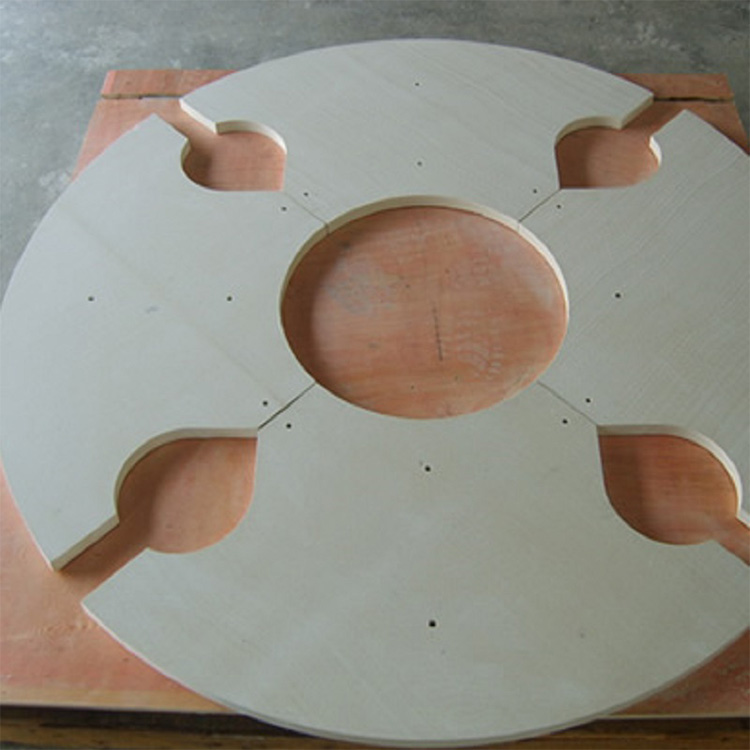
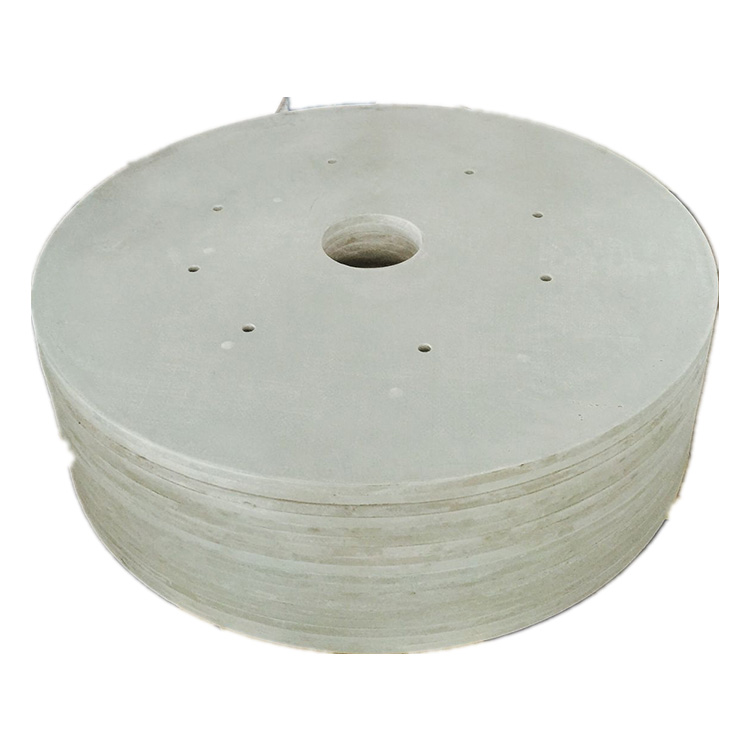
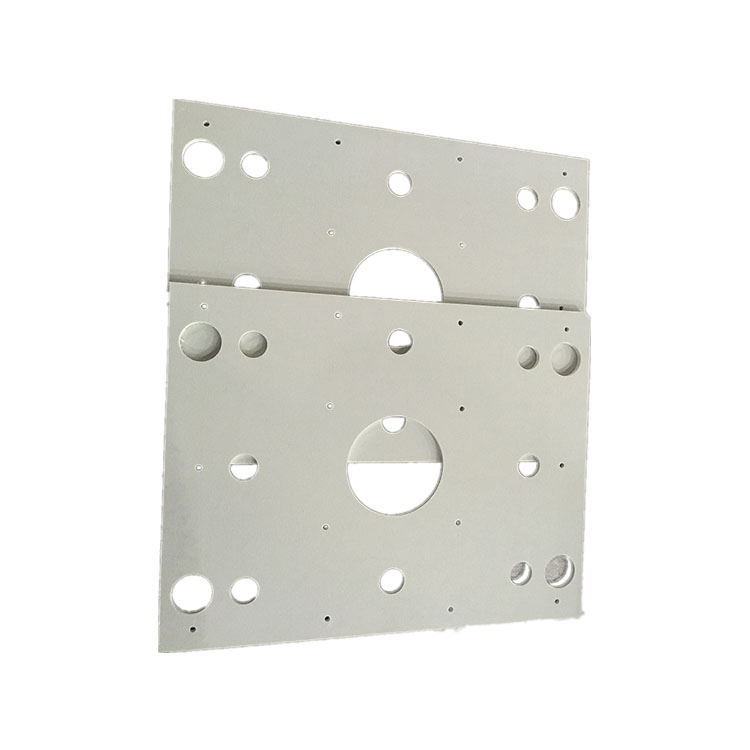
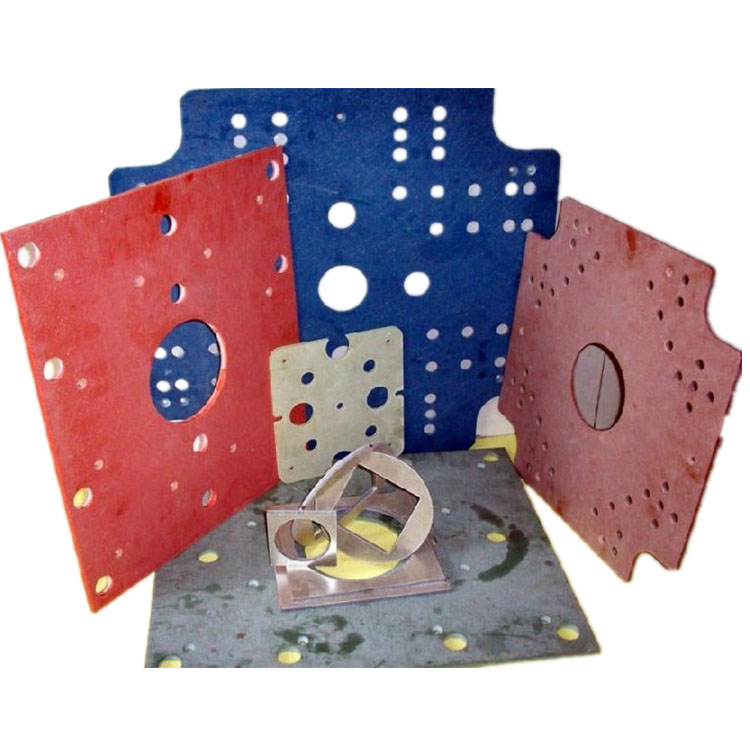
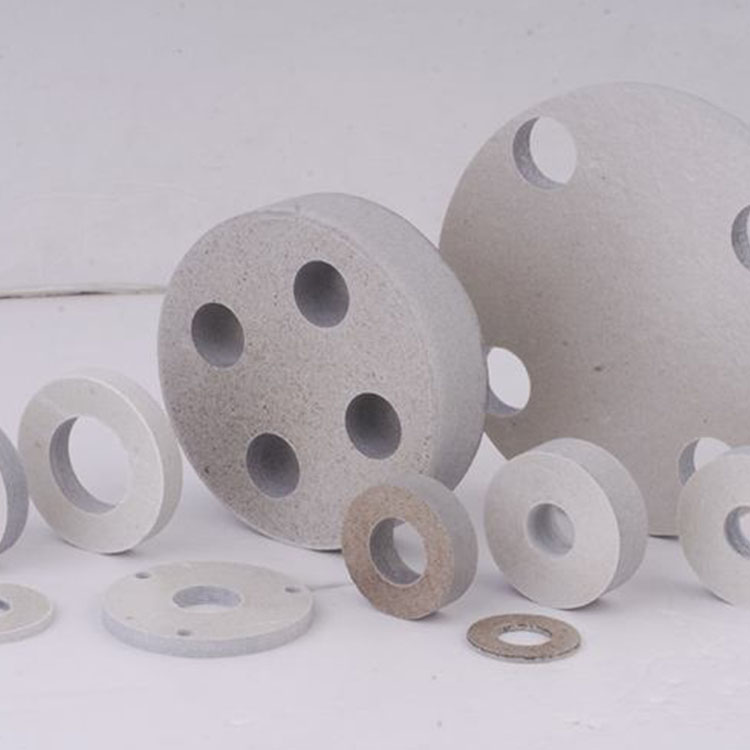
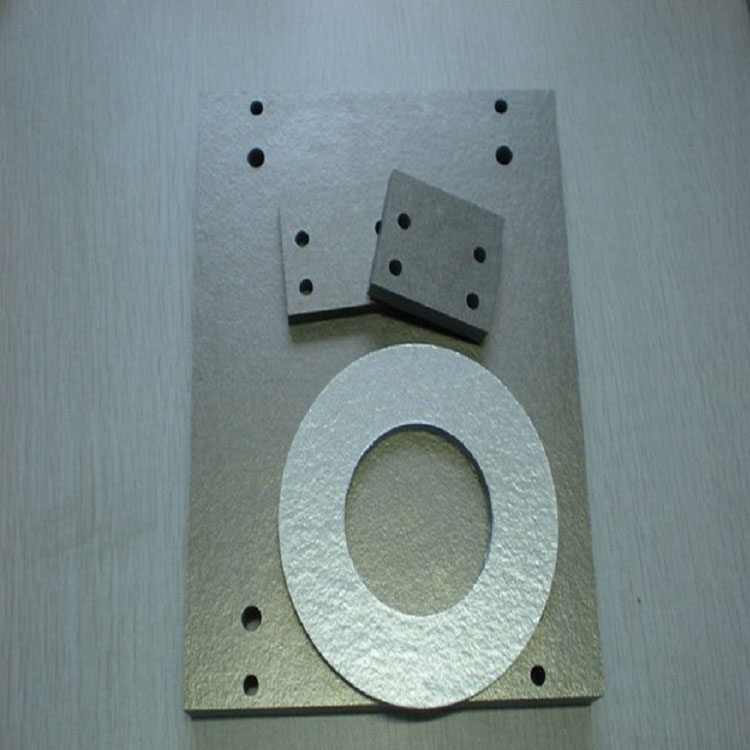
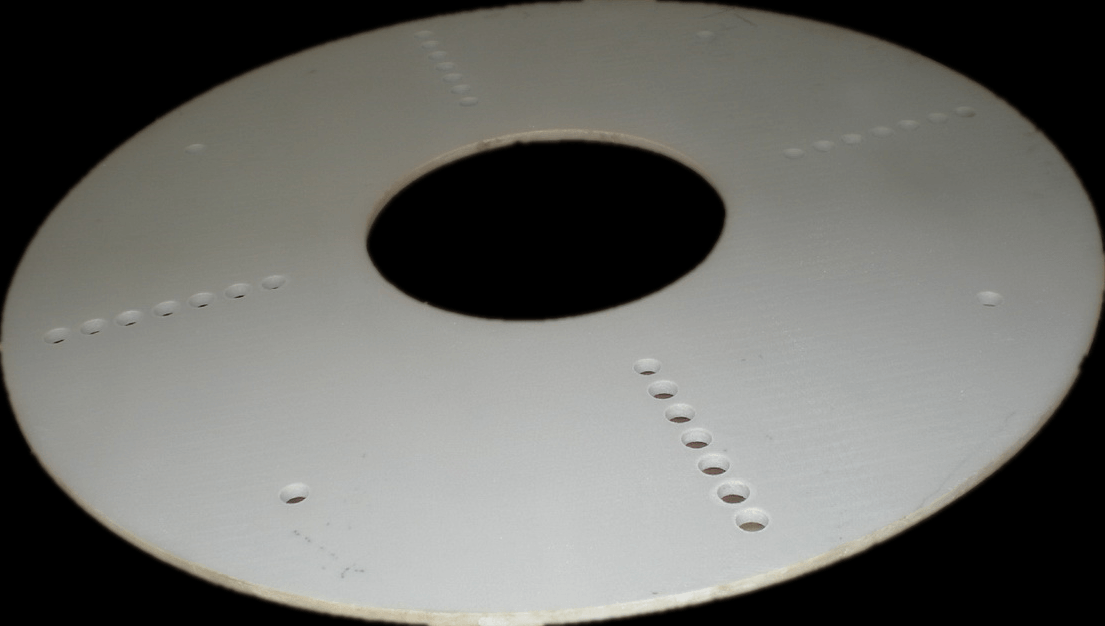
Insulating Plates - Molding Insulating Plates - Vulcanizing Machine Insulating Plates - Manufacturer Direct Professional Customization for Other Rubber Machinery Insulating Plates
13515199598


According to statistics, there are nearly 700 major plastic machinery manufacturing enterprises in China, with about 250 specializing in plastic molding equipment, and approximately 60,000 employees in the industry. In 2005, the output value of the plastic machinery industry in China was about 20 billion yuan, while the domestic market demand was around 30 billion yuan, with some equipment still relying on imports. The vigorous development of the Chinese plastic industry and the strong domestic demand have brought significant opportunities for the domestic plastic machinery industry. However, it's not difficult to notice that this has also opened the market for imported plastic machinery products, while foreign large companies, which have always held a dominant position in high-end machinery products, have indeed shown strong competitiveness.
China's plastic machinery production bases are primarily concentrated in the economically developed regions of the Yangtze River Delta and the Pearl River Delta, which have formed a complete plastic machinery industrial chain. However, domestically produced products still lack in large-scale, precision, and high-speed equipment. In recent years, the number of imported plastic machinery in China has been rapidly increasing, with tens of thousands of units of various plastic machines imported each year, nearly doubling the total output value of domestic plastic machinery. Particularly in certain product fields, imported equipment and some high-end production lines from overseas still hold a dominant position. "The Chinese plastic machinery industry needs to increase investment in equipment technology, energy-saving and consumption reduction, and the automation level of equipment. Moreover, with the acceleration of the domestication process of large-scale granulating units, domestic plastic machinery manufacturers can take this opportunity to greatly enhance product functionality and automation levels. At the same time, as an essential element for profit generation for numerous manufacturers in the plastic processing industry, automated products will also be more extensively applied in new equipment and production lines," said Wu Daming, Director of the Plastic Machinery and Plastic Engineering Research Institute at Beijing University of Chemical Technology, during an interview with this publication's journalist.
The trends in the plastic machinery industry are becoming increasingly clear.
Domestically, while a few large state-owned plastic enterprises and their subsidiaries, joint ventures, and private companies possess advanced equipment, the majority of China's plastic processing enterprises still rely primarily on domestic equipment. Approximately 20% of the equipment in use falls under high-energy consumption and low-output categories, which should have been phased out but are still in use for various reasons. Regarding this phenomenon, Director Wu has his own perspective, explaining, "Although the output of China's plastic machinery has surged significantly compared to the past and the technology level has improved to some extent, this demonstrates the robust development momentum of the plastic machinery industry in our country. However, the high-end plastic machinery equipment, which represents the level of plastic processing technology, is still dominated by foreign advanced equipment. The expensive prices of imported machinery put many small and medium-sized enterprises at a disadvantage."
Despite national policy guidance and the specific demand situation within the domestic plastic machinery industry shaping the fundamental development trends of plastic machinery products, the overall progress is greatly constrained due to the uneven levels within the domestic industry. "The development trends of the domestic plastic machinery industry can be summarized into three directions: large-scale, precision, and high-speed. In fact, these characteristics were proposed several years ago, and in recent years, the trend of the plastic machinery industry moving towards these three directions has become increasingly clear," Dr. Wu explained to the journalist.
Currently, domestic manufacturers lag behind the world's advanced levels in terms of high-speed and precision equipment. There is also a significant gap in real-time process parameter and product parameter monitoring, as well as the adoption of advanced control technologies. Advanced high-precision online detection instruments mainly rely on imports, with very few domestic products available, and their performance cannot be compared to imported products. Overall, China's precision extrusion molding equipment is still in its infancy, with a vast development space. Director Wu introduced, "In some high-precision product markets, such as a series of high-precision products represented by optical fiber cables and automotive fuel lines, the market demand is increasing day by day, and the requirements for precision extrusion molding equipment and technology are also continuously improving. Our research institute is also assisting some enterprises in overcoming technical challenges." He also pointed out that achieving high-speed extrusion molding equipment can reduce production costs, which is more pronounced in blowing film units and pipe extrusion units. As a major technical equipment for national key construction services, one of the three key equipment for large ethylene engineering has long relied on imports, so it is necessary to accelerate the localization process to meet the needs of the petrochemical industry development.
Domestic production of large-scale equipment brings multiple benefits
In Europe, the application of automation products and related technologies is widespread in the plastic machinery industry. From robots used on production lines to visual systems for quality inspection, to high-precision sensors in automated molding systems, and to the remote monitoring, diagnostics, and control automation technologies commonly adopted on extrusion production lines, all these contribute to establishing a brand image for European plastic processing machinery manufacturers characterized by high yields, low defects, timely delivery, and long product lifespan. Compared to advanced technologies used abroad, domestic manufacturers appear relatively conservative. "Domestic mechanical products may use some conventional automation products, such as PLCs replacing traditional instruments, and servo systems under high control precision requirements, etc. However, due to the fact that most of our plastic machinery manufacturing enterprises still have small-scale production lines, some overly complex automation technologies are not suitable for application in these situations," explained Director Wu.
Are large, highly integrated machines really the "weak spot" for domestic enterprises? It is known that Haini has manufactured several 70,000-ton-per-year plastic granulators through cooperation with foreign entities. Compared to foreign products, the production of large-scale plastic granulating units in China is still a gap, relying entirely on imports and also bearing expensive prices. Director Wu introduced, "The large-scale extrusion granulating unit is a major technical equipment R&D project under the country's '11th Five-Year Plan.' It is expected that China can achieve the localization of 200,000-ton-per-year large granulating units this year, which will promote the development of the entire rubber and plastic machinery industry and greatly improve the current situation where most mechanical products operate at the low-end."
The large-scale plastic granulating equipment features an intelligent system that integrates high performance, high raw material utilization rate, low energy consumption, and low pollution. Advanced control technology, commonly used in the industry, performs online detection of process parameters throughout the granulating process, such as melt pressure and temperature, segmental barrel temperatures, material ratios, and motor current and voltage. This is achieved through microcomputer closed-loop control. Remote detection ensures greater stability of process conditions, further enhancing the reliability of the equipment's operation. Director Wu commented, "The application of domestically produced large-scale granulating equipment has elevated the level of domestic mechanical manufacturing enterprises, making it easier for some advanced automation products and related technologies used overseas to be integrated into our products, creating a positive cycle within the industry. For automation product manufacturers, there is certainly potential for discovering new business opportunities."
Industry data indicates that by 2010, the annual growth rate of demand for plastic machinery in our country is expected to be around 6%. This means that the development potential of our plastic machinery industry is significant, with promising prospects in areas such as large-scale, precision, specialized injection molding machines, low-temperature, high-power single-screw extruders, and blow molding machinery for related industrial products. In the face of such favorable prospects, the investment in technological development in the rubber and plastic machinery industry by the state appears relatively insufficient. Additionally, the resolution of intellectual property disputes is not fully addressed, and innovative achievements of enterprises are not protected, nor is originality encouraged. Regarding this, Director Wu explained, "In terms of research and development of new equipment and new technologies, the investment in self-developed funds by enterprises is not proportionate, which directly leads to some companies adopting a 'copycat' approach, copying foreign products, and lacking independent innovation. Moreover, domestic enterprises have not yet formed a scaled-up presence, and most are still stuck in price competition." He believes that the state's macro-control and the introduction of relevant policies are extremely urgent for the plastic machinery industry, which is in a critical transition period. Faced with favorable industry development opportunities, policy support is crucial for the great development of the plastic machinery industry.
Automated Products Boost the Upgrade of Domestic Rubber Machinery
The development of China's rubber machinery industry has not only propelled the rapid growth of rubber manufacturing products but has also marked high-tech products like vulcanizers, extruders, and molding machines with the "Made in China" label. The rubber machinery industry is a traditional manufacturing sector domestically, with a history of development spanning decades. To meet the ever-changing market demands, major manufacturers have vigorously pushed forward the transformation of outdated production lines and the establishment of new ones. As a leader in the domestic tire manufacturing industry, Tianjin Saixiang Science and Technology Co., Ltd. (hereinafter referred to as "Tianjin Saixiang") has also made relentless efforts in equipment optimization and the application of new technologies in recent years. Engineer Liu Dongquan from the Electrical Design Department of Tianjin Saixiang Science and Technology Co., Ltd. said during an interview with a journalist, "Market trends and national policies are our 'beacon,' serving as a crucial basis for our equipment research and development. Currently, the application of automated products in rubber machinery has become a primary consideration in our equipment production process."
The rubber machinery industry accelerates its upgrading pace.
Statistics show that China's rubber consumption is expected to reach 5.5 million tons in 2008, an 8.9% increase from the previous year's 5.05 million tons. Experts predict that the overall growth rate of the rubber industry in 2009 will be around 10%. This includes tire production, which is expected to grow by about 8%, and other products, by about 10%. Despite signs that the financial crisis' impact on the rubber industry is stabilizing, China's rubber product production growth has significantly slowed, with tires taking the brunt, seeing a 11.8% decrease from the previous year. Liu Engineer also has his own views on the development of the tire industry, stating, "Tires are labor-intensive high-tech industries, and China has abundant labor resources. Establishing production bases in China can effectively reduce production costs, making Chinese tires highly competitive in the global market, thus indicating that the trend of expanding tire production will continue." However, he also points out that expansion should not be盲目, repetitive, or lack innovation. The existing rubber equipment is outdated, presenting a market for equipment upgrades, while automation products are not widely used in the rubber machinery industry, indicating that automation products have the potential to further promote equipment upgrade initiatives.
"Over 90% of the applications for automated products in the rubber machinery industry are in tire machinery. However, the current situation in China is that the production capacity structure of tire products is not balanced, with an excessive number of conventional bias-ply products, while the proportion of high-end products like radial tires and all-steel truck tires is significantly lower than that of developed countries. This indicates that automated products are predominantly used in low-end applications on equipment." Liu Engineer explained to the journalist. The lower level of equipment automation directly leads to low production efficiency and product quality. Many large enterprises in the rubber machinery industry in China have already recognized this issue and are beginning to address it.
Demand for automated products is becoming more diversified.
The quality of components selected for the equipment directly impacts the reliability of the entire machine and is crucial for the normal production of the entire enterprise. For instance, in many factories, machines like rolling mills are often single-unit configurations. A breakdown can lead to the entire factory halting production, causing significant economic losses for the company. As domestic rubber machinery enterprises become more aware of this issue, they are increasingly focusing on selecting high-quality components. Liu Engineer told the reporter, "Advanced technology and imported high-quality automation products, such as Siemens PLCs from Germany, components from Lenze Germany, and imported linear guides, have been widely applied in the equipment manufactured by our SaiXiang Company. These products not only enhance the reliability of the entire machine but also reduce the workload for maintenance and repairs, significantly decreasing the amount of work our equipment manufacturing factory needs to do on-site. This actually brings substantial economic benefits to both the users and the manufacturers."
Reliable automated products can bring benefits to mechanical manufacturing enterprises, and the issue of "component gap" caused by equipment upgrades is also where automated products can excel. Bias-ply tires have long become mainstream products in the tire market as an upgraded version of radial tires. The widespread adoption of new radial tire molding machines by most companies has also stimulated the development of new technologies in domestic tire machinery manufacturing. Tianjin Saimang is one of the few domestic companies capable of producing full-steel radial tire molding machines. Liu Engineer said, "Our three-drum full-steel radial tire molding machine has a high degree of automation, but operators must monitor the machine's operation during production. The rapid-moving parts of the equipment pose a significant threat to the safety of on-site staff. The corresponding measures we have taken include installing safety protection devices and using safety relays to monitor these devices."
Currently, automation products from various brands are widely used in the rubber machinery industry. To stand out in the fierce market competition, automation product manufacturers are also coming up with "unique tricks." Liu Engineer gave an example: "Most suppliers now take the design concept of 'simple operation and convenient development' very seriously, and also provide comprehensive solutions for the production of products. For instance, the systems and solutions provided by B&R use a single tool, AS, for human-machine interface, PLC programming, and servo motion control, which makes operation very convenient. This not only shortens the cycle from learning to application but also improves the efficiency of equipment development, which is unparalleled by other systems. Simultaneously simplifying operation saves production time, brings benefits to users, and avoids waste of large amounts of raw materials due to trial runs." He also pointed out that the quality and reliability of automation products need to be improved, and cannot rely solely on marketing methods to attract attention. The production and processing environment in the rubber industry is extremely harsh, and the reliability of automation products in humid and corrosive environments remains a top priority for automation product manufacturers.
Despite domestic rubber machinery companies not being at a disadvantage in the international competition with brand names, their level of automation in products still lags behind foreign mechanical products. In the European market, price is often not the primary factor in customers' purchase decisions for rubber machinery. They place more emphasis on other variable costs, such as raw material and energy costs, as these are significantly higher than the cost of investing in machinery. This perspective directly drives the development of new technologies and the promotion of the application of new automation product technologies. Liu Engineer points out that the rubber machinery industry must aim for the international market, achieving technological and quality levels that meet international advanced standards, in order for the domestic rubber machinery industry to maintain a leading position in international competition.
New Demands in the Development of Rubber Machinery
In recent years, the rubber machinery industry has been advancing the circular economy, with energy-saving, environmentally friendly, and efficient product scales becoming the trend. Liu Engineer believes that integration is the direction of rubber machinery development. The integration of some small equipment can reduce processes and unnecessary energy consumption, while the driving motors in the联动 devices can more easily find the balance point for energy saving. Additionally, the steam heating method used in the heating units of processing equipment is expected to be replaced by high-efficiency heating sources such as far-infrared heating, electromagnetic heating, and microwave heating. The efficiency of the heat sources has significantly improved, which will further reduce the cost of use.
Under the promotion of national policies, domestic enterprises are also gradually beginning to update and transform their equipment. Liu Engineer told the journalist, "In hydraulic systems, the high-pressure throttle method results in a significant loss of energy. Many domestic companies are now considering using variable-frequency drives more extensively to reduce energy consumption." He also pointed out that compared to open-loop control, using proportional control valves and servo systems to implement closed-loop feedback control of the control system can further improve control accuracy, which also helps to alleviate the issue of excessive energy consumption to some extent.
Advanced automation products from our predecessor have paved a highway for China's tire manufacturing industry to reach the global tire manufacturing market, bringing us closer to the world. With the further expansion of the application of automation products in the rubber machinery industry, domestically produced rubber machinery products will continue to maintain a strong position in international competition.
Contact us

Service Hotline
13515199598
Company Telephone
13515199598

Address
31 Sun Gong Bridge, Za Jia Village, Zheng Lu Town, Tian Ning District
b2b.china9.net © Zhongshang 114 Hebei Network Technology Co., Ltd.Address: Room 6009, Oriental New World Center, No.118 East Zhongshan Road, Qiaoxi District, Shijiazhuang City, Hebei ProvincePlatform Service Hotline: 4006299930