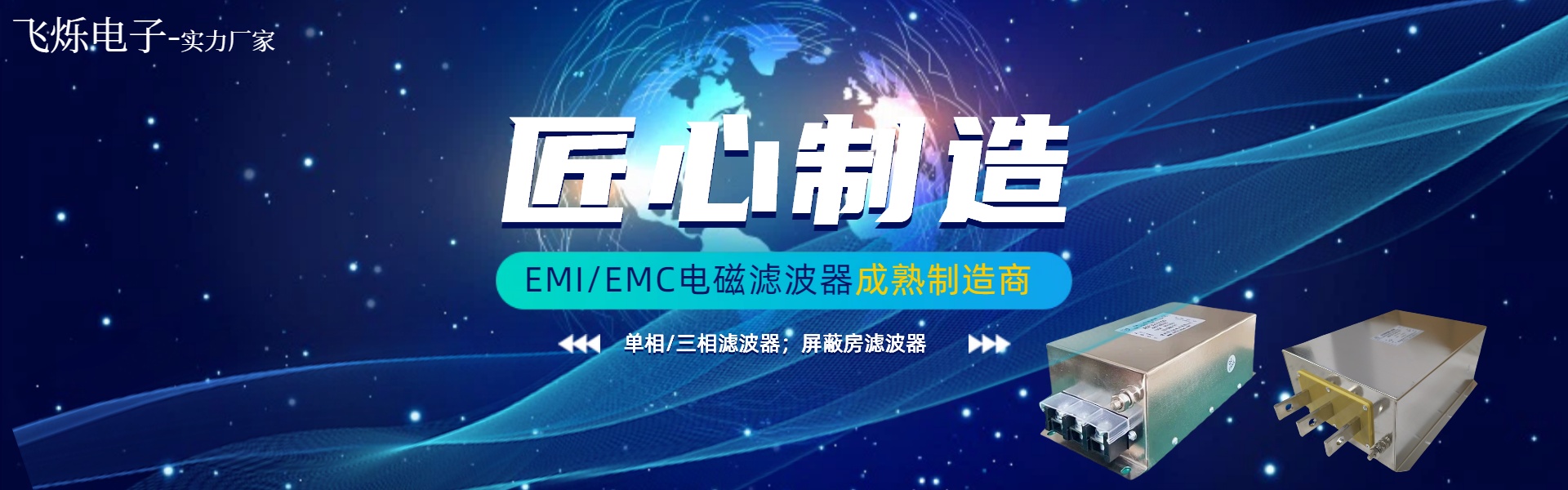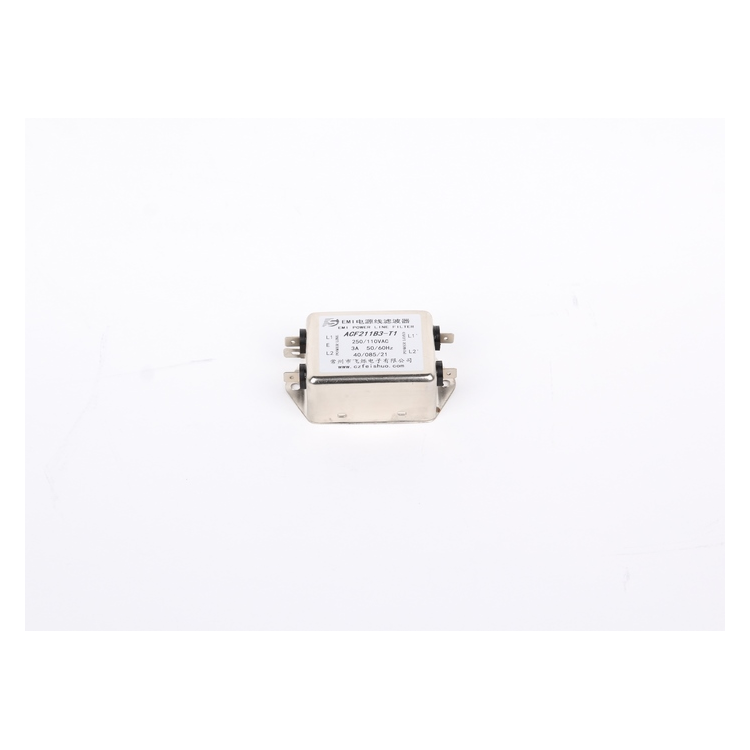
Single-phase/Three-phase Filters, Shielding Room Filters,...


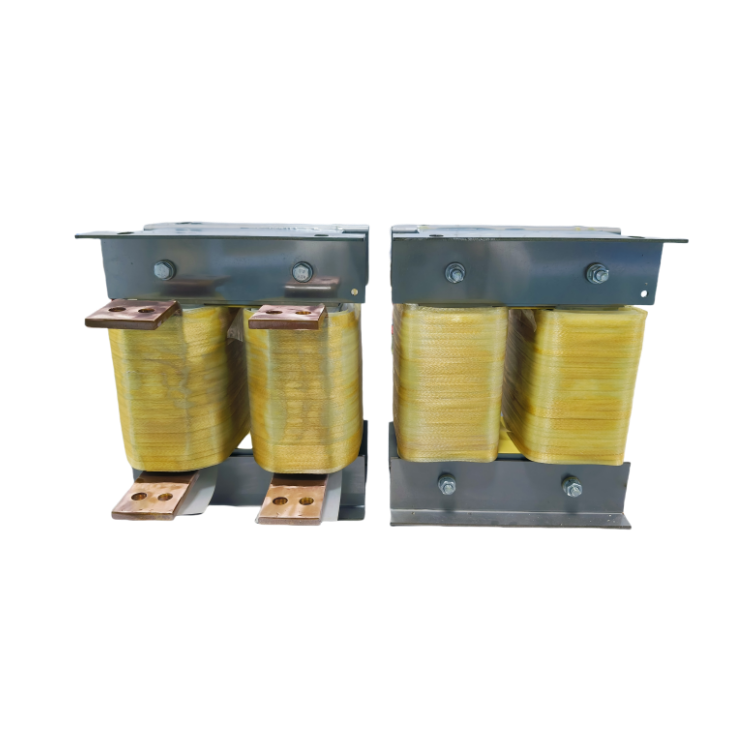
Reactor:
A reactor is an inductive component that generates a higher impedance at specific frequencies, thus limiting the size and direction of current flow. For harmonic currents, which have frequencies higher than the fundamental frequency, reactors exhibit increased impedance, which helps to impede the flow of harmonic currents, thereby reducing their propagation within the system. Therefore, reactors act as filters, minimizing the impact of harmonic currents on the system.
Capacitor:
Capacitors possess capacitive reactance characteristics, allowing for lower impedance to high-frequency harmonics while presenting higher impedance to fundamental current. This means capacitors enable high-frequency harmonics to pass more easily, thereby serving as a bypass, directing these unwanted harmonics to ground and preventing them from interfering with other equipment within the power grid.
Harmonic Filter (Combination of Reactor and Capacitor)
The combination of parallel capacitors and series inductors forms a circuit structure that effectively suppresses harmonics. In this configuration, capacitors offer a low-impedance path to absorb and dissipate high-frequency harmonic currents, while inductors provide a high-impedance path to restrict the flow of harmonic currents. This complementary action enables the combined circuit to effectively suppress harmonics in power systems.


b2b.china9.net © Zhongshang 114 Hebei Network Technology Co., Ltd.Address: Room 6009, Oriental New World Center, No.118 East Zhongshan Road, Qiaoxi District, Shijiazhuang City, Hebei ProvincePlatform Service Hotline: 4006299930