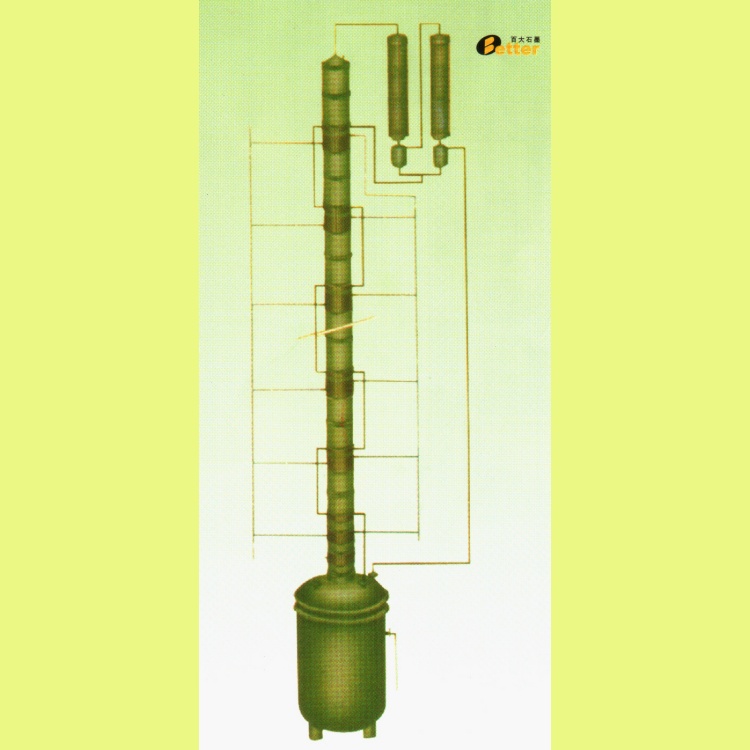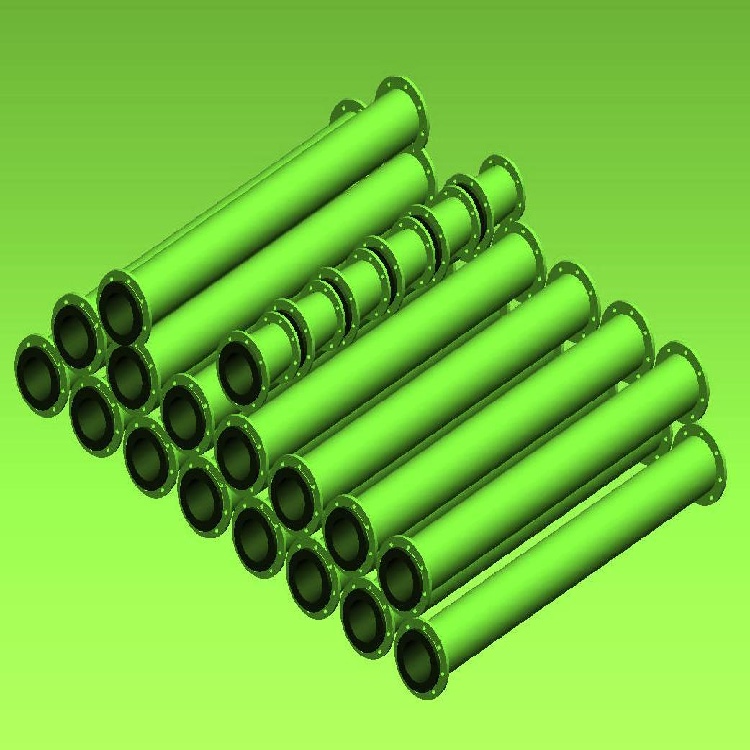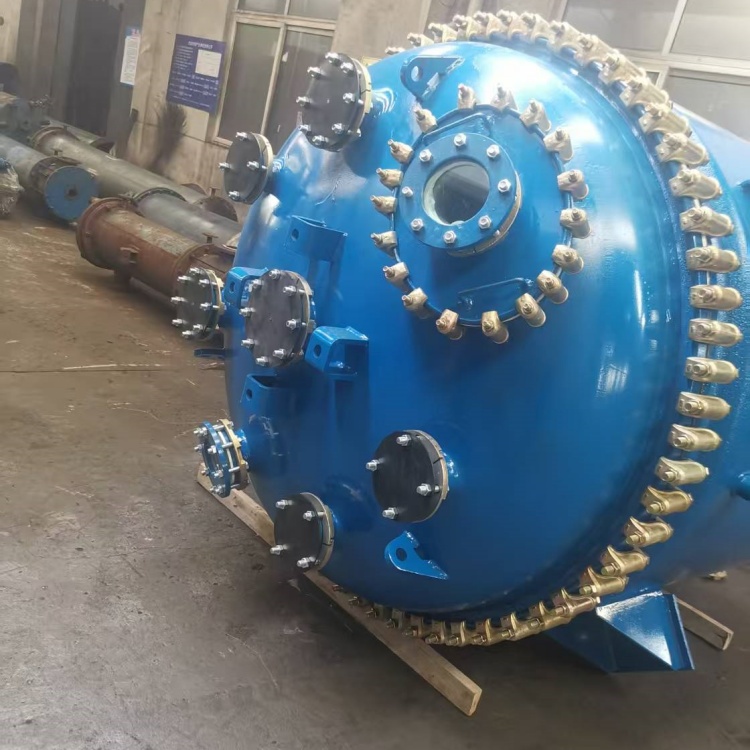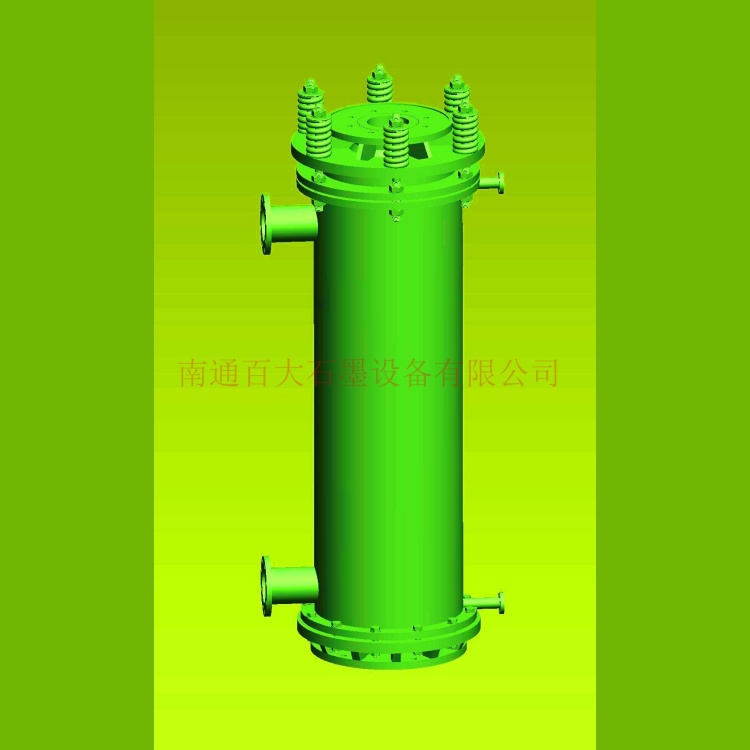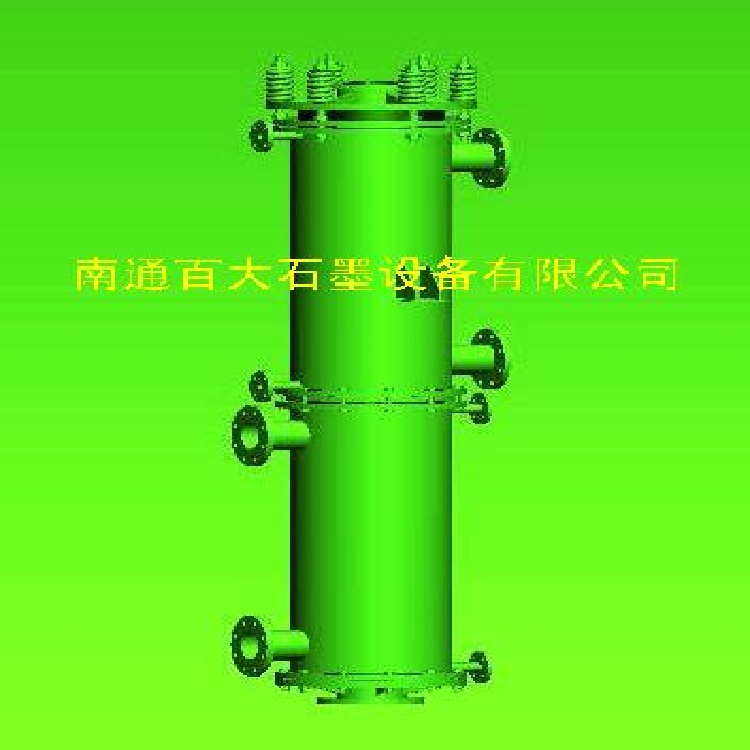
Mainly engaged in graphite heat exchangers, condensers, absorbers, heaters, evaporators, sulfuric acid diluters, etc.
0513-55880264
Graphite CondenserApplication Advantages in High-Temperature and High-Pressure Environments
As the pace of industrialization accelerates, particularly in high-temperature and high-pressure environments such as chemical engineering, nuclear energy, and metallurgy, condensation technology plays a crucial role in ensuring production safety and enhancing energy efficiency. In these conditions, condensers must not only exhibit excellent high-temperature and corrosion resistance but also possess superior heat exchange capabilities and stable operational performance. Graphite condensers, thanks to their unique physical and chemical properties, are increasingly becoming the ideal choice for tackling high-temperature and high-pressure environments.
Basics and Characteristics of Graphite Condensers
Graphite condensers are cooling equipment that utilizes graphite materials as heat exchange mediums. Graphite is an ideal material for heat exchange under extreme conditions due to its excellent thermal conductivity, high-temperature resistance, and corrosion resistance. Graphite condensers are commonly used in high-temperature, high-pressure chemical reactions, nuclear power plant cooling systems, and other fields.
Excellent thermal conductivity
Graphite boasts a high thermal conductivity, especially exhibiting superior thermal conduction properties at high temperatures. Compared to metallic materials, graphite condensers can transfer heat from high-temperature environments to the cooling medium more rapidly, thereby enhancing condensation efficiency.
2. High-temperature resistance
Graphite boasts exceptional high-temperature resistance, allowing it to operate at extreme temperatures without deforming or deteriorating. The typical operating temperature range for graphite materials can reach up to 1500°C, making it suitable for use in high-temperature and high-pressure industrial production.
Corrosion Resistance
Graphite exhibits excellent resistance to most acidic and alkaline mediums, as well as corrosive gases. In highly corrosive environments such as petrochemical plants and nuclear reactor cores, graphite condensers effectively prevent corrosive substances from damaging equipment, thereby extending the lifespan of the equipment.
4. Low expansion and stability
Graphite has a low coefficient of expansion, maintaining good dimensional stability under high temperatures, thus avoiding mechanical stress caused by temperature variations and reducing the failure rate of equipment.
5. Electrical Insulation
Graphite often offers excellent electrical insulation properties, which is particularly important for applications where avoiding current interference is crucial.
Graphite Condensers in High-Temperature, High-Pressure Environments
Graphite condensers play a crucial role in various high-temperature and high-pressure industrial sectors. Typical applications include:
Chemical Reaction Cooling
In many chemical reactions, high temperature and high pressure conditions are commonly required. For instance, processes such as syngas production and heavy oil cracking in the petrochemical and coal chemical industries need to be carried out under such conditions. The heat generated by these reactions must be effectively condensed to prevent equipment from overheating and causing safety accidents. Graphite condensers, due to their high-temperature resistance, corrosion resistance, and high-pressure tolerance, have become essential equipment for cooling these reactions.
In these applications, graphite condensers not only offer rapid heat exchange capabilities but also avoid the issue of corrosion that is common with metal condensers. For certain cooling media containing strong acids and alkalis, the chemical stability of graphite makes it an ideal choice.
Nuclear Power Generation
Condensers in nuclear power plants typically face extreme working conditions. The cooling systems of nuclear power plants operate at high temperatures and are significantly affected by radiation and corrosive mediums. Graphite condensers can act as a bridge between the coolant and the heat exchange system in nuclear power plants, effectively ensuring the operational efficiency and safety of the plant.
In nuclear power plants, condensers typically cool steam back into water and transfer heat to the cooling water system. Due to its excellent high-temperature resistance and radiation resistance, graphite can maintain a longer service life in the cooling system of a nuclear reactor, while ensuring efficient heat exchange.
3. Furnace Cooling in the Metallurgical Industry
In the metallurgical industry, some high-temperature melting furnaces operate at temperatures often reaching thousands of degrees Celsius. During the melting process, temperature fluctuations necessitate that the condensation system can withstand extreme conditions and effectively transfer heat. The superior performance of graphite condensers under these extreme conditions makes them an ideal choice.
In metallurgical melting furnaces, the graphite condenser quickly transfers the heat inside the furnace to the external cooling system, maintaining the furnace's stable temperature and preventing overheating and potential safety hazards.
4. High-pressure Steam Condensation
In many high-pressure industrial processes, the condensation of steam is crucial. For instance, in steam power cycle systems, high-pressure steam is rapidly cooled and recycled through graphite condensers, enhancing energy efficiency. Graphite materials can withstand the impact of high-pressure environments and effectively facilitate heat exchange, ensuring the smooth progression of the condensation process.
5. Solar Thermal Power Generation
In solar thermal power systems, the collected thermal energy typically needs to be converted through a condenser. Solar thermal power usually operates under high-temperature and high-pressure conditions, where graphite condensers can provide excellent heat exchange performance while maintaining stable system operation.
Applications Advantages of Graphite Condensers
Enhance energy efficiency
Graphite condensers, with their superior thermal conductivity and high-temperature resistance, significantly enhance heat exchange efficiency. In many high-temperature and high-pressure applications, graphite condensers can rapidly transfer heat from the heat medium, greatly maximizing energy recovery and improving the overall energy utilization rate of the production process.
2. Extend Equipment Lifespan
Graphite condensers boast corrosion resistance, high-temperature tolerance, and low expansion, enabling them to maintain a longer service life in extreme conditions. Compared to traditional metal condensers, graphite condensers are less prone to material fatigue and corrosion, thereby reducing the frequency of equipment replacement and maintenance, and lowering production costs.
Enhance Security
Graphite condensers can operate stably in high-temperature and high-pressure environments, reducing the risk of accidents caused by equipment failure. Particularly in high-risk environments such as nuclear power plants and chemical factories, the stability and durability of graphite condensers are crucial for ensuring production safety.
4. Reduce Maintenance Costs
Graphite materials' high corrosion resistance ensures that graphite condensers require minimal maintenance or part replacements even after prolonged use, thereby reducing maintenance costs. In extreme environments, traditional metal condensers may frequently shut down due to corrosion and scaling issues, while graphite condensers can maintain a longer stable operation period.
Conclusion
Graphite condensers, with their exceptional performance in high-temperature and high-pressure environments, have gradually become an indispensable and crucial piece of equipment in industries such as chemicals, nuclear energy, and metallurgy. Their unique physical and chemical properties offer significant advantages in terms of high-temperature resistance, corrosion resistance, and strong thermal conductivity, effectively enhancing energy efficiency, extending the service life of equipment, and ensuring production safety.
As high-temperature and high-pressure technologies continue to advance, graphite condensers are poised to gain widespread application across more industrial sectors. Their performance under various extreme working conditions in the future promises to bring more innovation and progress to the industry.
Contact us

Service Hotline
13706295970
Company Telephone
0513-55880264

WeChat Number
13706295970

Address
Jiangsu Nantong Gangqie District Qianzao Street Yuanqiao Village, Group 11
b2b.china9.net © Zhongshang 114 Hebei Network Technology Co., Ltd.Address: Room 6009, Oriental New World Center, No.118 East Zhongshan Road, Qiaoxi District, Shijiazhuang City, Hebei ProvincePlatform Service Hotline: 4006299930