

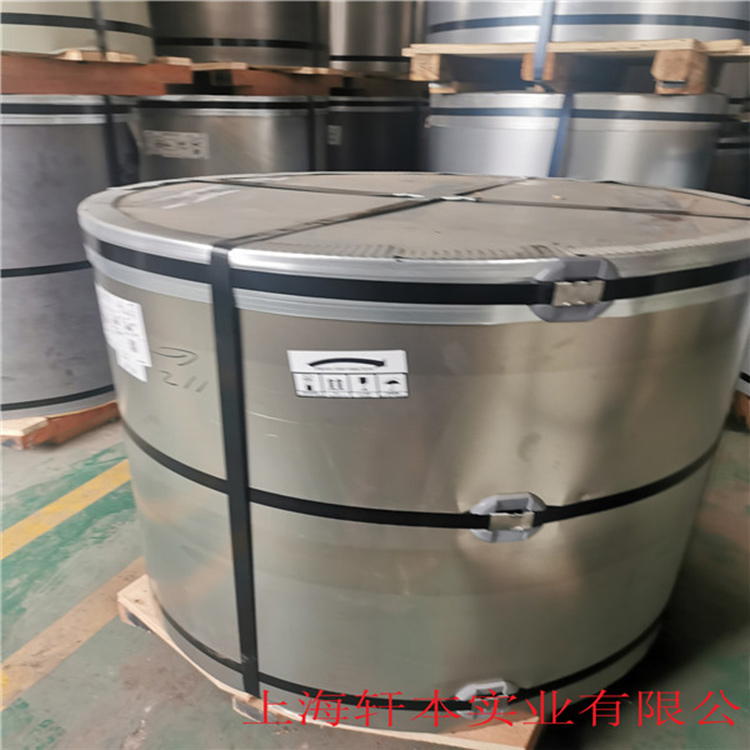
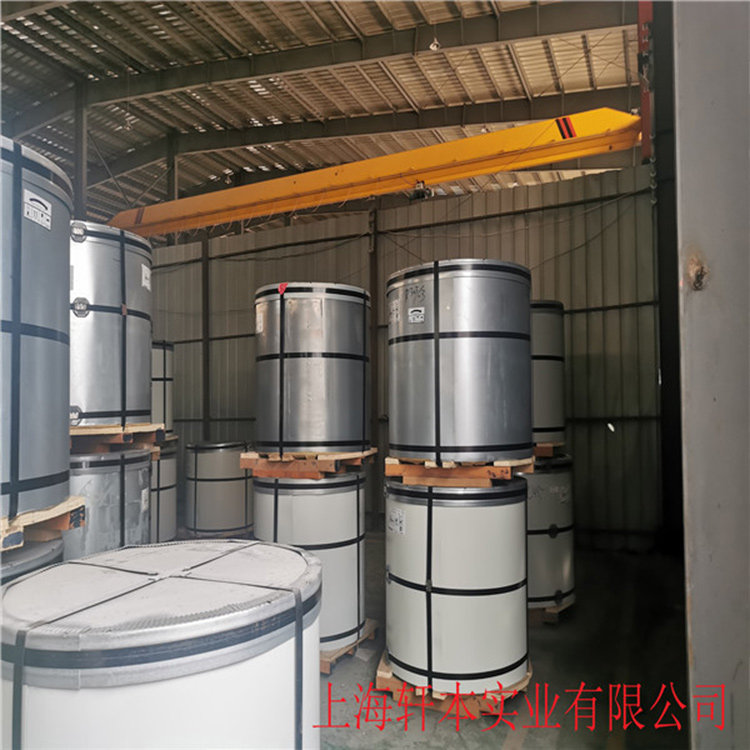

During storage and transportation, failure to employ basic protective measures may lead to steel plate damage, delays, and economic losses. Lift from the center of gravity of the bundled package. When using a crane for lifting, employ nylon straps and spreaders; do not use steel wire rope. When loading and unloading with a forklift, the fork distance must be adjusted to be greater than 5 feet. If the steel plate exceeds 10 feet, two or more people are required to lift one side to prevent sagging. Adopt the following methods during transportation and installation to prevent damage to the coated steel plates and maintain the steel plate dry during transportation. Wear dry, clean gloves when handling and installing the steel plates. Avoid dragging the steel plates across rough surfaces or the plate surfaces. The steel plates should be lifted off the ground and placed on wood blocks, tilted at a certain angle to prevent water accumulation, and covered with waterproof tarpaulins. Wet bundles should be separated promptly, wiped clean with a clean cloth, and stacked in a well-ventilated area until completely dry.
Size of the brittle fracture. (2) Hydrogen embrittlement is the phenomenon of early brittle fracture under the combined action of hydrogen and stress in the tested metal materials. Surface treatments such as pickling, cathodic descaling, and electroplating are the main causes of hydrogen embrittlement. Certain high-strength structural steels, especially high-strength steels, are particularly sensitive to hydrogen embrittlement, as many standard components used in aircraft have specific requirements for hydrogen embrittlement. Therefore, electroplating factories often encounter hydrogen embrittlement testing issues. Methods to measure hydrogen embrittlement include delayed fracture tests (notch toughness tests), slow bend tests, and stress ring tests, etc.
Two testing methods have a certain degree of subjectivity. The third method is more objective, especially effective for flat coating inspections, but also presents some difficulties, mainly due to the inability to differentiate between various glossy coatings. (1) Visual Inspection Method: To determine the brightness level of the coating using visual inspection, the illumination should be 3001 lux (equivalent to the illumination at 500mm from a 40W fluorescent lamp). The grading standards for visual inspection are as follows. Level 1 (Mirror-like Brightness): The coating is as bright as a mirror, allowing clear visibility of a person's facial features and eyebrows. Level 2 (Bright): The surface of the coating is bright, visible.
The graduations of the volumetric flask. Then gently swirl the flask to ensure thorough mixing of the two solutions. (3) Measurement Method and Result Calculation. Using a pipette, withdraw 5ml of the oxide of antimony solution into a beaker, add 100ml of analytical pure with a density of 1.18~1.19g/cm³, to prepare the test solution; its temperature should not exceed 40°C. Weigh the sample using an analytical balance to an accuracy of 0.001g, and denote this mass as wo. Place the sample into the test槽液 to dissolve the zinc layer, with the reaction being.
A quick and accurate method for measuring coating thickness is using a micrometer.
In France, the coating thickness of color coated steel plates is measured by determining the difference in thickness before and after the coating is removed. The Drilled Hole Destruction Microscopic Observation Method (also known as DJH method) is now also widely used.
Broadly used for coating thickness measurement, as this method can accurately differentiate and measure the thickness of primer and topcoat. It involves drilling a conical hole in the coating of the color coated plate, observing the coating through an optical microscope, and locating the coating interface.
Measure the horizontal distance and convert it to the coating thickness based on the taper.
Color coated steel coil - Pencil Hardness Test
The pencil hardness test is a convenient and effective method to determine the hardness of coatings, using a set of pencils with known hardness to measure the surface hardness of the color coated steel sheets. Baosteel, in collaboration with the Shanghai Zhonghua Pencil Factory, has developed the Zhonghua 505 pencil specifically for coating hardness testing on color coated sheets, which is recommended by the "GB/T 13448-2006 Test Methods for Color Coated Steel Sheets and Steel Strips." This pencil ensures the stability of hardness between pencil batches, making the pencil hardness test results more accurate and reliable.

Color Coated Steel Sheet: Reverse impact tests are typically conducted on color coated steel sheets. This involves allowing a heavy hammer of the impact tester to fall freely and strike the sample, causing it to deform rapidly and form convex areas. The coating on the convex areas is then inspected for cracking or peeling to evaluate its resistance to cracking or peeling.
Color-coated steel plate T-bend test involves bending the sample 180° around itself to observe any cracking or peeling of the coating on the bending surface, and to determine the small thickness multiple of the sample that does not produce cracking or peeling. 0T and 1T tests.
