


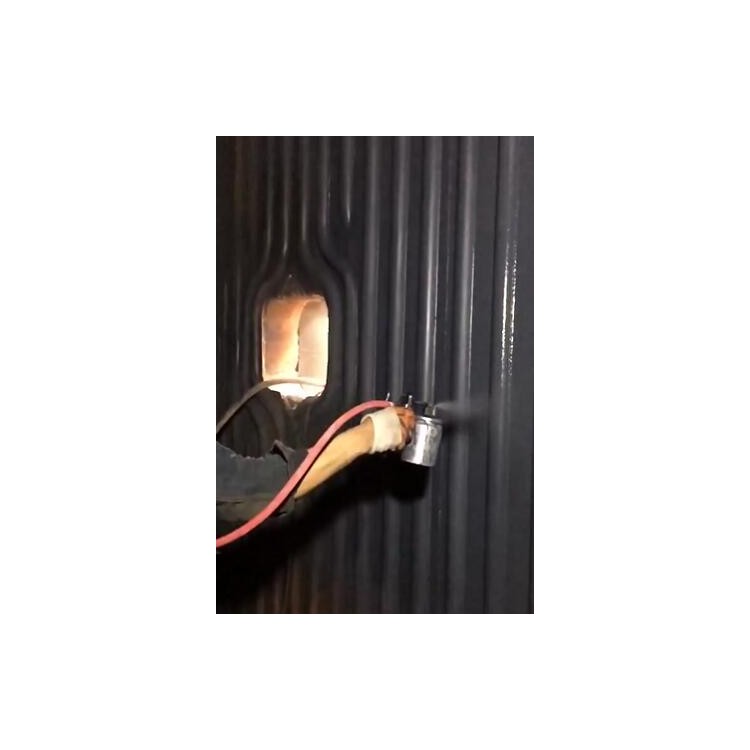
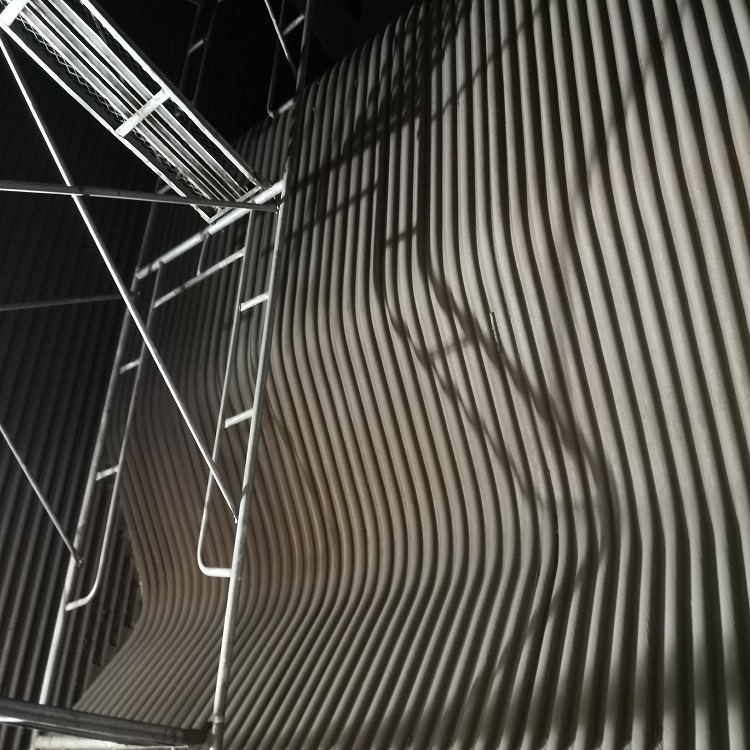
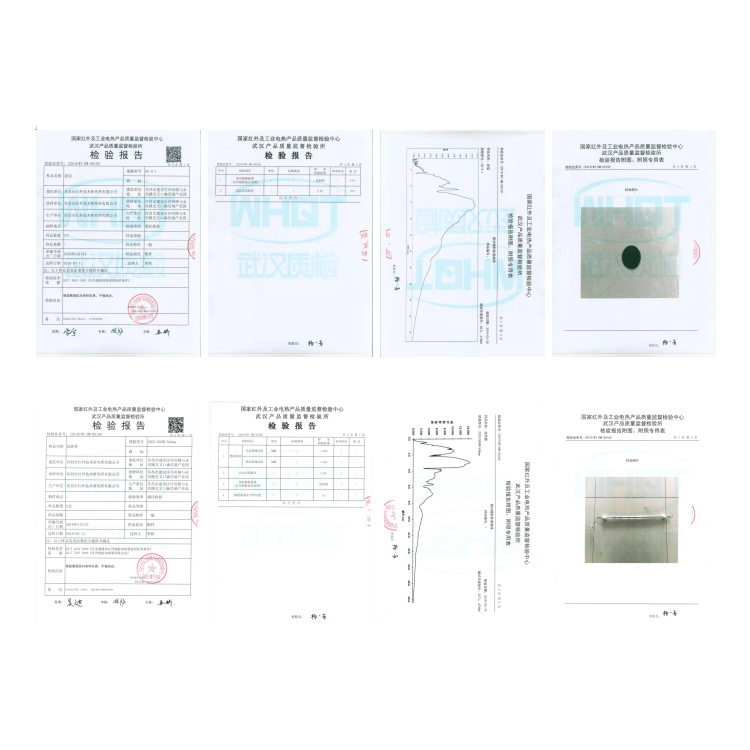
Xuchang Infrared Technology Research Institute Co., Ltd. is located on Yongxing East Road in the Xuchang High-Tech Industrial Development Zone (Zhongyuan Electric Valley), Henan Province. It was formerly known as the Xuchang Infrared Technology Research Institute and is currently one of the influential infrared heating research institutions in China.1979Year10Since our establishment last month, we have adhered to“Highlight strengths, focus on quality, enhance service, strive to create al”Our guiding principles. With strong technical capabilities, a high-quality team, and a spirit of innovation, the Xuchang Infrared Institute has developed and produced a series of national-level products.jInitially horizontal infrared products. Main products include: series of infrared radiation (absorption) coatings, infrared heating elements, infrared radiation heating modules (plates), infrared radiation heating furnaces (boxes), quick infrared radiation heaters, seriesgEnd infrared heating experimental equipment, series of infrared heating controllers, etc. Infrared high-temperature resistant coatings generally refer to those that can withstand high temperatures for a long time.200Above 0 degrees Celsius Special functional coatings that maintain certain physical and chemical properties, enabling the protected object to function normally in high-temperature environments. These coatings are filled with infrared borosilicate glass as the main filler into the resin matrix, forming a new type of infrared high-temperature resistant coating. High-temperature resistant coatings can be divided into two major categories: organic high-temperature resistant infrared coatings and inorganic high-temperature resistant infrared coatings. The coating in question is an inorganic high-temperature resistant coating. It features heat resistance, corrosion resistance, and conductivity, with inexpensive and readily available raw materials and a simple preparation process.jIt's simple. This coating is commonly used to paint high-voltage electrostatic precipitators.jBoards can extend the service life of electrostatic precipitators and improve operational conditions. Therefore, they are widely valued by departments using electrostatic precipitators in industries such as cement, metallurgy, and electricity. Infrared high-temperature coatings are inorganic single-component, utilizing a specially formulated solution with no odor. Temperature Resistance Range(-80-1800℃)Infrared high-temperature resistant thermal insulation coating is available only.0.03W/m.KEffectivelyyBlock and shield the radiant heat and conduction of infrared radiationyProduction efficiency can reach90%Left and right, available.yHeat radiation and heat loss from high-temperature objects, can effectively preserve the coldness of low-temperature objects andyThe radiation heat loss caused by the cooling environment can also prevent the occurrence of condensation on objects. Infrared high-temperature-resistant coatings can also be used as high-temperature-resistant adhesives, and these coatings can withstand1300℃At even higher temperatures, it can be used as a coating material for ceramics, glass, metals, and also as a binder for ceramics, glass, and metals. It is widely applied in industrial fields such as metallurgy, petrochemical industry, mining, and aerospace. When applied at room temperature to surfaces like metals, it dries at low temperatures or cures at room temperature, offering excellent adhesion to metals and is extremely hard, resistant to scraping off with a blade. Post-high-temperature firing, its strength becomes even more pronounced, and it remains crack-free, with excellent resistance.1800High-temperature resistance, suitable for surfaces of metals like iron, steel, aluminum, ceramics, glass, etc.
Infrared high-temperature coatings are a crucial type of paint, widely used in high-temperature motors and electrical insulation since the industrial production of silicone began in the 1940s. Silicone-based infrared ceramic glass coatings meet the requirements for corrosion resistance at higher temperatures. However, due to the poor mechanical properties, low adhesion, wear resistance, and solvent resistance of silicone itself, it is increasingly unable to meet the demands of modern motors, electrical appliances, aerospace, and special media resistance. As a result, a series of heterocyclic polymers have emerged. These polymers have been successfully applied in special high-temperature engineering plastics, molding compounds, films, laminates, adhesives, and paints. In addition to modifying the pure silicon-oxygen backbone, organic resins are also used to make them heat-resistant, radiation-resistant, oil-resistant, hydrolysis-resistant, and wear-resistant. Despite this, these new high polymers have not yet been widely used in high-temperature coatings, with the vast majority of products still in the research and development phase.
The raw materials for preparing paint can be divided into three parts.:Base material, reactive pigment. Further, react a certain amount of reactive pigment in a ball mill, mix the base material and pigment of the paint in a certain proportion, and disperse them with high-speed stirring for about half an hour, thus obtaining the paint. Due to the use of granular pigment in the formula, it is prone to sedimentation and agglomeration.,Adding anti-settling agents will reduce the conductive properties of the coating film. Additionally, long-term contact with acidic binders can cause a slow reaction. To avoid these drawbacks, the binder and pigments are separately packaged. They are mixed before application to achieve the appropriate working viscosity. There is no strict expiration date for the mixed paint; generally, it's best to use it the same day, but it can also be used a few days later.
After testing:High-temperature pipelines, equipment, and furnace chambers(Internal and External)Coating the surface of the container effectivelyyHeat radiation and heat loss.
1Infrared coatings for1100℃Apply coating to the surface of the object8mmThe surface temperature of the object can be reduced to100℃Within.
2On the inner and outer surfaces of the furnace kiln6mmThick infrared high-temperature heat-insulating and thermal-insulating coatings can reduce heat loss.30%Above.
3Applying it to the inner walls of furnaces and kilns results in a smoother and more reflective surface than any other material, reducing the heat absorption of the furnace walls and thereby increasing the flame temperature within the furnace.
4At minus30℃The cabinet is painted10mmThick infrared heat-resistant insulation coating24The temperature inside the hour box does not exceed0℃。
5Infrared coatings have zero ion content, and they also prevent moisture-laden chlorides or sulfides from the air or process from entering the metal surface, providing excellent corrosion protection for the metal without causing the weld seams of metal welding to become brittle.
6Infrared coatings can be used on chimneys, ducts, and windshields, offering excellent wear and impact resistance.
7Infrared coatings have a high insulation coefficient, offering excellent insulation under high temperatures.
8Infrared coatings have no odor, do not deform, and do not decompose under high temperatures.
Eco-friendly and harmless to humans.
Strong adhesion and good flexibility, suitable for coating on materials such as stainless steel, aluminum, iron phosphate, ceramics, and bamboo carbon.
Excellent high-temperature resistance; maintains stable luster and color under long-term high-temperature use.
Excellent scratch and corrosion resistance, high hardness, and good wear resistance.
Excellent continuous non-stick capability, capable of long-term resistance to boiling water, saltwater, milk, eggs, butter, and other edible materials.
Infrared high-temperature coatings can be applied to surfaces of iron, steel, aluminum, ceramics, and glass, and are widely used in industries such as metallurgy, petrochemicals, oil extraction, aerospace, and more.zHigh-tensile strength1400℃Even higher temperatures. Not only is it resistant to high temperatures, but also to thermal shock and abrasion. Through the coating, it can modify the surface of metals and various refractory materials, thereby enhancing the performance of the base material, saving energy, and extending the service life of the metallic matrix material.1-2High-temperature resistant infrared coatings are widely used in products such as electric irons, rice cookers, microwave ovens, and baking pans. They have excellent adhesion to metals, are extremely hard, and their strength is even more pronounced after high-temperature firing without cracking. They also offer good oil and acid/alkali resistance.XWGTModel High Temperature Infrared Radiation Paint88Named as a recommended energy-saving project in Henan Province annually, and awarded the Third Prize for Technological Progress in Xuchang City.2002In the year, we developed and produced nano low-temperature infrared radiation coatings.
Xuchang Infrared Institute will continue to focus on the research and development of infrared radiation heating technology to enhance safety.qEfficiency, reliability, and system lifespan, providing for you,zPure infrared heating technology solutions.
