
 Water Level Indicator Model XW-1, Xuzhou Weisi Water Level Monitoring Instrument
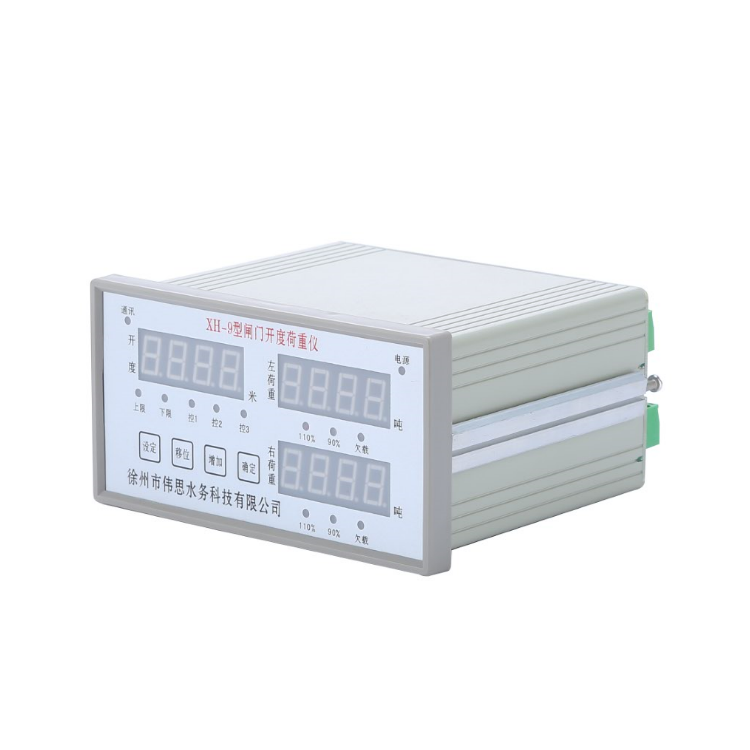 Xuzhou Weisi Gate Opener XH-9 Type Gate Opener Load Gauge -- Load Measurement and Control Instrument
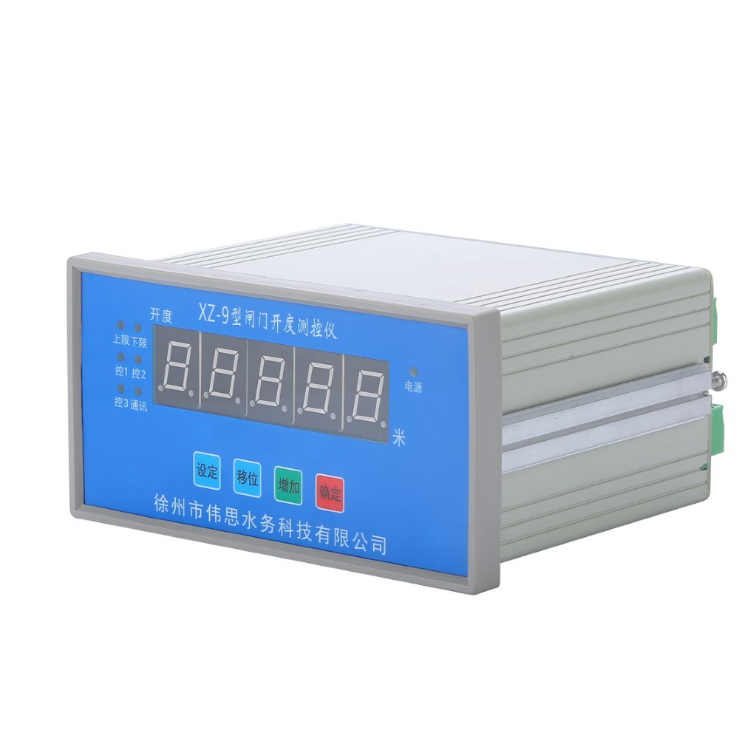 XZ-9 Type Gate Opening Gauge -- Gate Opening Measurement and Control Instrument
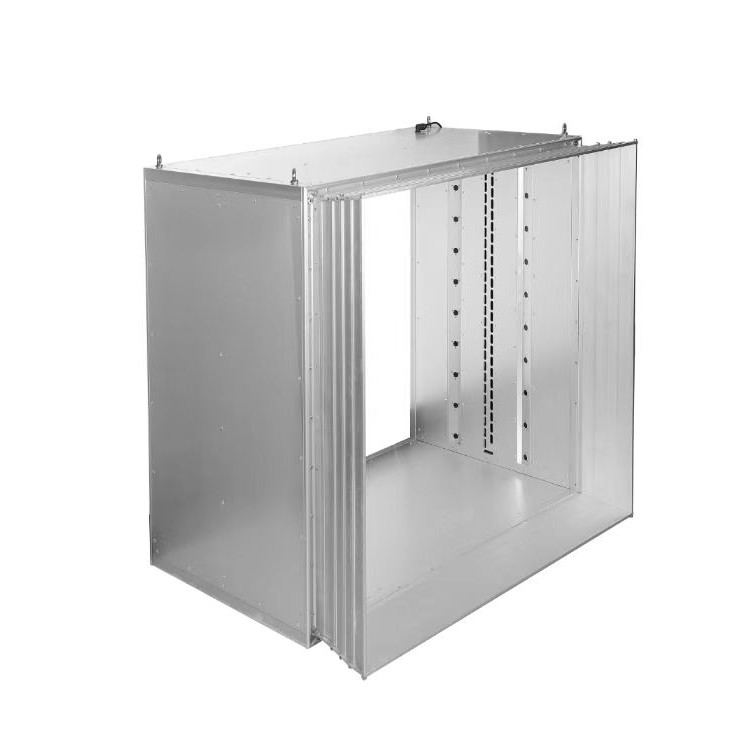 Tangent Flow Meters, LSC Series Box Type Tangent Flow Meters, Flow Meters
Product Details

Hydrological Instruments, Other Meteorological Instruments, Safety Equipment,...



产品Price 1000.00/Tai
最小起订Quantity:1 Tai 供货总Quantity: 10000 Tai


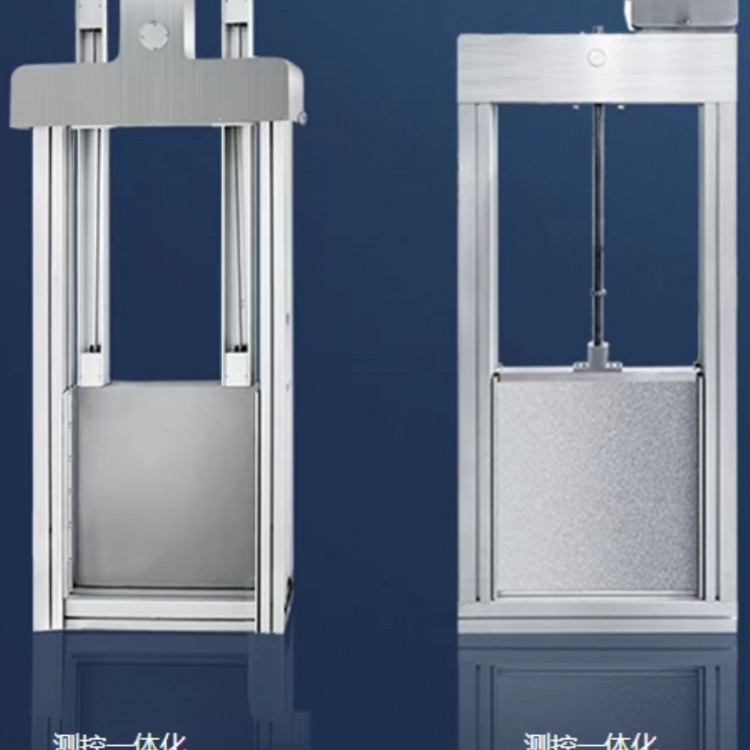 Integrated Control Gate, Wuxiu Wesi Integrated Control Gate, Integrated Control Gate Manufacturer
¥5000.00
Integrated Control Gate, Wuxiu Wesi Integrated Control Gate, Integrated Control Gate Manufacturer
¥5000.00
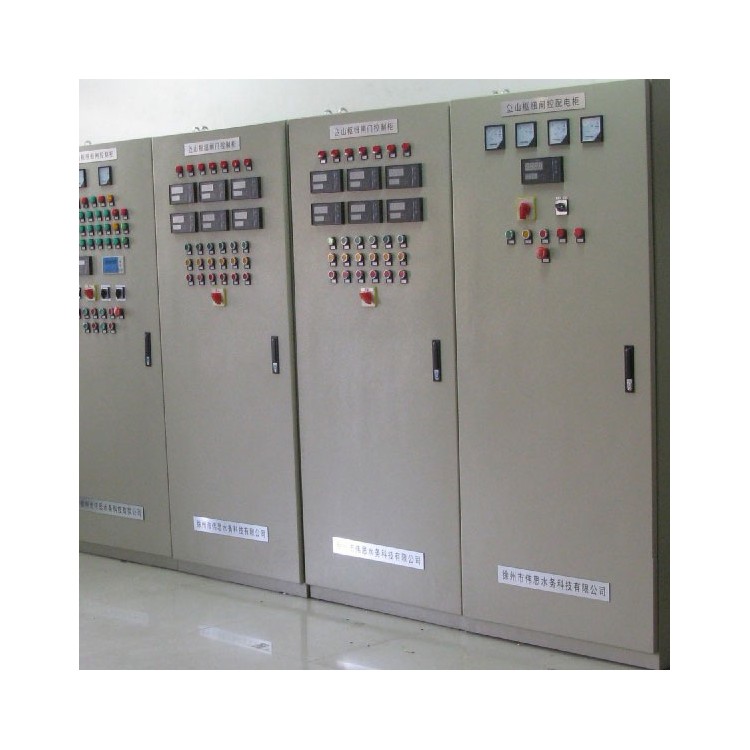 Gate Monitoring System, Xuzhou Weisi Gate Monitoring System, Gate Monitoring System Manufacturer
¥5000.00
Integrated Control Gate, Xuzhou Weisi Integrated Control Gate, Integrated Control Gate Manufacturer
¥5000.00
Gate Monitoring System, Xuzhou Weisi Gate Monitoring System, Gate Monitoring System Manufacturer
¥5000.00
Integrated Control Gate, Xuzhou Weisi Integrated Control Gate, Integrated Control Gate Manufacturer
¥5000.00
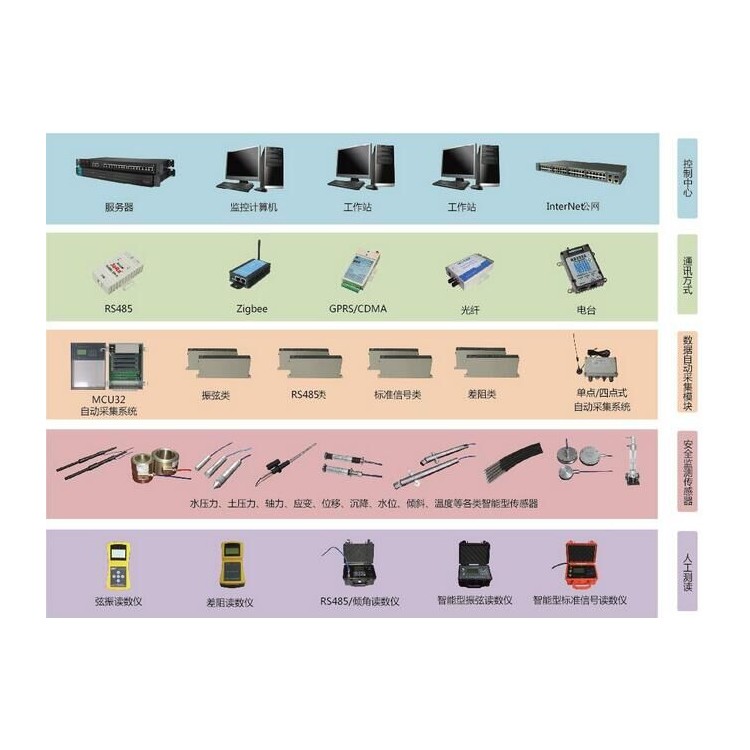
Reservoir Dam Monitoring System Our company boasts a large team of technical experts in communication, automation control, hydrology and water resources, and hydraulic engineering. We have been involved in the development of safety monitoring systems for numerous large and medium-sized reservoir and dam projects, accumulating extensive practical experience in the engineering development and application of dam safety monitoring systems for reservoir and hydropower stations. 1. Monitoring Content, Methods, and Instruments 3.3. System Network Architecture The reservoir dam safety monitoring data collection system utilizes a hierarchical distributed open structure, operates in a decentralized control manner, and can command each local monitoring unit to automatically conduct routine inspections, store data, and report to the safety monitoring center at scheduled times. The network communication between MCU systems and between MCUs and monitoring computers employs fiber optic cables. 4.6. Enable printing of system information, supporting the printing of graphics, reports, curves, alarm messages, and various statistical calculation results. 4.7. Online editing, maintenance, modification, and expansion features. The system hardware and software meet the requirements of open standards, ensuring compatibility for future system enhancements such as additional hardware nodes, expanded database capacity, and enhanced software functionalities. [TOP][Print This Page][Close Window]


1.1. Dam Area Rainfall Intensity and Amount Monitoring: Rainfall volume and intensity are measured using a bucket rain gauge.
1.2. Dam Seepage Line and Foundation Seepage Pressure Monitoring: Monitor the distribution of seepage pressure within the dam structure and the position of the seepage line, as well as the distribution of foundation seepage pressure, by installing seepage pressure gauges.
1.3. Dam upstream and downstream water level monitoring: Monitor the water levels upstream and downstream of the dam by installing float-type and vibration string water level gauges.
1.4. Dam Body Displacement Monitoring: Utilizing a total station automatic polar coordinate measurement system to monitor dam deformation, an integrated engineering survey system for both field and office work allows for unattended and automatic monitoring.
1.5. Dam Seepage Flow Monitoring: Install flow gauges at the downstream of the dam to monitor the seepage flow of the dam.
2. Sensors: Various types of sensors can be installed within the monitoring range according to actual needs. Commonly used ones include: piezometers, concrete strain gauges, stress gauges, multi-point displacement meters, crack gauges, water level gauges, steel bar gauges, tiltmeters, force gauges, barometers, thermometers, pressure cells, etc.
3. Automatic Monitoring System
3.1. System Overview
With advancements in computer and electrical testing technologies, monitoring projects based on electrical sensor technology can now be implemented for around-the-clock automatic surveillance. Similarly, the monitoring systems are also equipped for manual observation, where personnel can carry data recorders or laptops to various monitoring stations to read data, which can then be manually input into computers and entered into relevant databases.
Continuous automatic monitoring can record the complete data change process of the monitored object, providing real-time data. With the help of a computer network system, the data can also be transmitted to any department within the network coverage that requires it.
3.2. System Composition
The system consists of three parts:
1) On-site Measurement Section
2) Remote Terminal Collection Unit (RTCU)
3) Data Management in the Management Center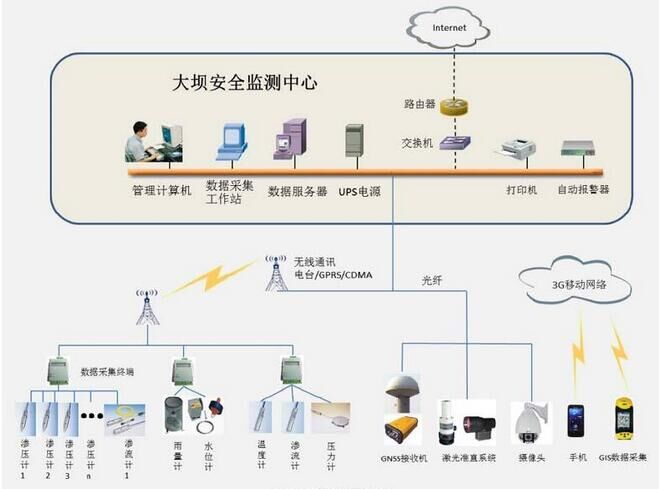
The safety monitoring data collection system can gather monitoring data from various monitoring stations within this project via optical fibers, which is then transmitted through the fibers to the monitoring host within the monitoring center located at the administrative office.
4. Monitoring System Features
This monitoring system is specifically designed to provide an optimal solution for dam safety monitoring, featuring basic functions such as:
4.1. Real-time remote monitoring of dam test parameters is available, allowing for customizable data collection frequency and points, as well as various calculations on raw data.
4.2. Professional assessment of reservoir dam data collection is available, with calculations, evaluations, and processing of relevant data according to hydraulic engineering requirements to meet the needs of various evaluation models.
4.3. Data can be saved in various database formats and supports historical data queries. It can also directly generate Excel or other report formats. Additionally, data can be saved in real-time to web reports, enabling remote browsing of various data on the web.
4.4. Data can be displayed graphically, including time series curves, X/Y coordinate charts, simulations, and histograms.
4.5. Features data limit alarm function; when the alarm information is uploaded immediately on-site, the host will display a clear alarm screen and message, along with various audio-visual alarm alerts.

Phone Consultation