Sound Rental, Sound Equipment Leasing, Audio Engineering, Stage Decoration, KTV Audio Equipment, Audio Equipment, Conference Room Sound System
13798888803


Product Recommendation
The construction and installation process for Dongguan audio engineering generally includes several stages such as preparation, foundation construction, equipment installation, wiring connection, and system debugging, as detailed below:
Construction Preparations
Familiarize with Drawings and Technical Documents: Construction personnel must carefully study the design drawings, construction specifications, and other technical documents for the audio engineering project to clearly understand the overall layout, equipment placement, wiring routes, and technical requirements.
Site Inspection: Conduct a physical survey of the construction site to assess the size, shape, and architectural structure of the space, as well as the availability of power, water, and ventilation. Determine if there are any factors that may affect construction, such as obstructions or dampness.
Material and Equipment Inspection: Inspect all types of materials and equipment required for the project. Verify that the models and specifications of equipment such as speakers, amplifiers, mixing consoles, and microphones match the design requirements, check for any damage to the appearance, and ensure proper functionality. Additionally, inspect the quality and quantity of materials such as cables, pipes, conduits, and hardware components to ensure they meet construction requirements.
Tool Preparation for Construction: Ensure all necessary tools for construction, such as drills, screwdrivers, wrenches, stripping pliers, crimping pliers, multimeters, and oscilloscopes, are ready and in good working condition, with an adequate supply.
Staff Organization and Safety Training: Allocate construction personnel based on the scale and complexity of the project, clearly defining each person's responsibilities and roles. Conduct safety training for the construction staff to ensure they are aware of safety precautions on the job site, understand safety operation procedures, and guarantee the safety of the construction process.
Foundation Construction
Cable Tray and Raceway Installation: As per design specifications, install cable trays or raceways on ceilings, walls, or floors to provide pathways for cable laying. Ensure the horizontal and vertical alignment of the trays or raceways during installation, secure them firmly, and maintain tight connections to prevent any movement or deformation.
Power Socket and Grounding System Installation: Install power sockets at the designated locations, ensuring that the specifications and quantity of the sockets meet the power requirements of the equipment, and that the wiring is correct and the grounding is effective. Simultaneously, establish a comprehensive grounding system, connecting the grounding terminals of the audio equipment to the grounding electrode reliably. The grounding resistance should comply with relevant standard requirements, generally not exceeding 4 ohms, to ensure the safe operation of the equipment and the quality of the sound.
Equipment Installation
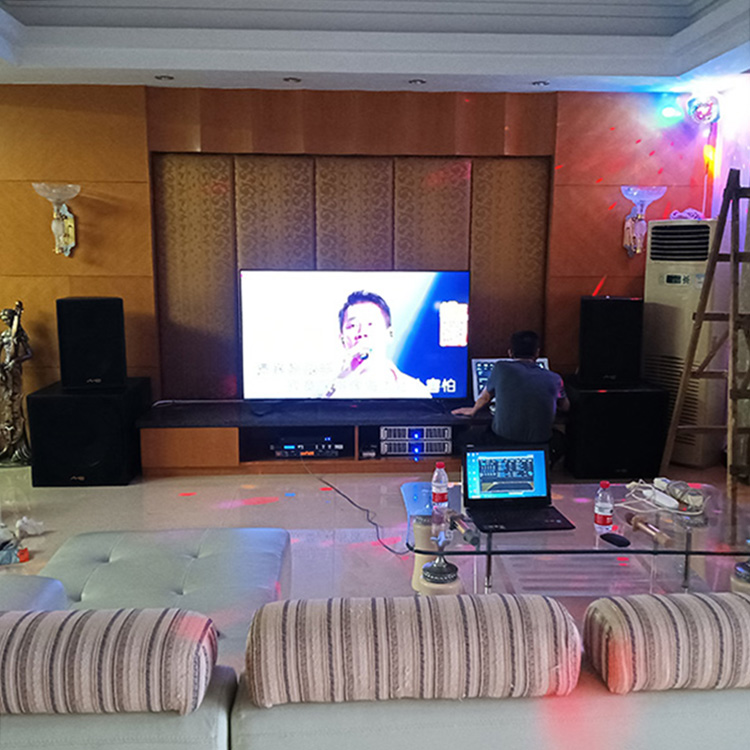
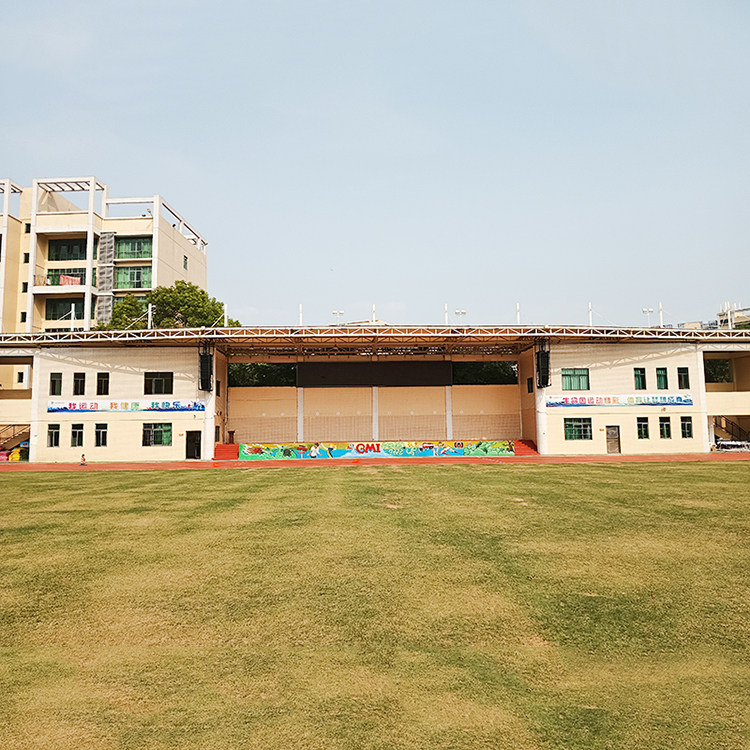
Speaker Installation: Determine the placement and method of the speakers based on the design plan, such as wall-mounted, ceiling-mounted, floor-standing, or suspended installations. For wall-mounted speakers, use appropriate expansion bolts to secure the speaker bracket to the wall, then mount the speaker on the bracket and adjust the angle; for ceiling-mounted speakers, drill holes in the ceiling, embed the speaker for installation, and ensure a flat installation; for suspended speakers, use professional hanging equipment and accessories to securely hang the speakers at the chosen location, adjusting the height and angle for optimal sound coverage.
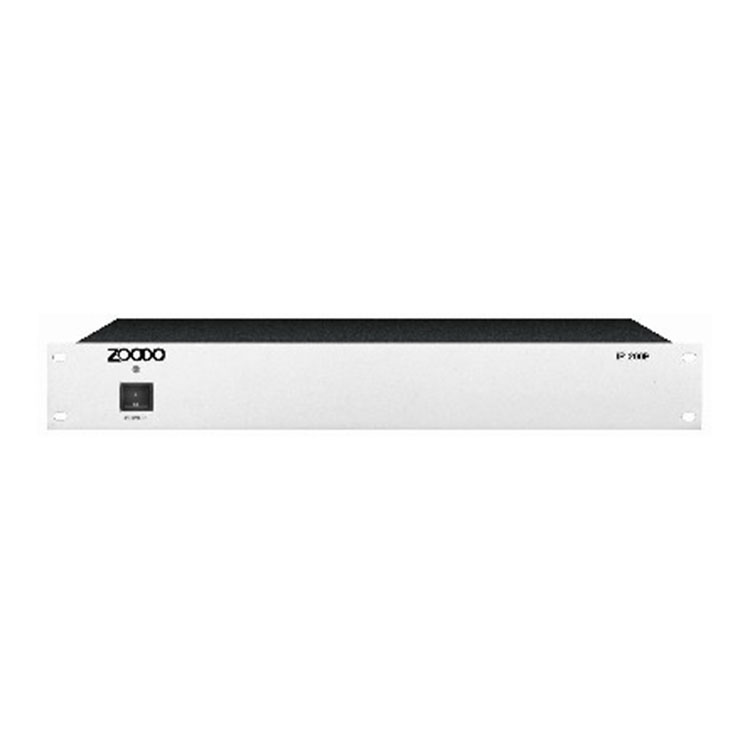
Installation of Amplifiers, Mixing Consoles, etc.: Install amplifiers, mixing consoles, audio processors, switches, and other equipment within the equipment cabinet. Arrange the equipment in the cabinet based on their size and weight, typically placing heavier devices on the lower shelves and lighter ones on the upper shelves for ease of operation and heat dissipation. Secure the equipment in place using screws to the cabinet's rails to ensure a stable and non-shaking installation.
Microphone Installation: Install microphones based on the usage scenario and requirements. In meeting rooms and classrooms, typically use desktop or gooseneck microphones, placing them in an appropriate position on the conference table or lectern; on stages or similar venues, handheld or wireless microphones may be used, necessitating the installation of a microphone receiver, and ensuring stable signal transmission between the receiver and the microphone.
Line Connection
Cable Laying: Install various types of cables, including audio, power, and control lines, along bridgeways, conduits, or tubes to reach each equipment location. Pay attention to ensuring the cables are neatly and aesthetically laid out, avoiding crossings and tangles, and leaving sufficient length for equipment connection. Different cable types should be laid separately to prevent signal interference, such as maintaining a certain distance between audio and power cables.
Cable Termination: Connect both ends of the cable to the corresponding interfaces of the equipment. Audio cables typically use XLR, TRS, or 6.35mm jacks for connection, ensuring secure soldering and good contact to avoid cold solder joints or short circuits; power cables should be connected according to the equipment's power requirements, ensuring correct plug and socket connections for accuracy and safety; control lines such as RS232 cables and network cables should also be terminated according to the respective standards and specifications.
After completing the cable connections, each cable must be labeled with information such as its starting point, endpoint, and purpose for future debugging, maintenance, and repairs. Labels can be applied using tags or marking pens, ensuring they are clear, durable, and resistant to fading.
System Debugging
Equipment Parameter Settings: Power on all devices and, following the equipment's user manual and design specifications, perform basic parameter settings for devices such as amplifiers, mixing consoles, and audio processors. This includes setting the output level and gain for amplifiers, channel parameters and input/output levels for mixing consoles, as well as equalization, compression, limiting, and delay parameters for audio processors.
Acoustic Field Testing and Adjustment: Utilizing professional acoustic testing equipment, such as sound level meters and spectrum analyzers, to measure the acoustic parameters of the entire sound system, including sound pressure levels, frequency response, and reverberation time at various locations. Adjusting the speakers' volume, phase, and equalization based on the test results to ensure uniform sound distribution across the acoustic field, a flat frequency response, and an enhanced auditory experience.
Functional Testing: Conduct comprehensive tests on the audio system's various functions, including microphone pickup, audio playback, signal switching, volume adjustment, and effects application. Check if all functions are operating normally and for issues such as feedback, noise, or distortion. If problems arise, promptly investigate the root cause, adjust equipment parameters, or inspect wiring connections until the functions are restored to normal.
Upon completion of the construction and installation, the contractor must organize the construction documents, including design drawings, construction records, equipment lists, and debugging reports, and submit them to the client or relevant department for inspection. Upon passing the inspection, the audio engineering project can be officially put into use.
Contact us

Service Hotline
13798888803
Company Telephone
13798888803

WeChat Number
13798888803

Address
23 Shop, Gangbei South City Road, Dongcheng District, Dongguan City
b2b.china9.net © Zhongshang 114 Hebei Network Technology Co., Ltd.Address: Room 6009, Oriental New World Center, No.118 East Zhongshan Road, Qiaoxi District, Shijiazhuang City, Hebei ProvincePlatform Service Hotline: 4006299930