



Roofing Waterproofing Features
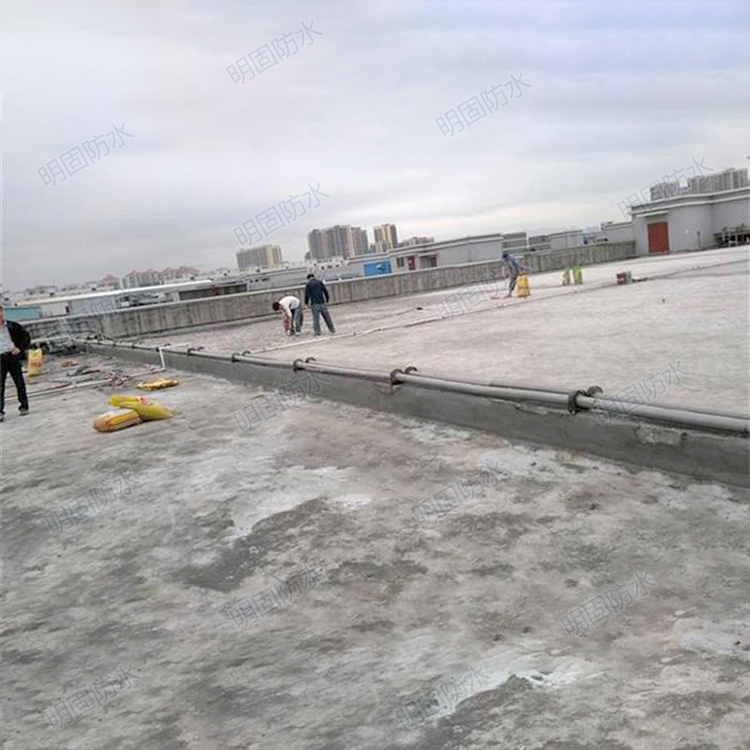
1. Wide temperature fluctuations, with high temperatures during the day and low temperatures at night, causing cyclic expansion and contraction, which can lead to cracking in the structure.
2. Reinforced concrete structures may crack and leak due to uneven settlement of the foundation caused by compaction under additional stress, leading to structural cracking in the floor.
3. Alkali-aggregate reaction, reinforcement corrosion, chloride ion effects, and harmful侵蚀 are all processes that occur under wet conditions. The formation and progression of leakage cracks can adversely affect the load-bearing capacity and durability of the building structure.
Design Principles for Waterproof Reinforcement Construction Plan
1. Inverted waterproof design ensures effective water resistance. The choice of reactive membrane materials that bond and seal with concrete guarantees a leak-proof seal, significantly enhancing safety and reliability.
2. The combination of flexibility and rigidity is crucial; the waterproofing layer must match the base material's changing characteristics.
3. Outsourced waterproofing achieves a flexible, sealed effect: safeguarding the safety of concrete structures from water damage侵蚀.
4. Flexibility: Binary creep resistance and crack prevention to avoid rigid "cracking" leakage.
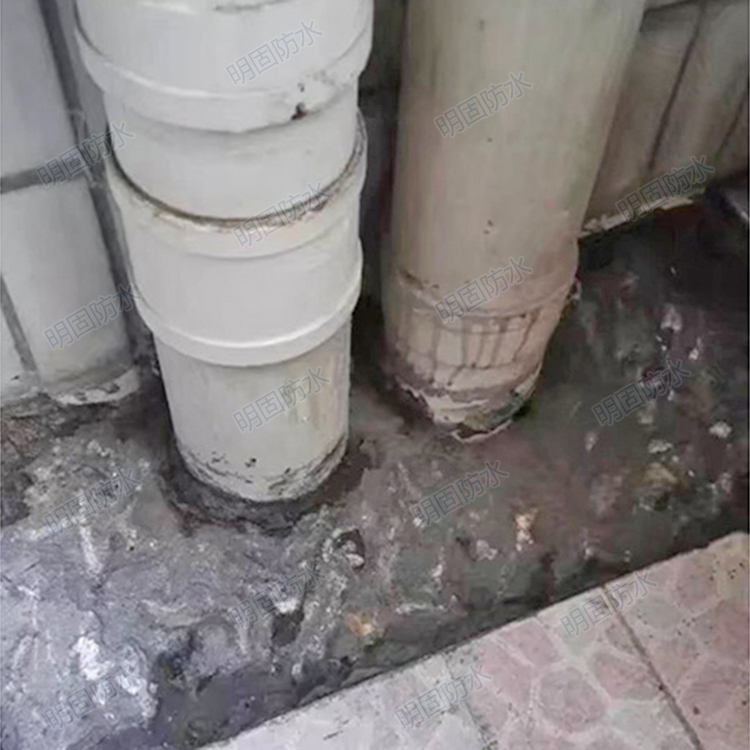
5. Sealing: Effective sealing treatments have been applied to roof junction areas such as cracks, wall corner roots, and drain pipes using matching junction waterproofing sealant; preventing "water leakage" that could lead to the failure of the entire system.
Floor Waterproofing and Insulation Construction Diagram
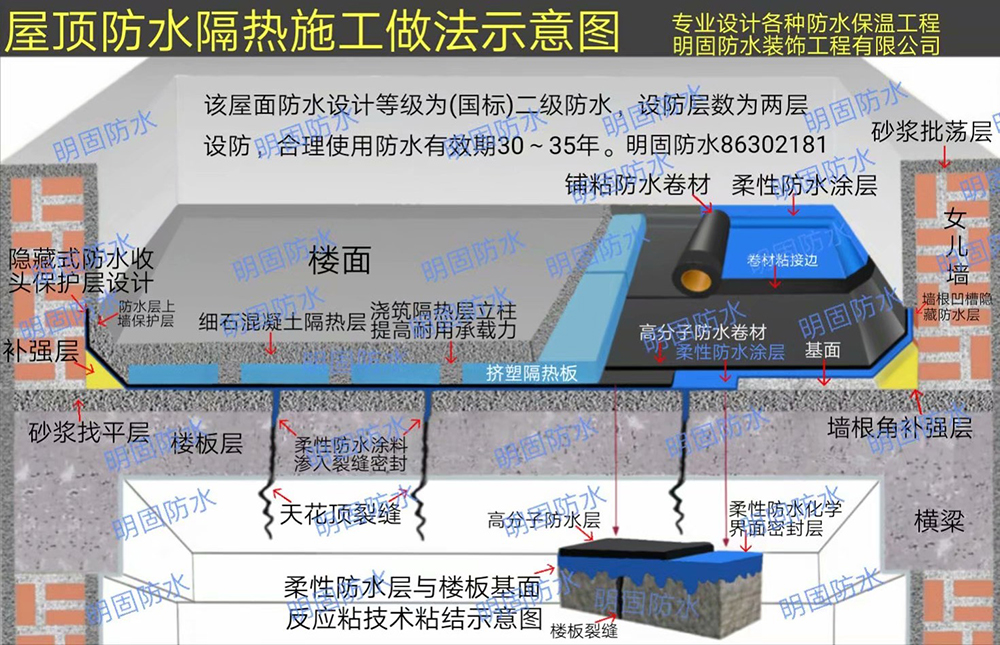

The floor slab structural cracks and leakage caused by uneven settlement of the foundation due to compaction under additional stress are reinforced with non-curing rubber waterproofing. The non-curing rubber offers excellent flexibility, suitable for base deformation, and resists cracks by complementing the substrate. Through physical adsorption, it forms a flexible waterproof layer that adheres firmly, eliminating stress caused by base changes, providing sufficient tensile strength to the waterproof layer, effectively resisting external stress damage.
