


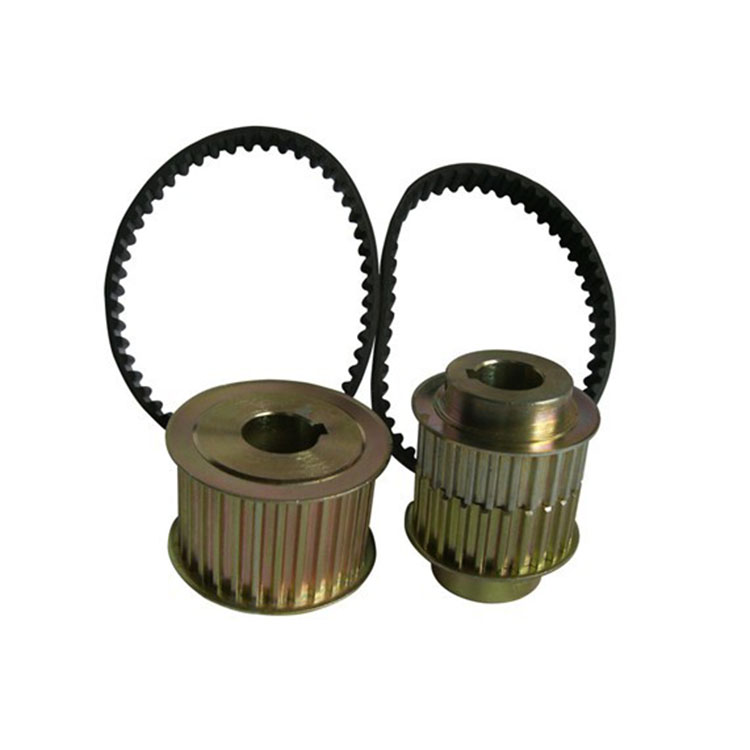


During normal machine operation, the belt pulley is the core driving component. To avoid injuries and losses caused by machine damage, it is necessary to conduct regular inspections and maintenance on the belt pulley.

One. Clean installation holes
As an essential component connecting the belt pulley directly to the machine, we need to regularly clean the inner bore of the belt pulley. First, we coat the inner bore with gasoline, then wipe it clean with a non-woven cloth. Afterward, add a few drops of lubricant and it's ready for installation.
Surface Rust Prevention
If the belt pulley surface shows signs of oxidation and rust, it can affect the pulley's balance, leading to vibrations during operation. In everyday use, it's necessary to regularly treat the belt pulley surface, ideally every 2-3 weeks. Remove the pulley, clean the surface with gasoline and non-woven cloth, and then apply a layer of anti-rust oil.
Three: Belt Tension
Belts, as the part that drives the belt pulley, require regular inspections. If the belt is too tight, it can overheat during operation. If the belt pulley is too loose, it may slip. Therefore, we need to regularly check the belt tension. Daily checks can be done by simply pressing the belt pulley with your hand. If the belt is either too loose or too tight, it should be replaced promptly.
