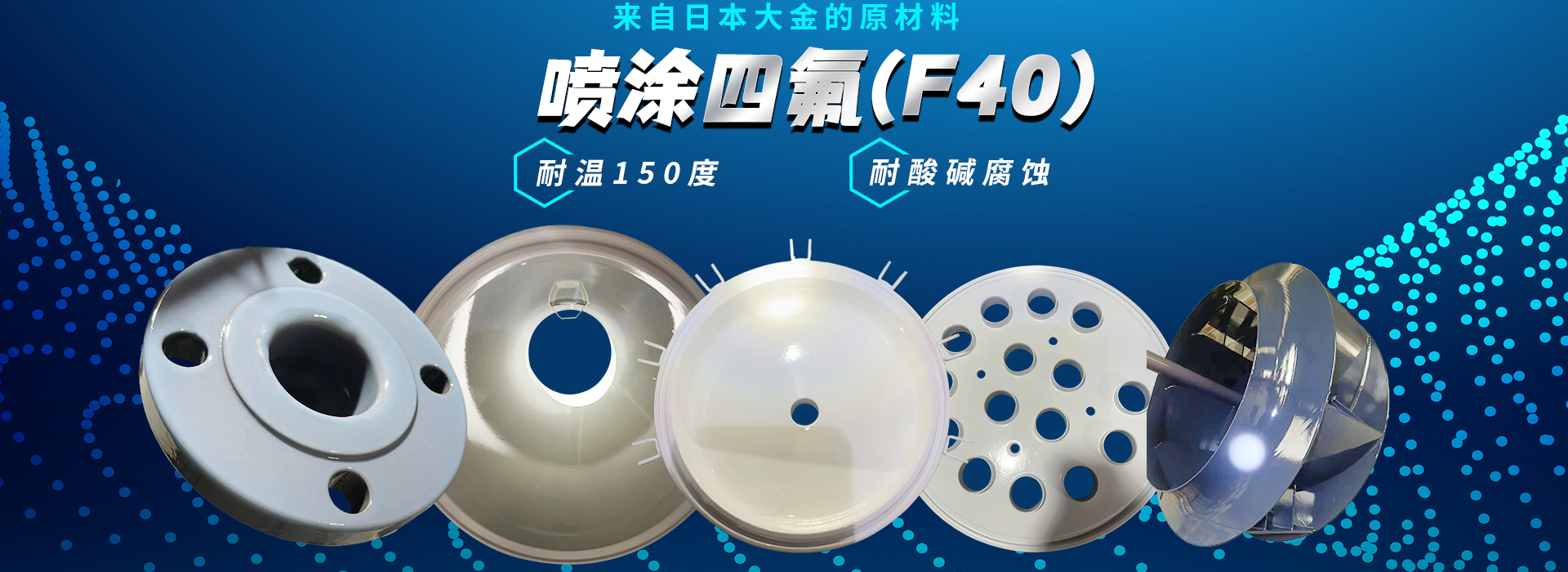
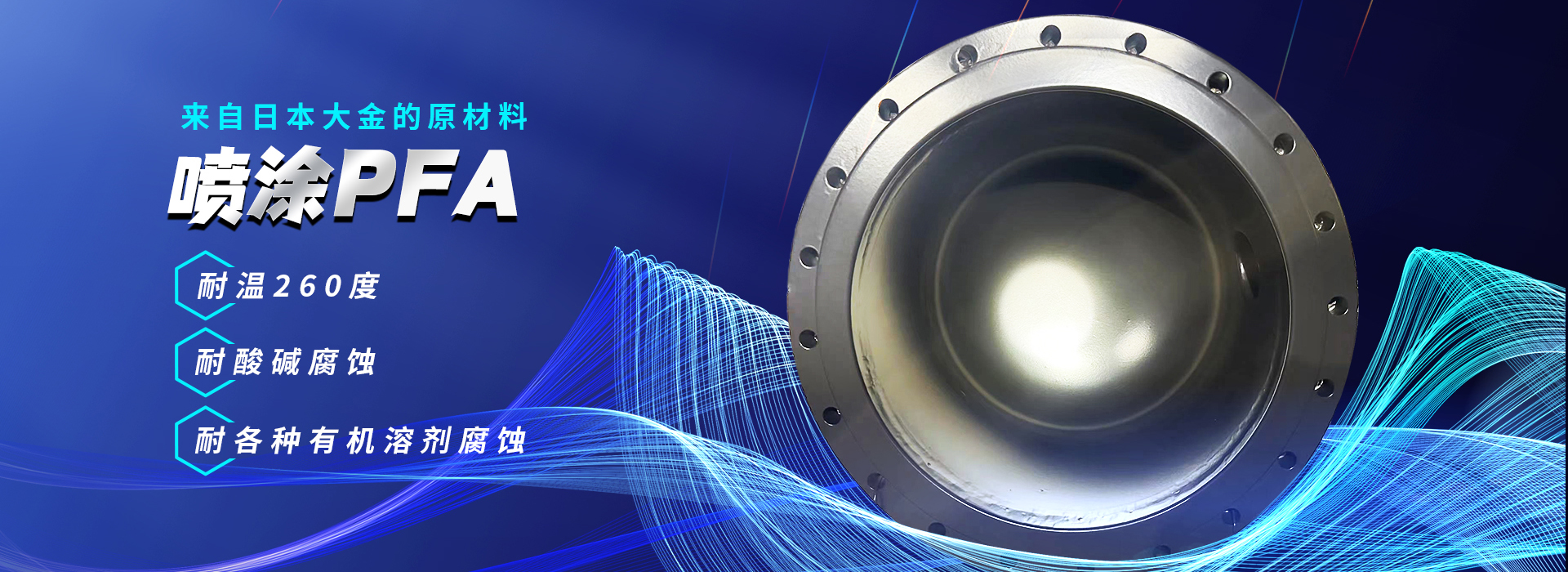
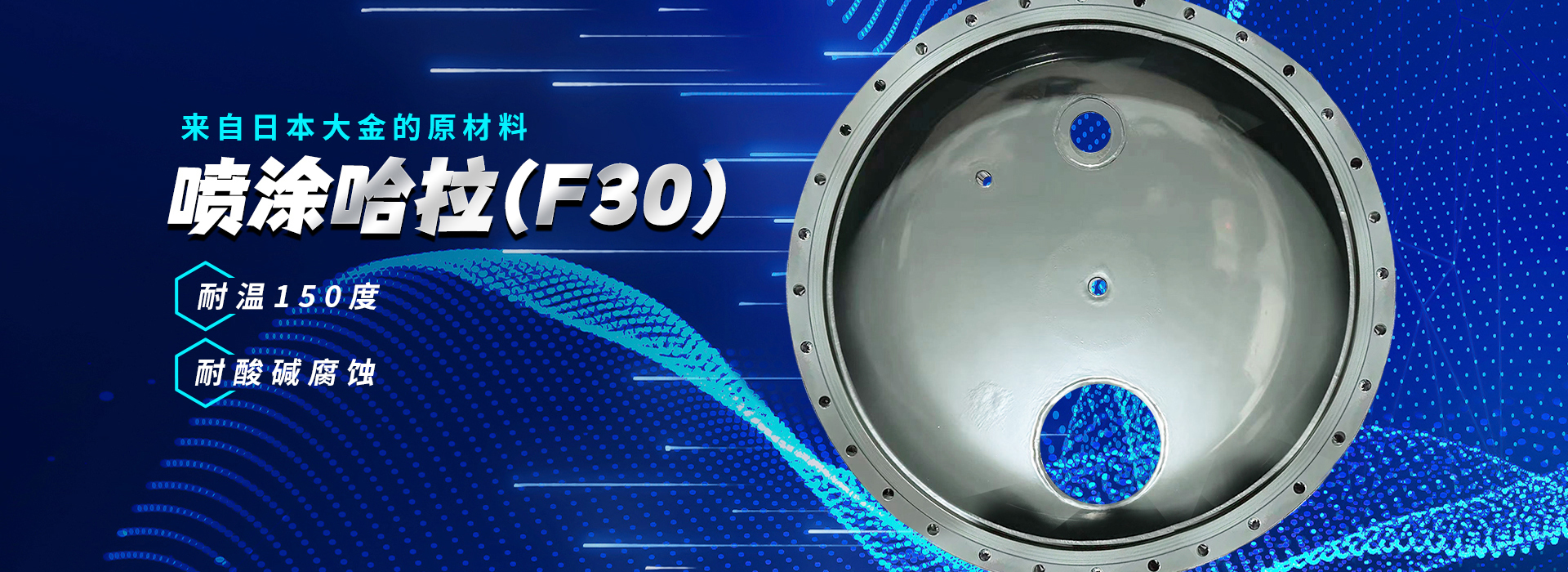
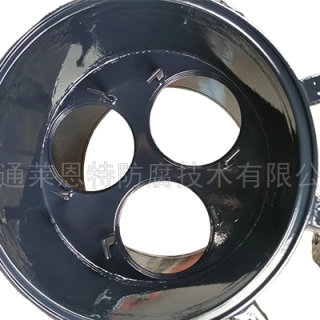
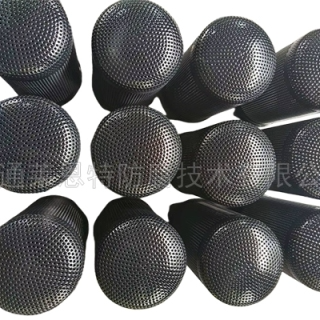
Committed to high-quality (PTFE, PFA, PVDF) lining and (P...

Dispersible Coating
The processing method for a dispersion coating involves uniformly distributing the coating material in a solvent to form a dispersion liquid, a wet process where solid particles are mixed with the liquid. This mixture is then atomized with high-pressure air and sprayed onto the workpiece surface.
The processing steps for the dispersion coating are as follows:
1. Part preparation
2. Wet Dispersible Coating Spray
3. Dry
4. Sintering
Part preparation
To ensure sufficient surface adhesion of the workpiece, it is imperative to first remove all oils from the surface to be coated. We dissolve the oils using organic solvents and heat them to approximately 400°C to completely evaporate. Next, we clean the workpiece mechanically via sandblasting to create a roughened surface. The bonding ability of the coating to the workpiece surface can be enhanced by applying adhesive aids and primers.
Water-based dispersion coating spray
Coating materials must be evenly and consistently applied. The coating thickness depends on the chosen coating system, with variations ranging from a few micrometers to 200 micrometers, or 0.2 millimeters.
In the furnace, the wet coating is heated, maintaining temperatures below 100°C until most of the solvents have evaporated. Sintering is the process of heating the workpiece to a higher temperature until an irreversible reaction occurs, where the coating material melts and forms a network structure with the adhesive aids.
Part Two: Powder Coating
The method of powder coating processing is a dry process; the coating material used here is in the form of extremely fine solid particles. This coating method avoids the use of solvents and the subsequent spreading phenomenon during coating adhesion. The processing employs the appropriate method to attach the micronized coating particles to the workpiece, followed by the melting of the micronized coating in the furnace.
The processing steps for powder coating are divided into the following stages:
Part preparation
2. Powder Coating
3. Powder material melting
Component preparation
To achieve sufficient surface adhesion on the workpiece, it is imperative to first remove all oils from the surface to be coated. We dissolve the oils using organic solvents and heat them to approximately 400°C to ensure complete evaporation. The next step involves cleaning the workpiece mechanically through shot blasting to create a rough surface. Enhancing the bonding ability between the coating and the workpiece surface can be achieved by applying an adhesive primer.
Powder Coating
Powder particles are blown out of the collector by compressed air and, en route to the spray gun nozzle, pass through a statically charged area. Due to the particles carrying the same charge, they repel each other along their flight path, forming a uniform, cloud-like spray. The item to be coated is grounded, creating a statically charged region between the spray gun and the item. The powder particles are attracted to and adhere to the item.
Powder material melting
In coating technology, high-temperature spraying and low-temperature spraying differ fundamentally. With high-temperature spraying, the base material temperature must be above the melting point of the powder material for the powder particles to be applied and melt during the spraying process. In contrast, low-temperature spraying involves processing where the base material temperature is below the melting point of the powder material, followed by melting in an oven.


b2b.china9.net © Zhongshang 114 Hebei Network Technology Co., Ltd.Address: Room 6009, Oriental New World Center, No.118 East Zhongshan Road, Qiaoxi District, Shijiazhuang City, Hebei ProvincePlatform Service Hotline: 4006299930