






详情描述
I. UG Modeling Training Syllabus Content:
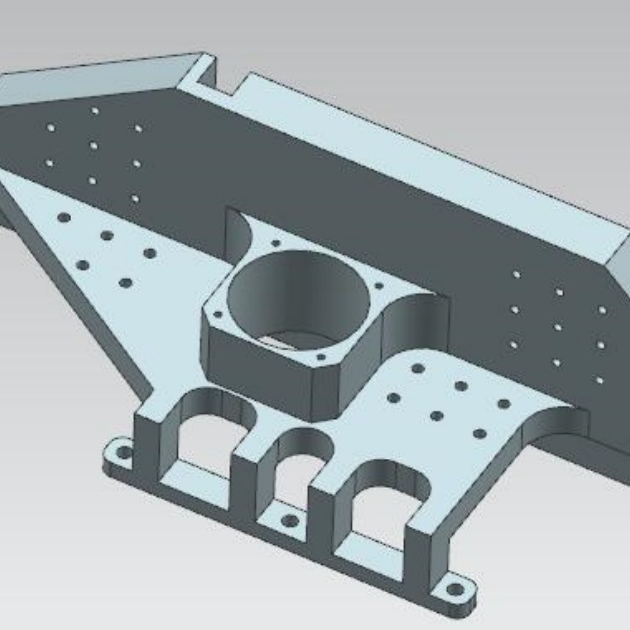
1. 94 typical factory drawings (54 small, 20 medium, and 20 large) for practical modeling, learning the principles, methods, approaches, details, and techniques of drawing modeling.
2. Origin, development, and 12 tips for understanding drawings, five common types of misinterpreted drawings, and three classification scenarios to consider when programming and drawing with tolerance requirements.
3. 3 Tips for UG Novices to Quickly Get Started, Summary of UG's Features and Characteristics
4. UG rapid learning methods and experience summary, as well as a summary of commonly used drawing modeling commands on-site.
5. Features of sketching, the 5 key principles of sketching, 7 positioning methods for sketching, techniques for solving 7 sticking points in sketching, 19 detailed issues in sketching, and 3 reasons for ineffective cross-section alarms.
6. Deep exploration of the powerful functions inherent in commonly used commands such as stretch, rotate, and sweep.
7. Key Four Benchmarks: Detailed explanation of the sub-items within benchmark points, benchmark planes, benchmark axes, and the coordinate system of benchmarks. It is the fundamental foundation for modeling and numerical control programming.
8. 5 Coordinate Systems: Coordinate System, Work Coordinate System, Reference Coordinate System, View Triple Axis, Machining Coordinate System
9. The fundamental uses of datum points, datum axes, datum planes, and the datum coordinate system.
10. Application of Auxiliary Tools: Analysis and measurement of quality, volume, circumference, center of gravity, draft angles; application of measuring projected distances, lengths, angles, quick picking, and filtering.
11. Practical Commands: Importing drawings taken with a mobile phone into UG for auxiliary drafting, and quick placement of model positions.
12. Explanation of related and unrelated concepts, and the fundamental distinctions of confusing commands: such as the differences between draft curves, basic curves, spatial curves, feature arrays, and the distinction between arrays within move and transform operations.
13. Commands for modifying models within synchronous modeling: move faces, rotate faces, extrude faces, delete faces, replace faces, adjust the size of fillets.
14. Installation Steps for UG Software, Software Introduction, and Installation Crack Principle


