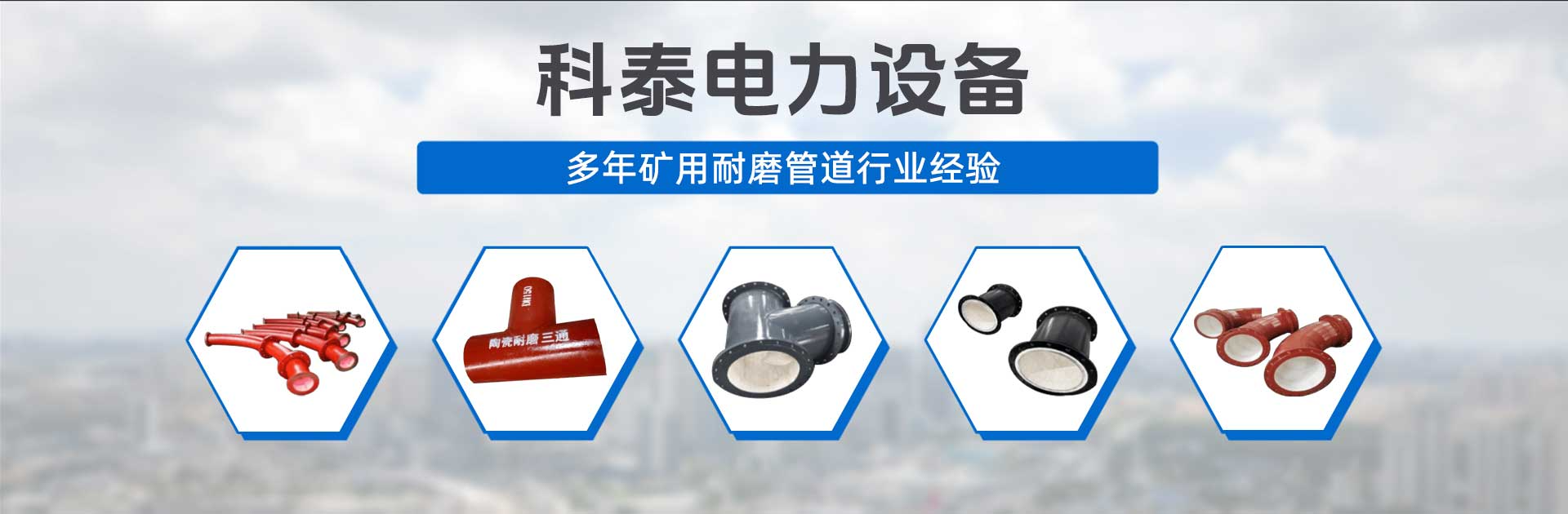
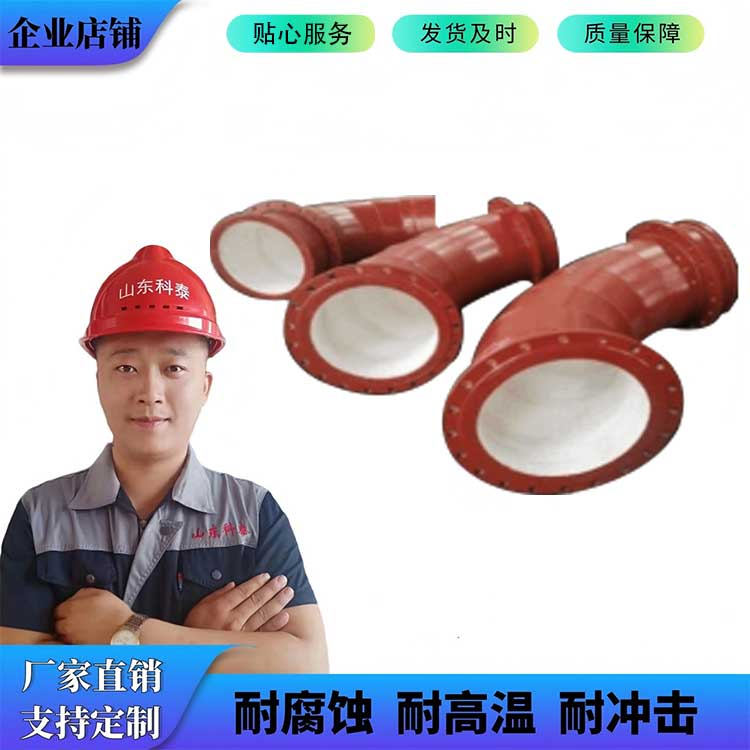
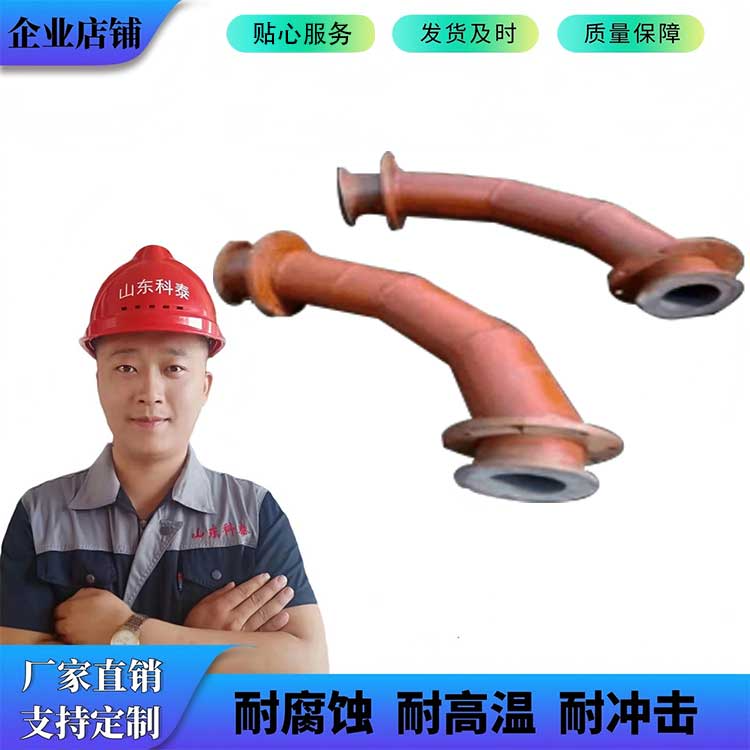
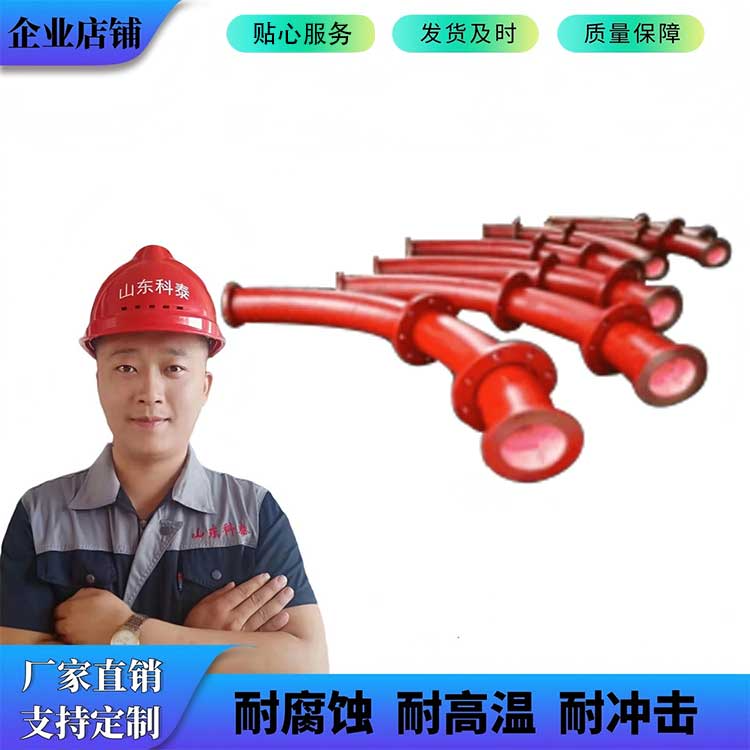
Power Environmental Equipment, Wear-Resistant Ceramic Elb...

Wear-resistant ceramic is a special alumina ceramic made primarily from AL2O3 and melted with rare metal oxides, baked at a high temperature of 1,700 degrees Celsius. The product is then combined with special rubber and high-strength organic/inorganic adhesives.
1. Abrasive-resistant ceramic features
Its Rockwell hardness is HRA 80-90, ranking second only to diamond, far exceeding the wear resistance of wear-resistant steel and stainless steel.
Excellent wear resistance.
According to the Central South University's Powder Metallurgy Research Institute, its wear resistance is equivalent to 266 times that of high-speed steel and 171.5 times that of high-chromium cast iron. Under the same working conditions, it can extend the service life of equipment by at least ten times.
3. Lightweight
Its density ranges from 3.6 to 3.9 g/cm³, just half that of steel, significantly reducing equipment load.
4. Strong bonding, excellent heat resistance
The wear-resistant ceramic tiles are bonded using a high-strength ceramic structural adhesive, ensuring the ceramic remains securely attached during long-term operation under high temperatures. This adhesive is a specialized formula jointly developed by a cooperative enterprise of Anyang Zhongyuan Ceramics Co., Ltd., capable of withstanding continuous operation without aging at temperatures up to 350°C.
Standard Specifications: 10x5x1.5mm, 10x10x1.5mm; 10x10x3mm, 15x15x3mm; 17.5x17.5x3mm, 20x20x3mm, 20x20x5mm, 50x60x6mm, 50x60x8mm, 120x80x25mm.
We offer customization and processing services for various non-standard parts, high-precision wear-resistant components, and ceramic-metal composite pieces.
Each engineering ceramic material has its own advantages and disadvantages, thus a thorough analysis and research must be conducted on the operational conditions for the use of ceramics. Failure to meet the operational requirements will prevent the ceramics from achieving the anticipated performance. The main factors influencing ceramic performance generally include:
Temperature Range and Variations Used:
2. Corrosive Medium
3. Load Conditions
4. Hard Particle Incident Angle:
5. Particle Erosion Intensity
Among all ceramic materials, Beijing Titanium Shield Technology recommends that you primarily use alumina and silicon carbide ceramics. Alumina ceramics offer exceptional resistance to general corrosion and erosion, and have the highest performance-to-cost ratio, making them suitable for the majority of applications. Sintered silicon carbide is only considered under conditions of higher temperature, higher toughness, and wear resistance.
National standard for wear-resistant ceramic production is currently in the drafting stage. There are many methods for forming wear-resistant ceramics, and the selection of the forming method should be based on the shape of the product. Different forming methods require different types of binders. Common forming methods, types of binders, and their amounts are as follows:
Shown:
Abrasive ceramic forming methods, binder types and amounts
Forming Methods, Examples of Binders <Binder Dosage (Percentage by Mass)
Thousand-pressure method, polyvinyl alcohol butyral, etc., 1~5
Injection Method, Acrylate Resin Types 1~3
Extrusion Method, Methyl Cellulose, etc., 5~15
Injection method, polypropylene, etc., 10~25
Isostatic pressure method, poly carboxylic ammonium salt, 0~3
Adhesives can be categorized into lubricants, plasticizers, dispersants, and surfactants (which have both dispersant and lubricating functions), and to meet forming requirements, a combination of various organic materials is typically used. Key technical indicators for wear-resistant ceramics:
Project Metrics
Alumina, content ≥90%
Density ≥ 3.5 g/cm³
Rockwell Hardness ≥ 80 HRA
Compressive Strength ≥ 850 MPa
Fracture Toughness KIC 24.8 MPa·m^(1/2)
Bending Strength ≥ 290MPa
Thermal Conductivity: 20 W/m·K
Coefficient of thermal expansion: 7.2 x 10^-6 m/m·K
Typical Applications of Wear-Resistant Ceramics
BD Series Adhesives Chosen for Wear-Resistant Ceramic Bonding (1): A blend of epoxy resin, phenolic epoxy resin, silicone resin, and DBT-7 toughener in appropriate proportions to maximize the performance of various resins. (2): Utilizing a multi-composite principle, the hardener is recombined, enhancing the cured material's resistance to aging and wear under high temperatures and temperature variations. (3): The construction process performance has been significantly improved, as the BD181 Wear-Resistant Ceramic Adhesive can be applied to vertical surfaces and ceilings without magnets or other supporting measures, meeting performance criteria for construction in various environmental conditions.
The project's temperature resistance and aging resistance indices have caught up with and even surpassed some imported wear-resistant ceramic adhesive. For instance, BD400 high-temperature adhesive can withstand up to 450℃ of high temperature, while BD1200 high-temperature adhesive is suitable for bonding under conditions of 1200℃. This wear-resistant ceramic adhesive has been granted a national invention patent.


b2b.china9.net © Zhongshang 114 Hebei Network Technology Co., Ltd.Address: Room 6009, Oriental New World Center, No.118 East Zhongshan Road, Qiaoxi District, Shijiazhuang City, Hebei ProvincePlatform Service Hotline: 4006299930