New material technology promotion services; new material ...

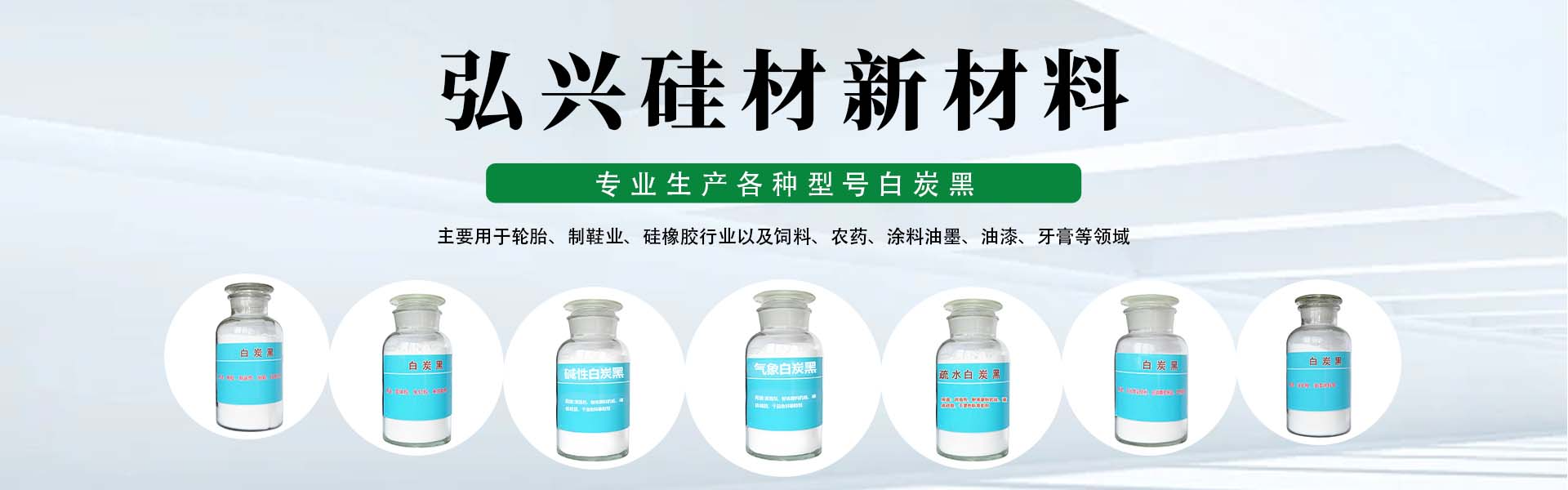
Vapor phase white carbon black is one of the most crucial high-tech ultra-fine inorganic new materials. Due to its small particle size, it boasts a large specific surface area, strong surface adsorption, high surface energy, and high chemical purity, as well as excellent dispersibility. It exhibits unique properties in terms of thermal resistance and electrical resistance. With its superior stability, reinforcing, thickening, and thixotropic properties, it stands out in numerous disciplines and fields, playing an irreplaceable role. Also known as "nano white carbon black," it is widely used in various industries as an additive, catalyst carrier, in petrochemicals, as a decolorizer, a matting agent, a reinforcing agent for rubber, a filler for plastics, a thickening agent for inks, a soft polishing agent for metals, an insulating and thermal insulating filler, and as a filler and spray material for high-end daily cosmetics, as well as in pharmaceuticals, environmental protection, and various other fields. It also provides a new material foundation and technical guarantee for the development of related industrial fields. Its distinctive functions in terms of magnetism, catalytic activity, light absorption, thermal resistance, and melting point, compared to conventional materials, have garnered significant attention. The following is the application of vapor phase white carbon black in various industries [3].
Electronic Packaging Materials
Organic Light Emitting Diode (OLED) devices are a newly developed type of flat display panel with low turn-on and drive voltages, capable of being driven by DC voltages, compatible with large-scale integrated circuits, and easy to achieve full-color display. They also boast high brightness (>105 cd/m²). However, the lifespan of OLED devices is still insufficient for practical applications. One of the key technical challenges to be addressed is the encapsulation material and technology. Currently, overseas (Japan, the U.S., Europe, etc.) widely use silicone-modified epoxy resins, which achieve a reduction in the internal stress of the epoxy resin and molecular toughening through blending, copolymerization, or grafting reactions. This also improves the heat resistance, as well as the moisture, oil, and oxidation resistance of the silicone. However, these resins require a longer curing time (hours to days). To accelerate the curing process, higher temperatures (60°C to over 100°C) or increased curing agent quantities are needed, which not only raises costs but also makes it difficult to meet the requirements of mass production lines for encapsulation materials (short curing time, room temperature curing). By thoroughly dispersing surface-treated gas-phase white carbon black in the silicone-modified epoxy resin encapsulation matrix, the curing time of the encapsulation material can be significantly reduced (to 2.0-2.5 hours) and the curing temperature can be lowered to room temperature. This enhances the sealing performance of OLED devices, thereby increasing their lifespan.
Resin Composite Materials
Resin-based composite materials feature light weight, high strength, and corrosion resistance. However, with the increasing demand for performance from both the material industry and the pillar industries of the national economy, how to synthesize high-performance resin-based composite materials has become a crucial issue in the material field and the corporate world. The emergence of vapor-phase titania has provided a new opportunity for the synthesis of resin-based composite materials and offers a new path for modifying traditional resin-based materials. As long as the vapor-phase titania particles are fully and uniformly dispersed within the resin material, it can completely achieve the goal of comprehensively improving the performance of resin-based materials.
Enhanced strength and elongation. Epoxy resin is a fundamental resin material. By adding aerogel white carbon black to epoxy resin, the resulting composite material is structurally distinct from those containing coarse-grained silica (like aerogel white carbon black), where coarse-grained SiO2 is typically used as a reinforcing agent, mainly distributed between polymer chains. In contrast, aerogel white carbon black, due to its severely undercoordinated surface, large specific surface area, and oxygen-deficient surface, exhibits strong reactivity, readily bonding with the oxygen in the epoxy cyclic molecules, thereby enhancing intermolecular bond strength. Additionally, a portion of the aerogel white carbon black particles still reside in the voids of the polymer chains, demonstrating higher fluidity compared to coarse-grained SiO2 particles. This results in significantly improved strength, toughness, and ductility of the epoxy resin material containing aerogel white carbon black.
2. Enhance wear resistance and improve the surface smoothness of materials. The particle size of vapor phase white carbon black is 100-1000 times smaller than that of SiO2. Adding it to epoxy resin facilitates the process of drawing fibers. Due to its high fluidity and small size effect, vapor phase white carbon black makes the material surface denser and finer, reducing the coefficient of friction. Furthermore, the high strength of the nanometric particles significantly enhances the material's wear resistance.
3. Anti-aging Performance: A critical weakness of epoxy resin-based composite materials during use is their poor resistance to aging, primarily due to the destructive effects of ultraviolet (UV) radiation in the 280-400nm band, particularly the medium and long wavelengths. This radiation significantly degrades the polymer chains, leading to rapid aging of the composite materials. However, aerogel silica can strongly reflect UV radiation, and when added to epoxy resins, it significantly reduces the degradation caused by UV radiation, thereby slowing down the aging process of the materials.
Plastic
Utilizing the high transparency and fine particle size of vapor phase white carbon black, plastics can be made denser. Adding vapor phase white carbon black to plastic films not only enhances their transparency, strength, and toughness but also significantly improves their waterproofing and anti-aging properties. By incorporating a small amount of vapor phase white carbon black into standard PVC plastic, the hardness, luster, and anti-aging performance of the produced plastic windows and doors are greatly improved. Modifying regular polypropylene plastic with vapor phase white carbon black achieves key technical indicators, such as water absorption rate, insulation resistance, compression residual deformation, and flexural strength, that meet or exceed the performance standards of engineering plastic nylon 6. This has enabled the replacement of nylon 6 in rail components with polypropylene, resulting in a substantial reduction in product costs and significant economic and social benefits.
Paint
Our country is a major producer and consumer of coatings, yet domestic coatings generally suffer from performance deficiencies, such as poor suspension stability, poor thixotropy, poor weather resistance, and poor scrub resistance. This necessitates importing large quantities of high-quality coatings annually. Some coating manufacturers in Shanghai, Beijing, Hangzhou, Ningbo, and other places have dared to innovate, successfully applying vapor-phase titania to coatings. This nano-modified coating addresses the shortcomings of previous products. After testing, its main performance indicators have seen significant improvements, except for the reflectance ratio remaining unchanged. For instance, the washability of exterior wall coatings has increased from the original thousand-plus washes to over ten thousand washes. The accelerated climate aging and radiation exposure aging time has increased from the original 250 hours (powdering level 1, discoloration level 2) to 600 hours (no powdering, film without discoloration, color difference value 4.8). Additionally, the bonding strength between the film and the wall has been greatly enhanced, the film hardness has significantly increased, and the self-cleaning ability of the surface has also been improved.
Rubber
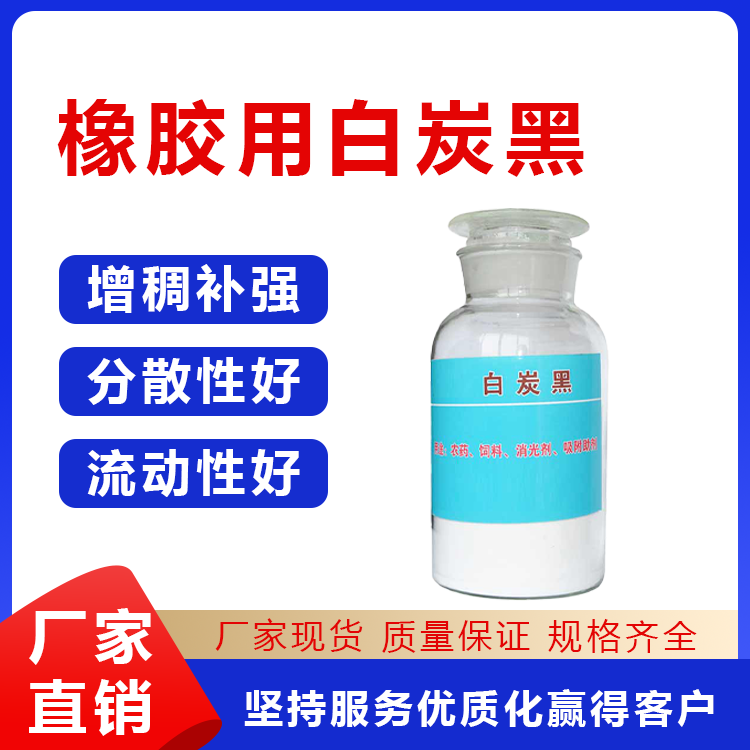
Rubber is an excellent elastic material with high elasticity, but its overall performance is not satisfactory. During the production of rubber products, it is common to add carbon black to the rubber compound to enhance strength, wear resistance, and aging resistance. However, the addition of carbon black makes the products black and of lower quality. The introduction of fumed silica in China has laid the material foundation for producing a new generation of rubber products with novel colors and superior performance. Adding a small amount of fumed silica to ordinary rubber improves its strength, wear resistance, and aging resistance to meet or exceed those of high-end rubber products, while maintaining a long-lasting color. The nano-modified colored EPDM waterproof membranes show significant improvements in wear resistance, tensile strength, flexural resistance, and aging resistance, with vibrant colors and excellent color retention. The development of colored tires has also made progress, such as the flexural resistance of tire sidewalls increasing from the original 100,000 cycles to over 500,000 cycles, promising the colorization of domestic car and motorcycle tires in the near future.
Colorants
Organic (dye) pigments, despite their vibrant colors and strong coloring power, generally lack the durability of inorganic pigments in terms of resistance to light, heat, solvents, and migration. By surface modifying organic (dye) pigments with vapor-phase white carbon black, not only is their anti-aging performance significantly enhanced, but also their brightness, hue, and saturation are all improved to a certain extent. Their performance can now rival high-end imported products, greatly expanding the grades and application scope of organic pigments.
Ceramic
Replacing nano-Al2O3 with aerogel white carbon black in 95 porcelain not only serves the role of nano-particles but also acts as a secondary phase particle, enhancing the strength and toughness of ceramic materials, as well as improving their hardness and elastic modulus. Its effects are more ideal than adding Al2O3. Utilizing aerogel white carbon black for composite ceramic substrates not only improves the density, toughness, and luster of the substrates but also significantly reduces the sintering temperature. Moreover, the application of aerogel white carbon black in ceramic filter meshes and corundum balls and other ceramic products is also highly effective.
Sealant, Adhesive
Sealants and adhesives are crucial products with large quantities, broad applications, and a wide range of uses. They require optimal viscosity, fluidity, and curing speed. Our country's products in this field are relatively backward, with high-end sealants and adhesives largely reliant on imports. Overseas products in this field have already adopted nanomaterials as modifiers, with vapor-phase silica being the preferred material. It primarily involves coating a layer of organic material on the surface of vapor-phase silica to impart hydrophobic properties. When added to sealants, it quickly forms a silicate structure, where nanoscale SiOx particles create a network structure to inhibit colloidal flow, accelerate curing speed, and enhance bonding effectiveness. Due to the small size of the vapor-phase silica particles, this also increases the product's sealing and impermeability properties.
Fiberglass Products
Fiberglass products, while lightweight, high-strength, and corrosion-resistant, have the drawback of low hardness and poor wear resistance. Experts added aerogel titania to the gel coat resin using ultrasonic dispersion, and conducted performance tests comparing it with gel coat without the aerogel. The Mohs hardness increased from the original 2.2 (equivalent to gypsum) to 2.8-2.9 (with 3 being the hardness of natural marble), and wear resistance improved by 1-2 times. Due to the grafting and bonding between the nanometer particles and organic macromolecules, the material's toughness increased, leading to a doubling of tensile and impact strengths, as well as significantly improved heat resistance.
Drug Carrier
With the significant increase in urban waste and the escalating environmental pollution, it has become increasingly urgent to intensify efforts to eliminate pests and prevent the spread of diseases. The traditional methods of painting lime on tree trunks and spraying insecticides in trash bins are no longer effective. In major cities, the use of central nervous system anesthetics for spraying has become the norm to combat mosquitoes, flies, cockroaches, and other insect pests. However, these are often imported from abroad, are expensive, and have a short effective period after spraying (only one month). Using gas phase white carbon black as a carrier for adsorption of these substances has achieved excellent sustained-release effects. Measurements show that the effective period after spraying can last for over a year.
Cosmetics
For cosmetics, it's essential to have strong UV blocking capabilities, ideally protecting against both UVB (medium-wavelength UV) and UVA (long-wavelength UV) radiation. Essentially, UV blocking involves two aspects: absorption and reflection. To date, there have been no reports of anti-UV agents developed from a UV reflection perspective worldwide. In the past, organic compounds were commonly used as UV absorbers in sunscreen products, but this approach has issues, such as increasing the risk of skin cancer and chemical allergies when the dosage is increased to maximize UV protection. Unlike these organic compounds, aerogel white carbon black is an inorganic ingredient that easily blends with other cosmetic components, is odorless and tasteless, and does not pose the aforementioned problems. It is also white, allowing for simple coloring. Most notably, aerogel white carbon black boasts strong UV reflection and excellent stability—it does not decompose, discolor, or react chemically with other components in the formula upon UV exposure. These outstanding characteristics of aerogel white carbon black lay a solid foundation for the upgrade and replacement of sunscreen cosmetics.
Antimicrobial Materials
Utilizing the large specific surface area, multi-mesoporous structure, and superior adsorption capacity of gas phase titania, as well as its unique physical and chemical properties, silver ions and other functional ions are uniformly designed into the mesopores of the gas phase titania surface and stabilized, successfully developing an efficient, durable, high-temperature resistant, and broad-spectrum antimicrobial nano-antimicrobial powder (with particle sizes of about 70 nm). Not only does it fill a domestic gap, but all the main technical indicators also meet or exceed those of similar Japanese products. Testing shows that when the concentration of the nano-antimicrobial powder in water is only 0.315%, its antimicrobial ability against Gram-positive and Gram-negative representative species can be very obviously revealed, with inhibition zones appearing 2-3 mm in diameter. Moreover, as the concentration of the nano-antimicrobial powder in water increases, the inhibition zone becomes significantly larger. It has been determined that at a concentration of 0.01 mg/L of Ag+ in water, E. coli can be completely eliminated, and no new colonies can form for up to 90 days. Applying the nano-antimicrobial powder to enamel glaze results in drum washing machines with antimicrobial and anti-fungal properties, achieving an antimicrobial rate of over 99%. It should be noted that the application of the nano-antimicrobial powder in enamel glaze is quite stringent, requiring strong alkaline liquids and high temperatures (around 900°C) to maintain strong antimicrobial properties, which is unmatched by other antimicrobial powders. Adding the nano-antimicrobial powder to interior wall paints produces paints with long-lasting antimicrobial and anti-fungal properties. Using the powder in women's underwear detergents, wool and cashmere detergents, dishwashing liquids, and hand sanitizers, the health department has found its antimicrobial properties to be quite significant. It is expected that with the increasing health awareness of the public, nano-antimicrobial powders will gradually be accepted by a wide range of related application enterprises, making a mark in industries such as票据, medical and health care, chemical building materials, household appliances, functional fibers, and plastic products.
Other
In the optical field, the application of nano-particles in infrared reflective materials primarily involves the creation of films and multi-layer films. The membrane materials made from nano-particles hold great promise in the lamp industry. High-pressure sodium lamps and various iodine-arc lamps used for photography require strong illumination, yet 69% of the energy is converted into infrared radiation when the filament is heated, indicating a significant amount of electrical energy is wasted as heat, with only a small portion converted to light energy for illumination. Additionally, the heat generated by the lamp tube affects the lifespan of the lighting fixture. Increasing luminous efficiency and brightness has always been a critical issue to be resolved. The advent of nano-particles provides a new approach to this problem. Since the 1980s, researchers have used nano-SiOx and nano-TiO2 particles to produce multi-layer interference films with a total thickness of the micron level. These films are mounted on the inner wall of the lamp shade, resulting in excellent transparency and strong infrared reflection capabilities. According to expert calculations, under the same brightness of light, this type of lighting fixture can save 15% of electrical energy compared to traditional halogen lamps.


b2b.china9.net © Zhongshang 114 Hebei Network Technology Co., Ltd.Address: Room 6009, Oriental New World Center, No.118 East Zhongshan Road, Qiaoxi District, Shijiazhuang City, Hebei ProvincePlatform Service Hotline: 4006299930