

Product Details

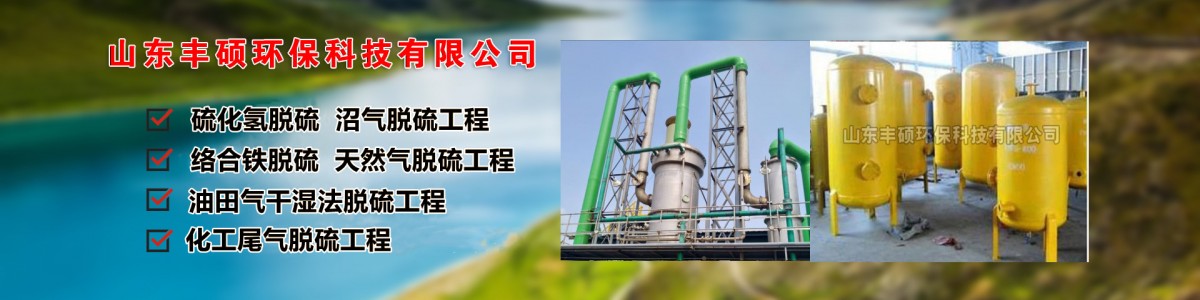
Desulfurization equipment, desulfurization towers, desulfurization tanks, biogas desulfurization, hydrogen sulfide desulfurization, etc. desulfurization projects


价 格Negotiable
最小起订0 Piece库存0 Piece
 Business Card
Negotiable

Negotiable

Negotiable

Negotiable
 Chelated Iron Desulfurization Tow
Negotiable
Biogas Dehydration Equipment
Negotiable
Chelated Iron Desulfurization Tow
Negotiable
Biogas Dehydration Equipment
Negotiable
 Biogas burner
Negotiable
Biogas boiler
Negotiable
Biogas burner
Negotiable
Biogas boiler
Negotiable
 Biogas Equipment - Horizontal Con
Negotiable
Biogas Equipment - Horizontal Con
Negotiable
 Biogas Equipment - Positive/Negat
Negotiable
Biogas Equipment - Positive/Negat
Negotiable
 Chelated Iron Desulfurization Sol
Negotiable
Chelated Iron Desulfurization Sol
Negotiable
 Biogas Storage Equipment
Negotiable
Biogas Equipment - Modular Tank
Negotiable
Biogas Storage Equipment
Negotiable
Biogas Equipment - Modular Tank
Negotiable
 Biogas Equipment - Desulfurizatio
Negotiable
Biogas Equipment - Desulfurizatio
Negotiable
In the process of converting coal-fired boilers to gas boilers, different retrofitting plans should be determined based on the varying types of boilers.
2. Key Stages of Coal-Fired Boiler Retrofit
(1) Remove the slag discharging machine, coal hopper, coal feeder, chain grate, transmission gear, and other equipment from the original coal-fired boiler.
(2) By calculating the heat transfer within the furnace, determine the geometric dimensions of the furnace and the location of the flame center. Recast the furnace using refractory concrete for the casting material, with the mix ratio being: large aggregates ∶ medium aggregates ∶ small aggregates ∶ sand ∶ refractory cement = 4 ∶ 2 ∶ 1 ∶ 1 ∶ 2. To avoid the flame center in the back arch tube of the boiler, elevate the existing back arch tube on the basis of its original slope.
(3) Install explosion-proof doors. (4) Conduct a hydrostatic test on the boiler body at 1.5 times its working pressure. For the SHL-type double-drum horizontal boilers at our thermal power plant and other various water-tube and fire-tube boilers, the general approach for modification should be to minimize changes to the pressure parts of the boiler body, and only make local modifications to the furnace arch and walls. During the modification construction, regardless of the type of furnace, the following issues should be noted:
Ensure smooth烟气flow with good filling and avoid dead ends and zones.
②The burner should be positioned at the center height of the furnace chamber, with sufficient combustion space and length. The flame should not scour the wall of the heating surface tubes to prevent incomplete combustion of gases and localized overheating damage to the tube walls.
③ Due to the intense combustion and high heat intensity of natural gas in the furnace, the bottom of the kettle drum exposed to the furnace should undergo **heat treatment. Additionally, for fire-tube boilers, the smoke temperature at the tube plate inlet should be controlled at ≤600°C to prevent cracking of the tube plate.
④ Various water pipes, fire and water pipes, and boiler walls are primarily constructed with refractory bricks, with additional insulation materials and protective plates. During the "coal-to-gas" conversion, attention should be given to the tightness of the walls, with an effort to minimize the original furnace doors and inspection doors, which can be sealed with refractory materials to prevent flame喷射 from injuring people or excessive cold air from leaking into the furnace, affecting the boiler's efficiency. For the remaining observation holes, enclosed observation holes should be used, with a view of the fire through heat-resistant glass.
⑤ Coal-fired boiler furnaces are generally larger than gas boilers, providing ample combustion space. After modification, they can increase the gas volume without affecting the combustion conditions. If the user requires a significant increase in the boiler's output, it is possible to appropriately increase the radiation heating surface of the furnace while removing scale and soot from both sides of the original heating surface. Increasing the boiler's output without expanding the boiler's volume is not an issue. However, it is crucial to also perform strength calculations in addition to the boiler's thermal and airflow resistance calculations.
III. Proper Selection of the Appropriate Burner
There are numerous types of burners currently available with no unified regulations. They can be categorized by air supply forms as atmospheric burners and diffusion burners, and further divided into natural draft and forced draft types. By fuel mixing, they can be classified as premixed (pre-mixed) and post-mixed (after-mixed) burners. In terms of pressure, they are categorized as low-pressure burners (P < 5000 Pa) and high-pressure burners (5000 Pa ≤ P ≤ 300,000 Pa). When making a specific selection, attention should be given to the following aspects:
1. The combustion mechanism: The main components of most combustible gases are hydrocarbons and hydrogen (and carbon monoxide), with the combustion process essentially a chain reaction, typically a continuous branching chain reaction under normal conditions. The required conditions include: 1) sufficient temperature (e.g., the ignition temperature of hydrogen is 630°C, and methane is 645°C); 2) adequate air mixing; and 3) appropriate combustion space. This continuous chain reaction of the gas is reflected in the speed of flame propagation, which is maintained by the flow rate of the mixture of combustible gas and air. Both should be balanced (or maintained within a certain range) to ensure stable flame combustion. During operation, the mixed gas (combustible gas, air) flows into the furnace chamber, while the flame spreads outward. If the mixing airflow is too high, the concentration of combustible gas in the ignition zone decreases, affecting the ignition effect and causing the subsequent gas to fail to ignite, leading to flameout. Conversely, if the mixed gas flow rate is too low, the flame will enter the combustion chamber, causing flashback. Therefore, we need to consider factors such as gas pressure, boiler back pressure resistance, air supply pressure, and pipeline resistance, and comprehensively select an appropriate burner.
Boiler Coal-to-Gas Conversion Products in High Demand: Jilin, Liaoning, Heilongjiang, Hunan, Hubei

Phone Consultation