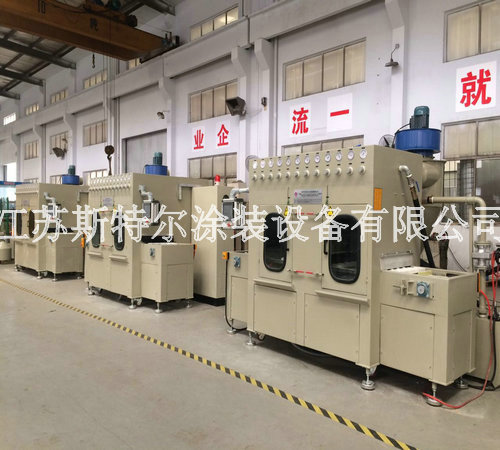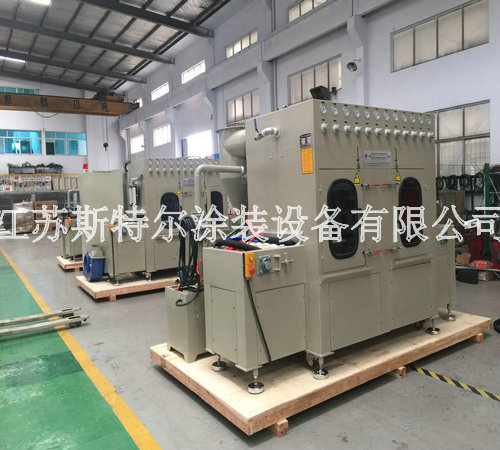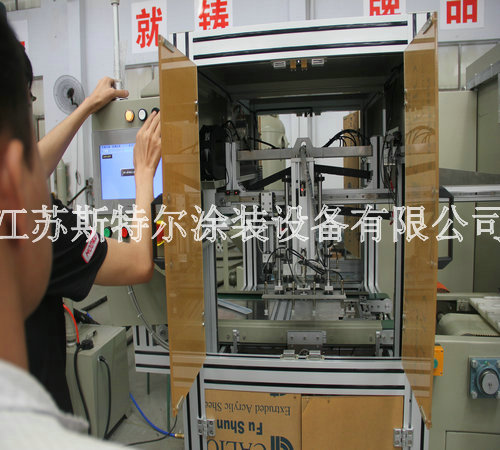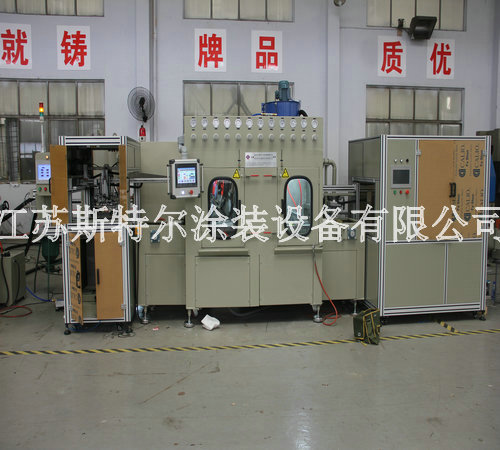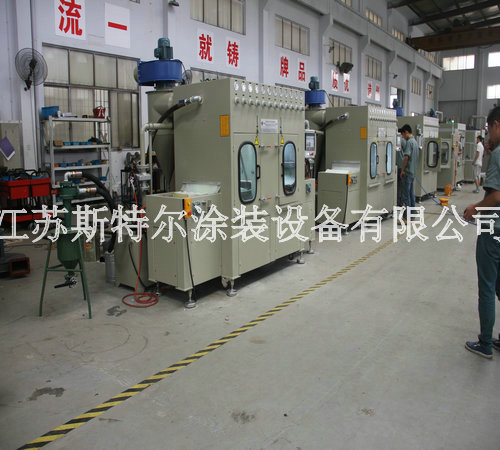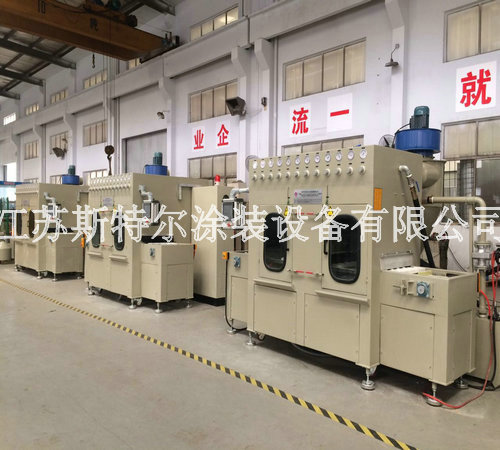

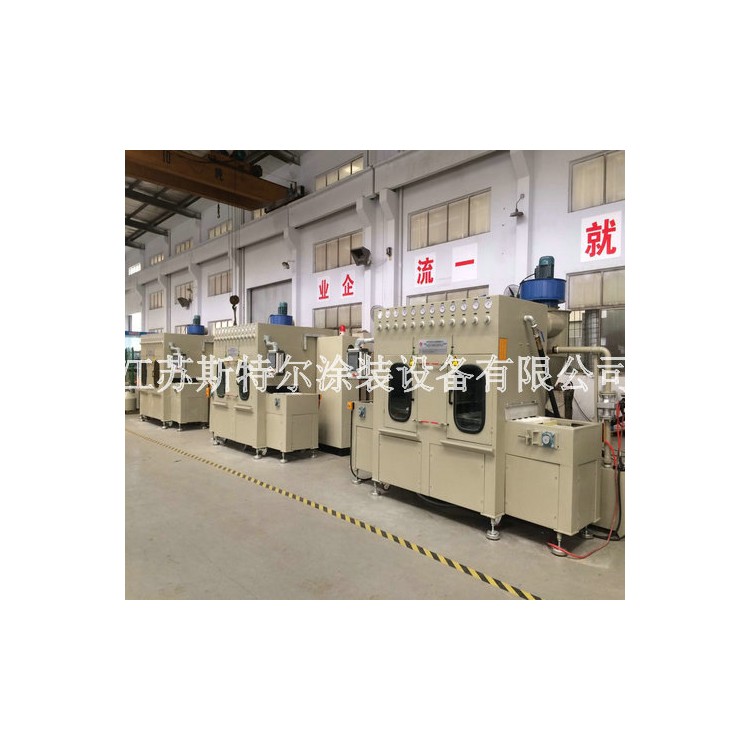
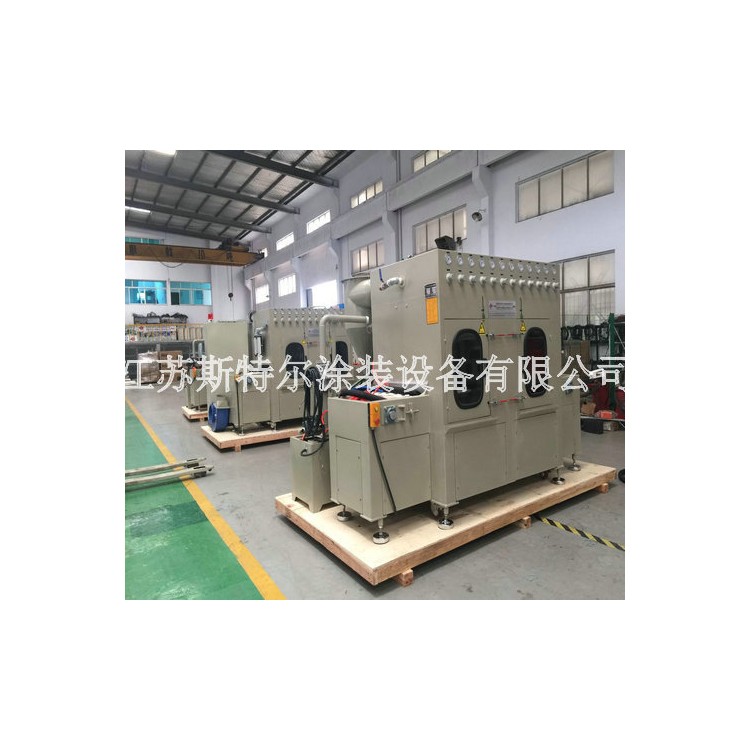
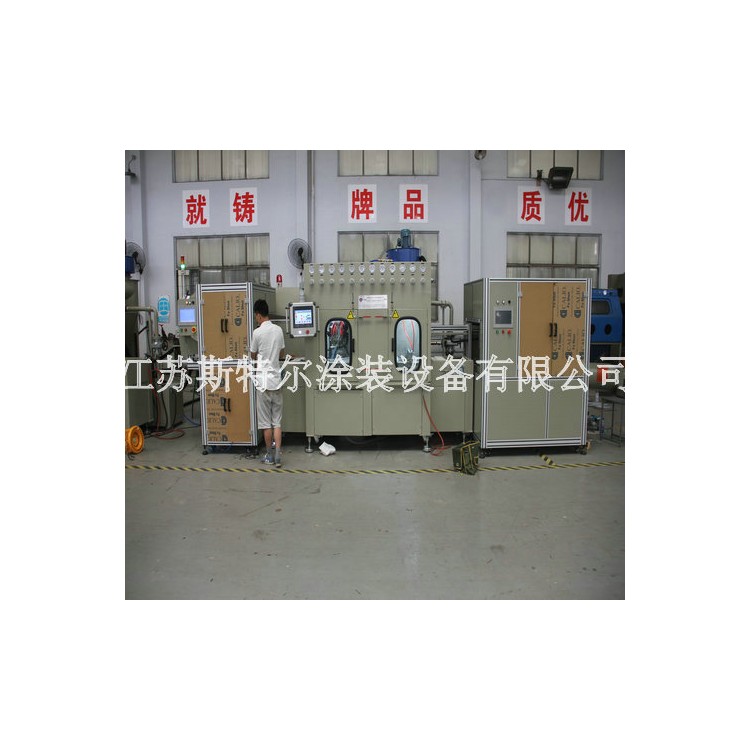
Our company has customized a fully automatic glass water sanding automatic sandblasting machine for the new OPPO smartphone case.
The fully automatic glass water and sand blasting machine consists of three main parts: the automatic feeding machine, the blasting machine, and the automatic unloading machine. Firstly, the automatic feeding machine places trays with two sets of ports, which can be automatically exchanged. The operator manually places trays at the LD port, and after the tray is positioned, the transfer arm starts to pick up glass pieces, aligns them, and then directly places the glass on the carrier stage, sending it into the blasting equipment. When a tray port is finished, it will alarm to remind the operator to load a new tray. When the empty tray is full, the equipment will automatically alarm to notify the operator to remove the empty tray, and this cycle continues. Then, at the automatic glass water and sand blasting machine, after the operator manually adjusts a certain water and sand ratio, the equipment automatically mixes and stirs. The automatic feeding mechanism picks up glass and places it on the synchronous conveyor belt, entering the blasting machine chamber for blasting. After the blasting operation is completed, it moves to the water jet area for rinsing, and is then dried by a wind knife. After drying, it moves to the unloading machine transfer position, where the transfer arm picks up the glass and places it on the FORK of the unloading machine, and this cycle continues. The blasting, cleaning, and drying areas have side guards to prevent workpiece displacement. The automatic unloading machine is equipped with two sets of CST ports that can be automatically exchanged. The operator manually places empty CSTs at the UnLD port. After the CST is flipped 90°, the cylinder mechanical positioning is activated, and the transfer arm picks up the glass from the fixture and places it on the Fork, then sends it into the CST. The base plate inside the CST port is placed on the Fork starting from the top layer. After the Fork vacuum sensor/glass fiber sensor is turned off, the Fork automatically retracts to the waiting position, and this cycle continues. When the CST is full, the equipment will alarm to prompt the operator to remove the CST and load an empty one.