


- AllProduct Category
-
Conveying Equipment
Blender Series
Disperser Series
Mixing Machine Series
Homogenizer Series
Emulsifier Series
Metallurgical Equipment
Petroleum Pipeline Equipment
Self-Cleaning Filter Equipment
Fine Filtration Equipment
Jet Mixer
Soda Blender
Pipe Filtration Equipment
Static Mixing Equipment




Recommended Products
详情描述
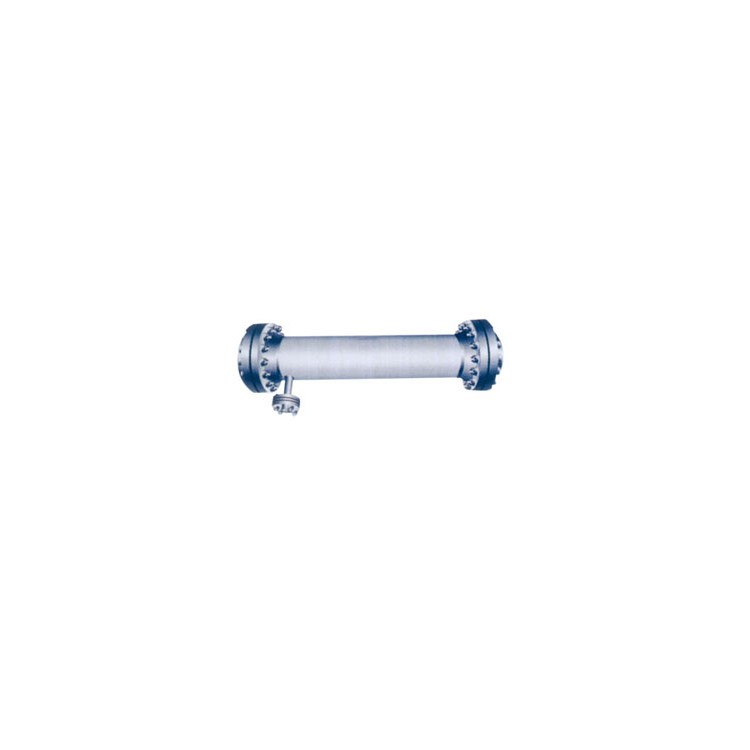
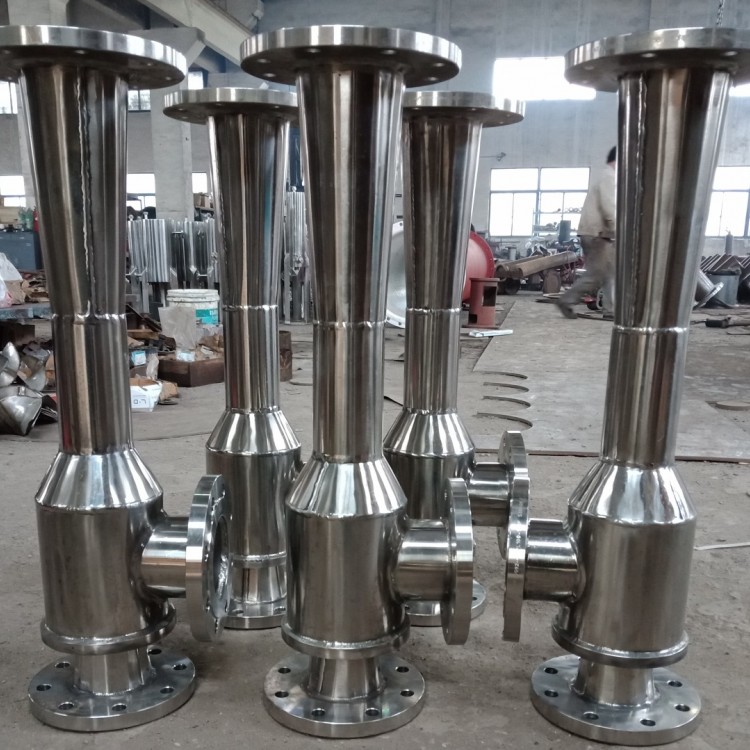
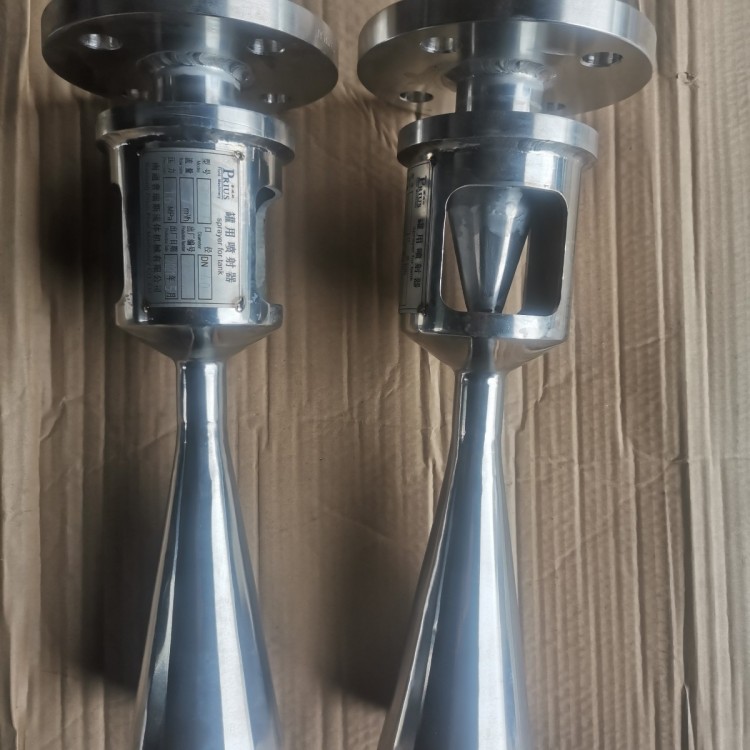
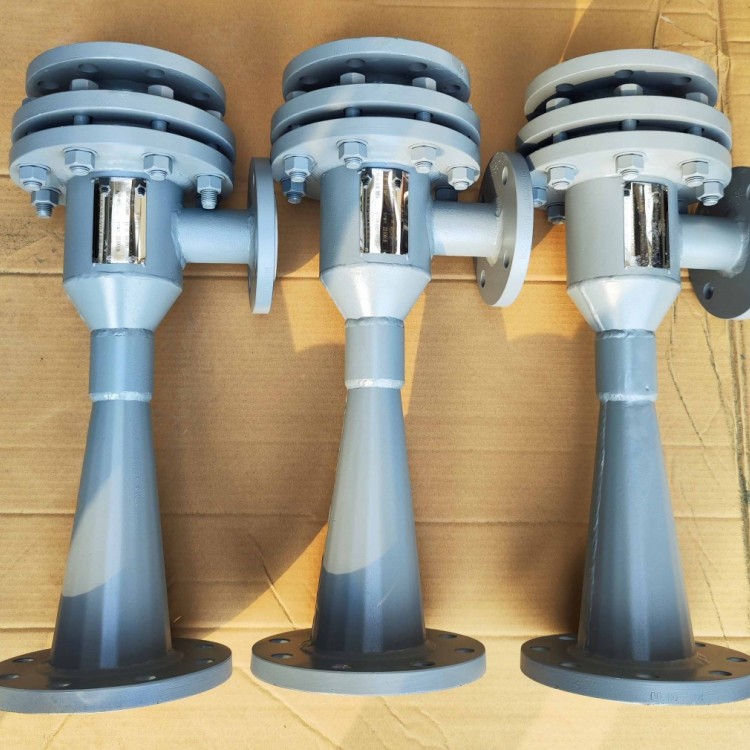
ZL/HT Type Steam Condenser
1. Product Features
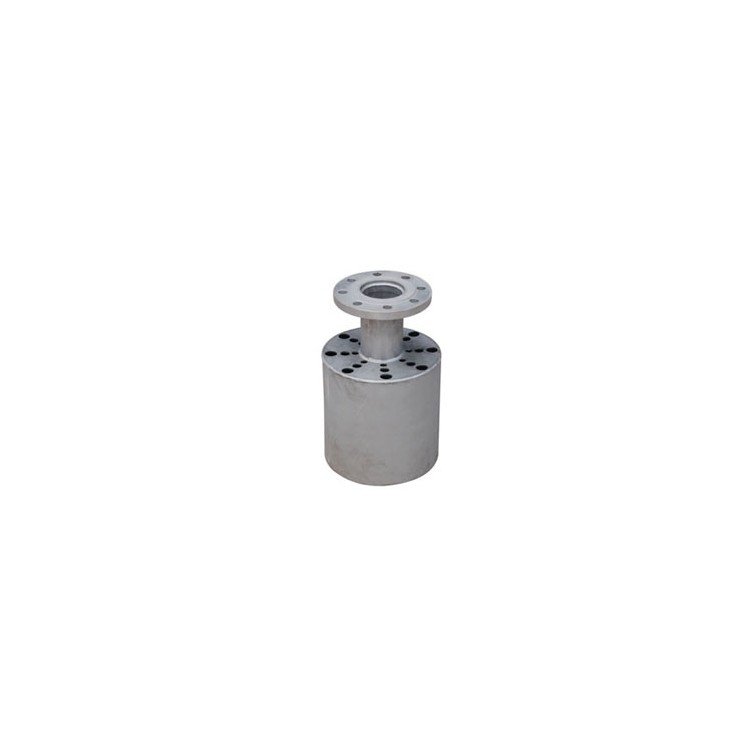
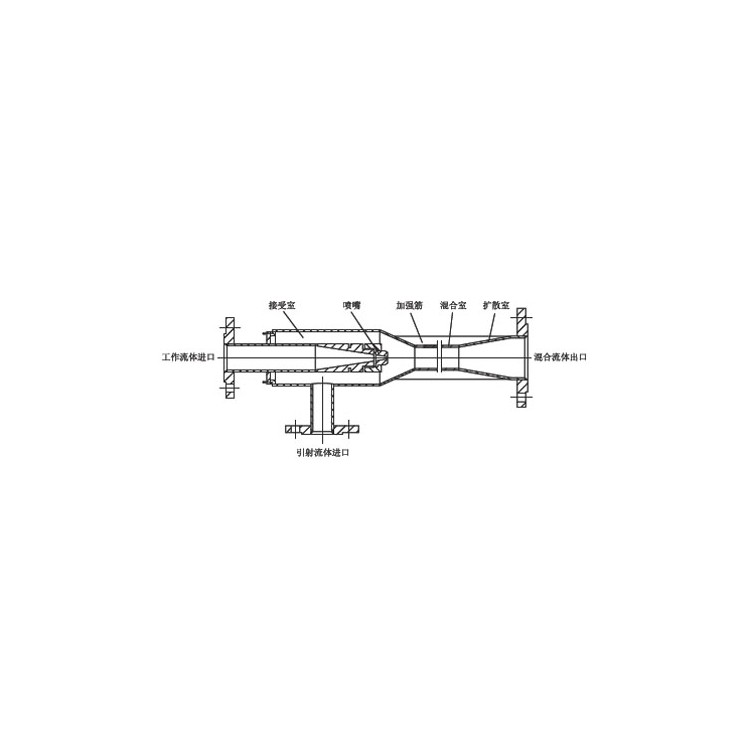
Steam desuperheaters are a widely adopted energy-saving equipment in modern engineering. The device is composed of two main parts: a water atomization unit and a combined vaporization unit. The atomizing nozzles perform pressure atomization on the desuperheating water, dispersing it throughout the high-temperature steam flow. The combined vaporization unit further forcibly rotates and shears the atomized desuperheating water, which is then heat-evaporated on the surface of the vaporization unit components, significantly enhancing the vaporization process and achieving a reduction in the temperature of high-temperature steam. This equipment boasts advantages such as simple structure, high atomization desuperheating efficiency, low energy consumption, minimal investment, high operational flexibility, and easy installation and maintenance.
2. Comparison with Other Temperature Reducers Performance
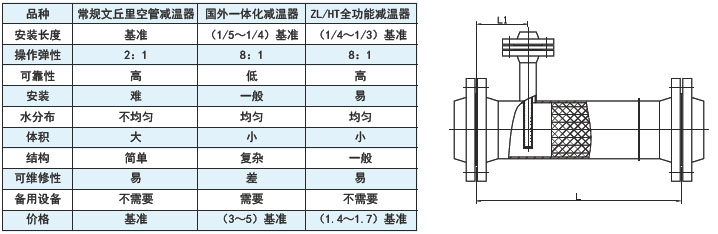
3. Product Specifications, Model Numbers, and Technical Data
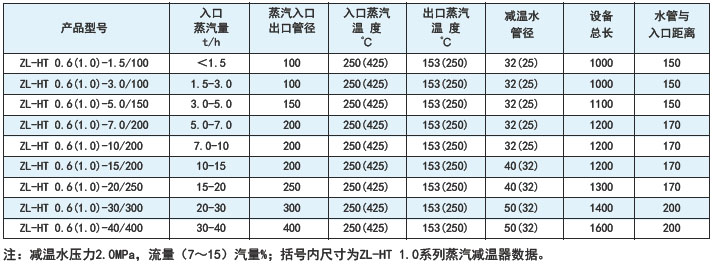
4. Installation and Maintenance
This product can be installed horizontally, vertically, or at any tilt angle, offering convenient installation. It is connected to the pipeline by means of a flanged connection at the end, completing the setup. During maintenance, disconnect the end flange from the pipeline flange, remove the equipment, and begin the maintenance process.
(2) ZL/DR Type Pressure and Temperature Reducing Valve
1. Usage
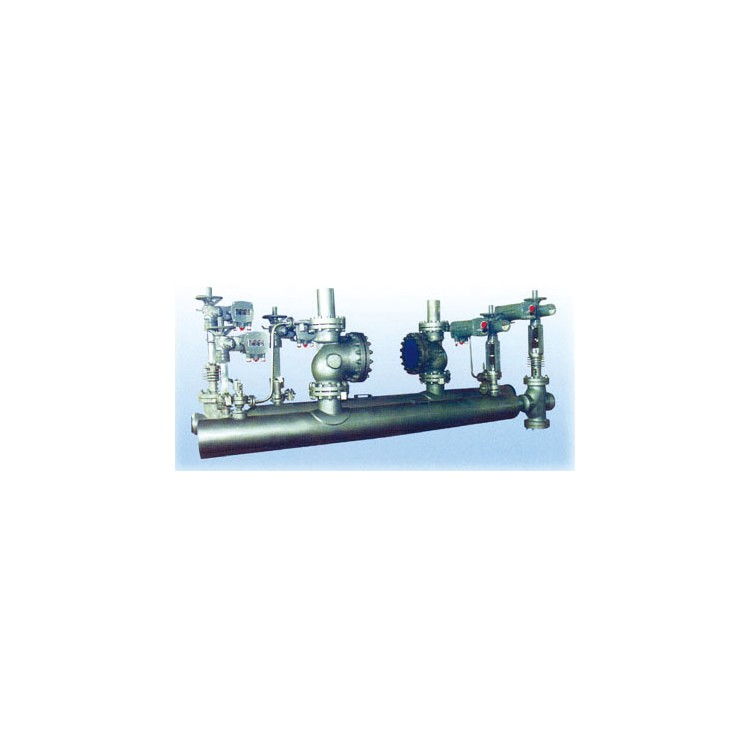
The temperature and pressure reduction unit is our company's new generation product, improved upon the absorption of advanced domestic and international technologies. It is used in large-scale power stations, industrial boilers, and thermal power plants domestically, meeting the needs of various changing operating conditions and achieving satisfactory economic benefits. Widely applied in power plants, light and textile, petrochemical, and papermaking industries.
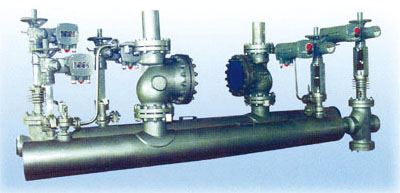
2. Structural Characteristics
● Utilizing a temperature-reducing and pressure-reducing valve structure, both temperature reduction and pressure reduction are conducted within a single valve, significantly shortening the overall length of the unit, reducing the land area required, and lowering engineering investment.
● The temperature and pressure reducing valve features a single seat sleeve structure for pressure reduction, increasing the adjustable flow ratio and reducing valve leakage. It also enhances the pressure reduction range. Inside, a throttle baffle is designed to prevent the pressure reduction sub directly impacting the valve body, thereby extending the valve's lifespan. The temperature and pressure reducing valve is equipped with an adjustable umbrella-shaped nozzle, which meets the working needs during significant changes in operating conditions and offers excellent atomization effects.
The temperature control system employs a high-pressure differential water regulating valve, which reduces the internal leakage of the valve while eliminating the return water branch of the traditional water distribution valve in the device, thus facilitating the layout of the unit.
● Available with different flow-time coefficients Cv for water supply regulators with the same diameter, significantly enhancing the adjustment sensitivity and accuracy of the temperature control system.
● Temperature and pressure reducing valves, along with water supply regulating valves, are equipped with straight stroke mechanisms. This eliminates the traditional lever hinge mechanism, reducing the empty travel in the intermediate stages, thereby further enhancing the sensitivity and accuracy of the regulating system.
● Equipped with electric or pneumatic diaphragm actuators for temperature and pressure reduction, water regulating valves meet the needs of special users and offer the advantage of maximizing energy utilization.
● Our company's specially designed thermal control cabinet, paired with the temperature and pressure reduction unit, allows for automatic control of the device or manual remote operation from the control panel, ensuring the secondary parameters meet production process requirements.
3. Product Categories and Key Technical Specifications
A, Temperature and pressure reducing devices can be classified according to imported pressure and temperature:
● Medium temperature and pressure reducing and depressurizing unit:
Steam Parameters (进口 steam parameters): Pressure P1 = 3.9 MPa; Temperature t1 = 450°C
Secondary Steam Parameters (Outlet Steam Parameters): Pressure P2 is determined by the customer's requirements; Temperature t2 = saturation temperature.
Flow Rate: Q = 2 to 360 t/h (tons per hour).
● Sub-high pressure reducing temperature and pressure device:
One-time Steam Parameters (进口 Steam Parameters): Pressure P1 = 5.4 MPa; Temperature t1 = 485°C
Secondary Steam Parameters (Outlet Steam Parameters): Pressure P2 is determined by customer requirements; Temperature t2 = saturation temperature.
Flow Rate: Q = 20 ~ 200 t/h (tons per hour).
High-pressure and high-temperature temperature-reducing and pressure-reducing unit
One Steam Parameter (进口 Steam Parameter): Pressure P1 = 10 MPa; Temperature t1 = 540°C
Secondary Steam Parameters (Outlet Steam Parameters): Pressure P2 determined by customer requirements; Temperature t2 = saturation temperature.
Flow Rate: Q=30~240 t/h (tons per hour)
B. Key Technical Specifications of the Temperature and Pressure Reducing Device
● Temperature and Pressure Reducing Device Export Flow
Temperature and Pressure Reducing Device Export Steam Flow Range: 30%Q to 99%Q%0Q, special requirements can be negotiated between the buyer and seller.
● Temperature and pressure reducing unit rated outlet steam pressure P2
The rated outlet steam pressure deviation range of the temperature and pressure reducing device is:
① When the rated outlet steam pressure is less than 0.98 MPa, it is P2 ± 0.04 MPa
② When the rated outlet steam pressure does not exceed 3.82 MPa, it is P2 ± 0.06 MPa
③ When the rated outlet steam pressure is greater than 3.82MPa, it is P2 ± 0.15MPa
● Rated export steam temperature t2
The rated steam temperature for export must be above the saturation temperature (inclusive of the saturation temperature).
The minimum deviation range of the rated steam temperature at the outlet is ±5℃ from the rated steam temperature t2.
● Issues with temperature and pressure reducing device noise
The temperature and pressure reducing device operates normally; the noise is measured 1m downstream from the centerline of the temperature and pressure reducing valve (reducing valve) at the same horizontal level, with the overall noise level not exceeding 85dB(A). In case of special requirements from the customer, the solution can be agreed upon by both parties involved in the supply and demand.
4. Equipment Features
Achieve pressure reduction without energy loss, and increase steam supply volume through this equipment. Simple structure, no rotating parts, and reliable operation. Easy to operate, easy to maintain, and can be automatically adjusted. Significant energy-saving effect.
5. Supply Range
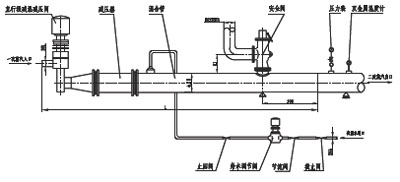
The supply scope of the temperature and pressure reducing unit is depicted by the solid thick line: mainly includes:
● Pressure Reduction System: Temperature and Pressure Reducing Valves, Throttle Plates, etc.
● Temperature Reduction System: Water regulating valves, throttle valves, etc.
● Safety Systems: Safety helmets, check valves, etc.
● Piping Systems: Steam piping, transition piping, demineralized water piping, etc.
● Accessories: dual metal thermometer and connection pipe, pressure gauge and installation accessories.
6. Order Instructions
Please provide the following at the time of contract signing:
● Export steam flow rate Q, inlet steam pressure P1, temperature t1, outlet steam pressure P2, temperature t2;
● Reduce the feedwater pressure Pb and temperature Tb;
● Specify control method (dashboard control, DCS control, DCS monitoring)
● Control Type: Electric, Pneumatic;
When selecting pneumatic actuators, it is also necessary to provide:
● Acting Type: Gas Open or Gas Closed;
● Source Gas Pressure
Supply electrical valve positioner electrical signals.
● Any special requirements should be noted or a separate technical agreement should be signed after being agreed upon.
询价单


