

- AllProduct Category
-
Conveying Equipment
Blender Series
Disperser Series
Mixing Machine Series
Homogenizer Series
Emulsifier Series
Metallurgical Equipment
Petroleum Pipeline Equipment
Self-Cleaning Filter Equipment
Fine Filtration Equipment
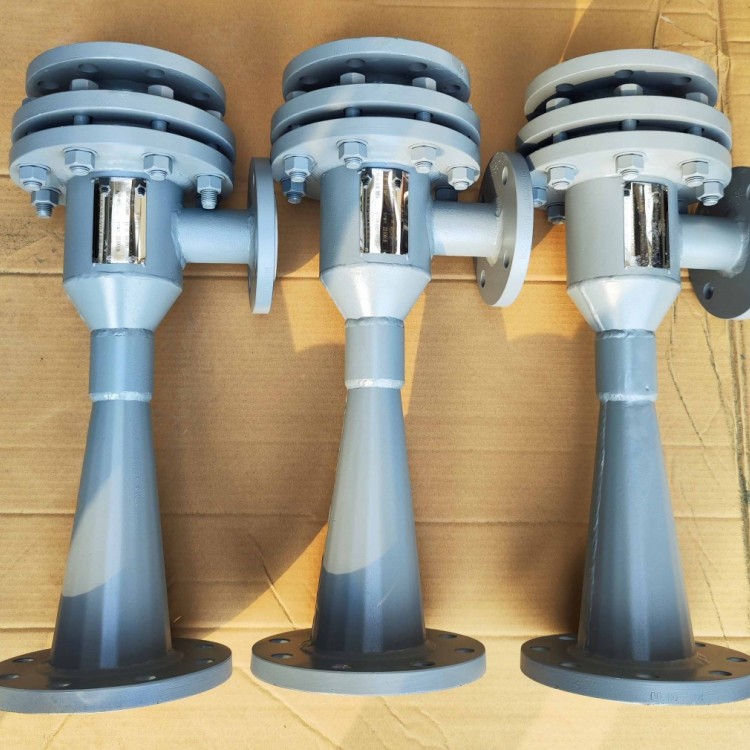
Jet Mixer
Soda Blender
Pipe Filtration Equipment
Static Mixing Equipment




Recommended Products
详情描述
I. Structural Features, Mixing Principles
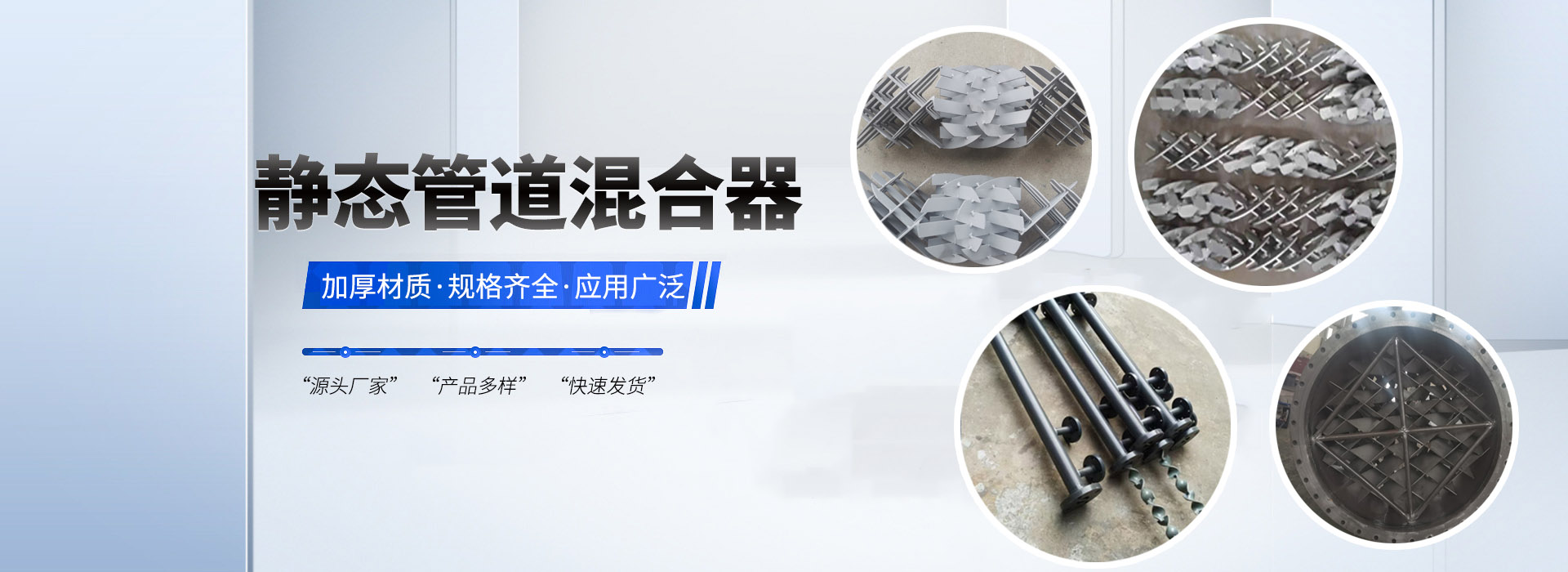
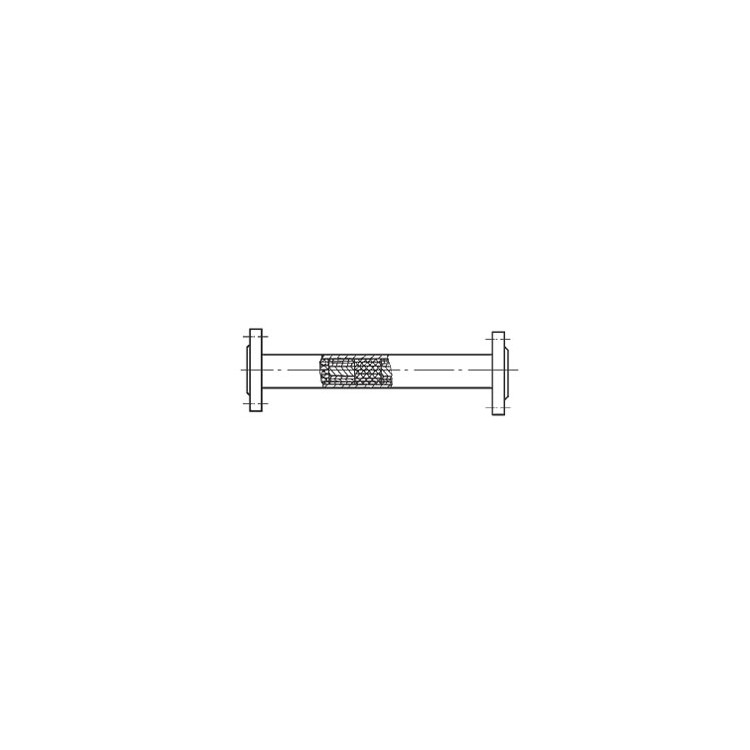
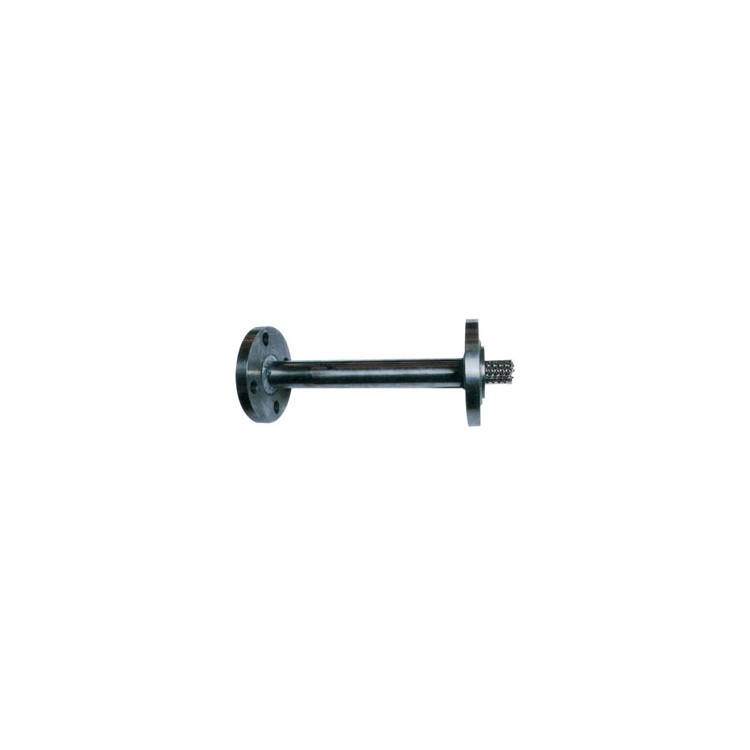
The blending process of static mixers is carried out by a series of differently sized mixing elements installed in a hollow pipe. Due to the action of these elements, the fluid alternates between left and right rotations, continuously changing its flow direction, pushing the central fluid outward while drawing peripheral fluid inward, thus achieving excellent radial mixing. At the same time, the rotational action of the fluid also occurs at the interfaces of adjacent components, facilitating a comprehensive radial circulation mixing effect. This ensures uniform blending of the material.
This static mixer is designed, manufactured, and accepted in accordance with the industry standard JB/T7660-95 "Static Mixers."
Section 2: Application Scope
Static mixers can be used in processes involving liquid-liquid, liquid-gas, liquid-solid, gas-gas mixing, emulsification, neutralization, absorption, extraction, reaction, and enhanced heat transfer. They are applicable over a wide range of viscosities and in different flow patterns (laminar, transitional, turbulent) for both intermittent and continuous operations. Below is a brief introduction to the scope of various applications.
Liquid-Liquid Mixture
From laminar to turbulent, viscosity at 106
Fluids within the mPa.s range can achieve excellent mixing, with the smallest droplet diameter reaching 1-2 μm, and the size distribution being uniform.
(2) Liquid-Gas Mixture
Static mixers enable continuous renewal and thorough contact of the interface between liquid-gas two-phase components, and can replace bubble towers and sieve plate towers under certain conditions.
(Liquid-Solid Mixture)
When a small amount of solid particles or powder (solid constitutes about 5% of the liquid volume) is mixed with liquid under turbulent conditions, using a static mixer can force the solid particles or powder to be fully dispersed, achieving the requirements for liquid extraction or decolorization.
(4) Gas-gas mixture
Mixable for cold and hot gases, blending of different gas components.
(5) Enhanced Heat Transfer
Due to the static mixer, the contact area of the fluid is increased, thereby enhancing the heat transfer coefficient. Generally speaking, for cooling or heating gases, if a static mixer is used, the heat transfer coefficient of the gas can be improved by a factor of 8; for heating viscous liquids, the heat transfer coefficient can be increased by 5 times; during gas condensation with a large amount of non-condensable gas, the heat transfer coefficient can be improved by 8.5 times; and for heat exchange of high polymer melt, it can reduce the temperature and viscosity gradients across the cross-section of the melt.
Section 3: Precautions
Engineering design typically achieves mixing purposes through a single static mixer or a series of them. When operating two static mixers in parallel, the piping design must ensure uniform fluid distribution.
When using the small-scale SV type, if the medium contains impurities, two parallel switchable filters should be set before the mixer. The mesh size of the filter usually selects 40-20 mesh stainless steel filter.
Avoid installing flow, temperature, and pressure indicators and detection points on the static mixer as much as possible. For special requirements, please provide a drawing specification at the time of order.
Please specify when ordering if heat exchanger sheath tubes need to be installed in the mixer housing.
For the SH series products, due to their high processing accuracy and difficulty in maintenance, the medium used must be clean, or capable of being inverted and cleaned with a solvent, or the medium must be able to melt at high temperatures.
For SV series products, if blockage occurs due to unclean fluid, the removable equipment can be cleaned by pouring water (steam) or solvent upside down, or the unit can be disassembled to remove the blockage.
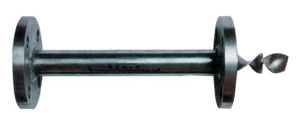
For SK series non-permanent unit products, the entire unit can be pulled out for cleaning, but avoid striking it while pulling out to prevent deformation of the unit.
In most cases, by selecting the right specifications, models, and materials, our static mixers can be designed to avoid the need for maintenance.
SV Type Static Mixer
I. Product Features
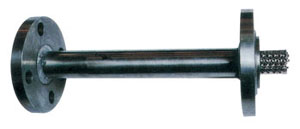
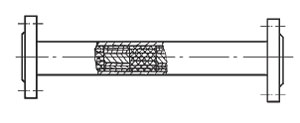
The SV-type unit is a cylinder assembled from specific规格 corrugated plates, featuring technical characteristics: high dispersion ranges from 1-2µm, and the degree of non-uniformity coefficient for liquid-liquid and gas-gas phases is σ X ≤ 1-5%.
Typical Applications: Gasoline, diesel, fuel blending, saltwater neutralization, acid-base neutralization, gas mixing.
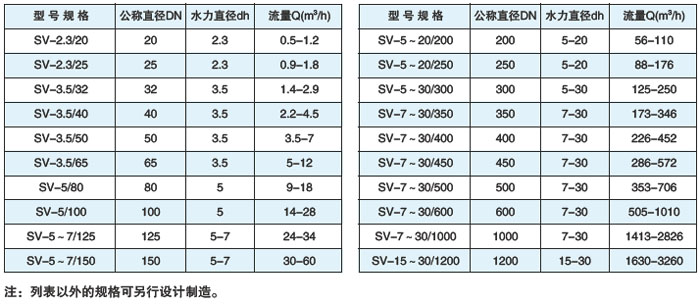
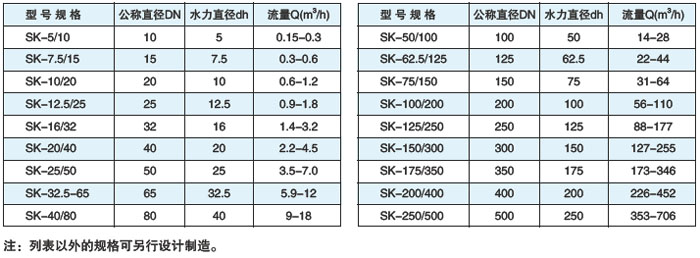
Section 2: Product Model
SK Type Static Mixer
I. Product Features
The SK type unit is made by welding together spiral blades twisted to the left and right from a single passage. Its technical performance includes a high degree of dispersion ≤10µm, and a coefficient of heterogeneity σX ≤5% for liquid-liquid and liquid-solid phases.
Typical Applications: Chemicals, Petroleum, Food, Fine Chemicals, Plastic Environmental Protection, Synthetic Fibers, Injection Molding, Color Matching, Papermaking, Pulp Chlorination Mixing, Solvent Asphalt Removal, Acid-Base Neutralization, Asphalt, Oil Blending, Industrial Naphthalene Dephenolization, Liquid Hydrocarbon Desulfurization, High Polymer Material Mixing, Color Matching, Heat Transfer.
Section II: Product Models
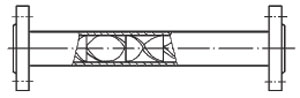
SX Static Mixer
I. Product Features
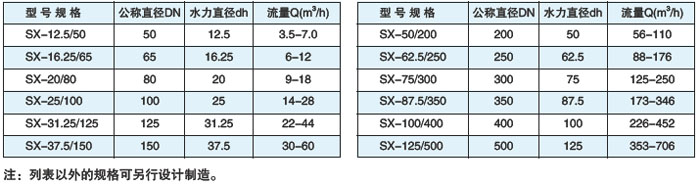
SX units are composed of many X-shaped units formed by intersecting horizontal bars in a certain pattern. Technical characteristics: Mixing unevenness degree is σ X ≤ 1~5%.
Typical Applications: High polymer blending, light ketone benzene dewaxing oil, pulp chlorinated bleaching, alkali injection process.
Section 2: Product Model
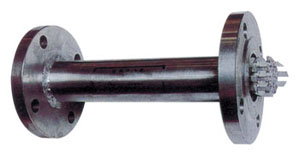
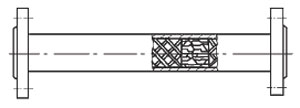
SL Type Static Mixer
I. Product Features
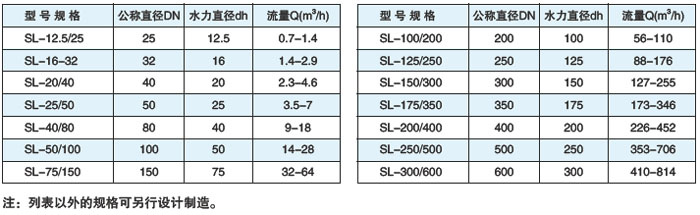
The SL-type unit is composed of crossed strips in a certain pattern to form single X-shaped units. Its technical characteristics include liquid-liquid and liquid-solid phase mixing, with a non-uniformity coefficient σX ≤ 5%. Typical applications include wastewater treatment, high polymer blending, heat transfer reactions, and heat exchangers.
Section II: Product Model
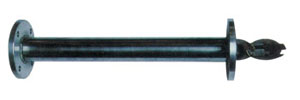
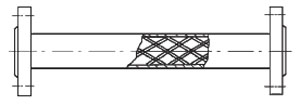
SH Type Static Mixer
I. Product Features
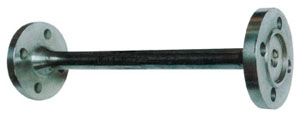
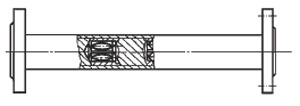
The SH unit is composed of dual channels, with helical fins placed inside the channels. Adjacent unit dual channels are offset by 90°, and fluid redistribution chambers are provided between units. Technical specifications include: high dispersion degree of 1-2µm, and non-uniformity of liquid-liquid phase: σ X ≤ 1-5%.
Typical Applications: Acrylamide blending, polymer material blending, color matching, heat transfer.
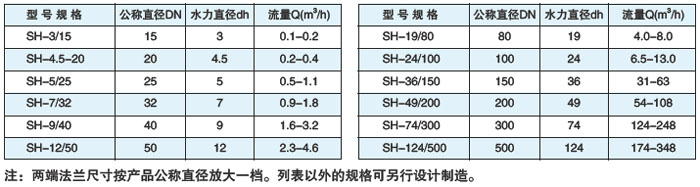
Section 2: Product Model
询价单


