







I. Introduction:
The ZDMP series automatic jet fire extinguishing device integrates infrared/ultraviolet sensor technology, signal processing technology, communication control technology, computer technology, and mechanical transmission technology. It can automatically monitor and protect the fire within the range at all times. Upon fire detection, the device immediately activates, performing a two-dimensional scan of the fire source horizontally and vertically. After determining the two positions of the fire source, the central controller issues commands, sends out an alarm signal, and simultaneously starts the pump, opens the valves. The fire extinguishing device then targets the fire source with water jets. Once the fire is extinguished, the central controller sends a command to stop the water jet. In case of a new fire source, the device repeats the process. After all fire sources are extinguished, it returns to the monitoring state. This device features columnar water jetting, with a long range, wide protection area, and strong fire extinguishing capabilities.
II. Product Features:
Utilizes dual-band infrared-ultraviolet composite detection technology, offering high sensitivity to various fire sources with high accuracy, full-space coverage with no blind spots within the size range; quickly achieves precise fire source location and water spray extinguishing with multiple degrees of freedom.
Utilizes 485 industrial-grade bus communication, with minimal consumables, easy installation, and stable and reliable performance.
AdoptedMilitary IndustryLevel bus video real-time transmission technology allows operators to manually control by combining on-site video.
Accurate control of the intelligent water cannon can be achieved through three control methods: automatic control, on-site manual control, and remote center manual control.
Can seamlessly integrate and be compatible with other devices through the established communication protocol.
Fire emergency SMS alert feature, allowing for notification of relevant personnel upon detection of a fire.
(2) Busy public venues such as large shopping malls, conference halls, cinemas, theaters, stadiums, as well as transportation hubs like airports, train stations, bus stations, and docks, and industrial sites like large warehouses and production workshops.
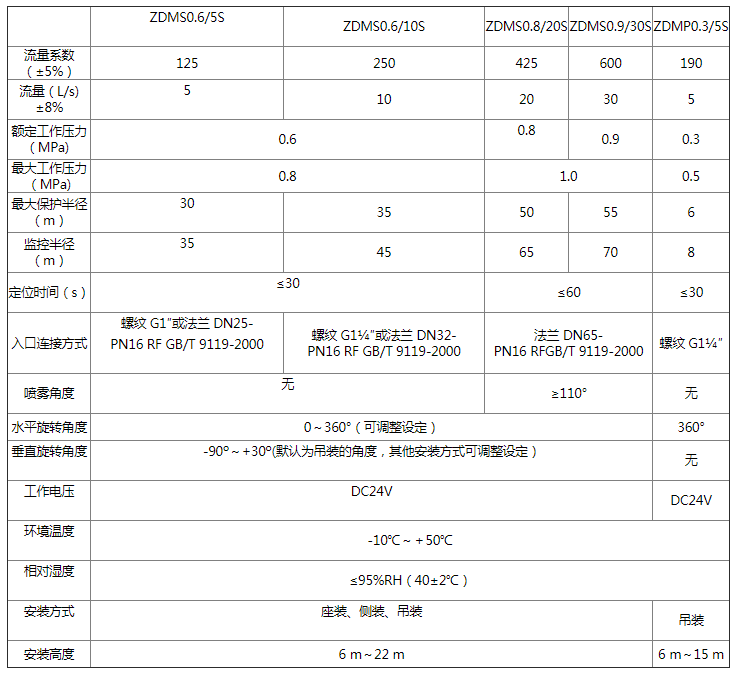
III. Performance Parameters: