















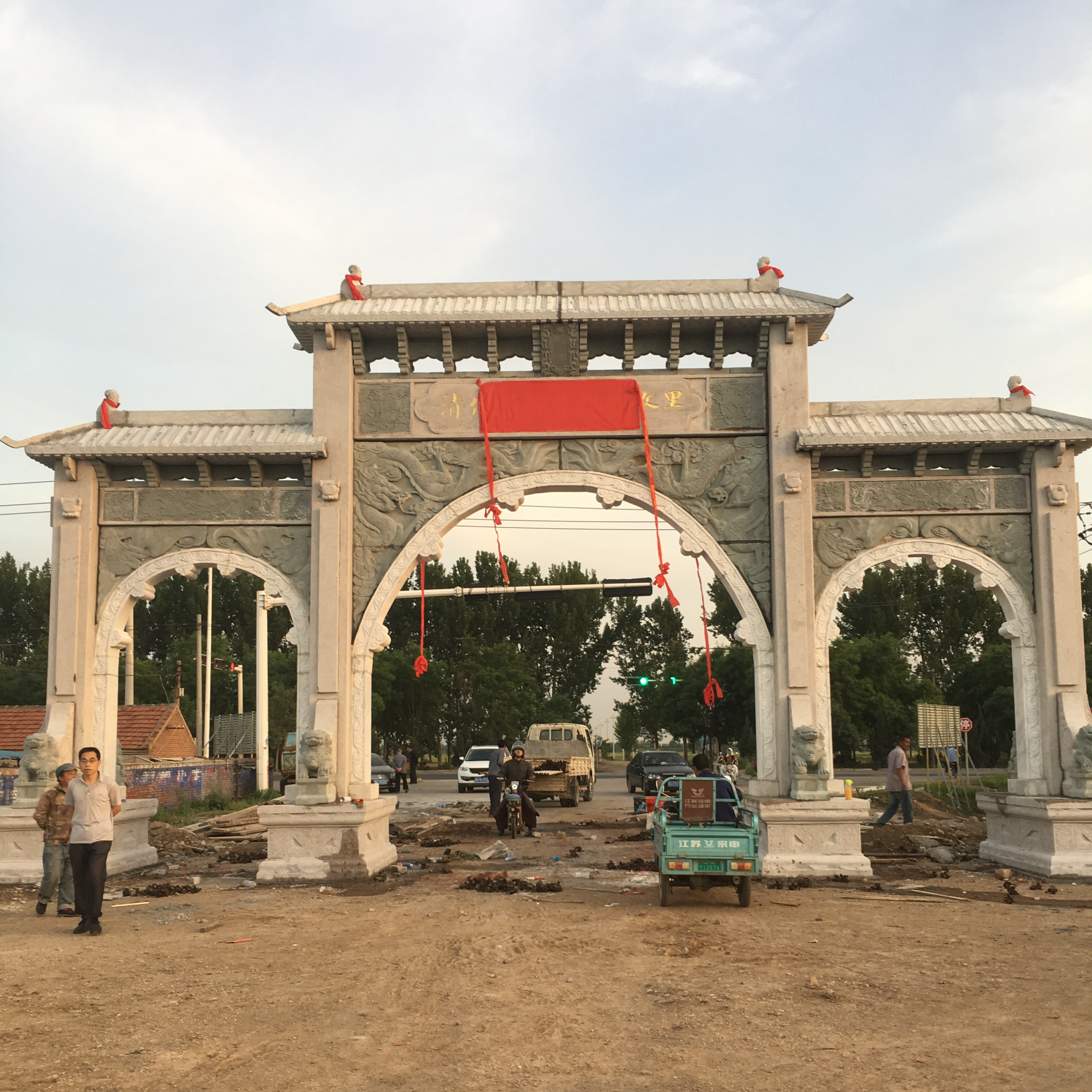

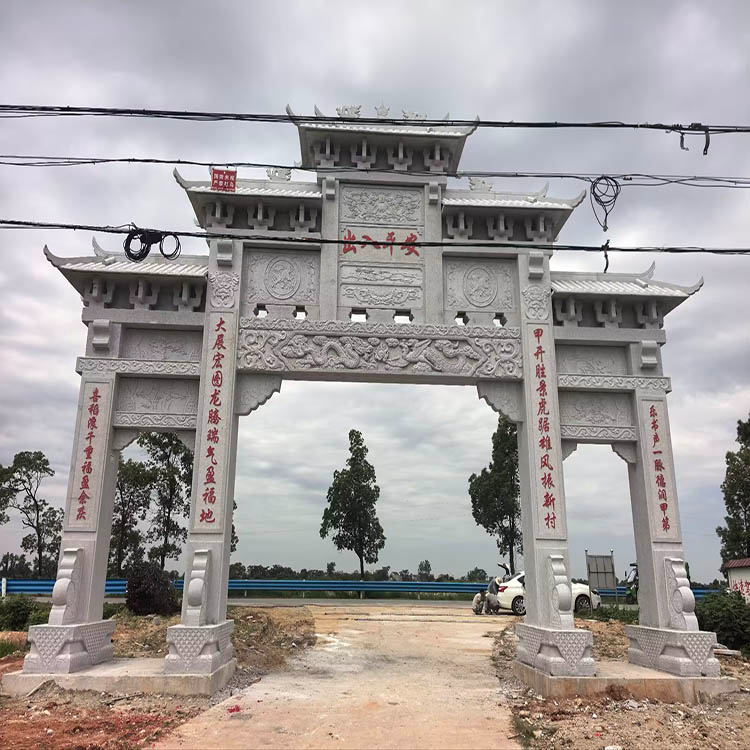
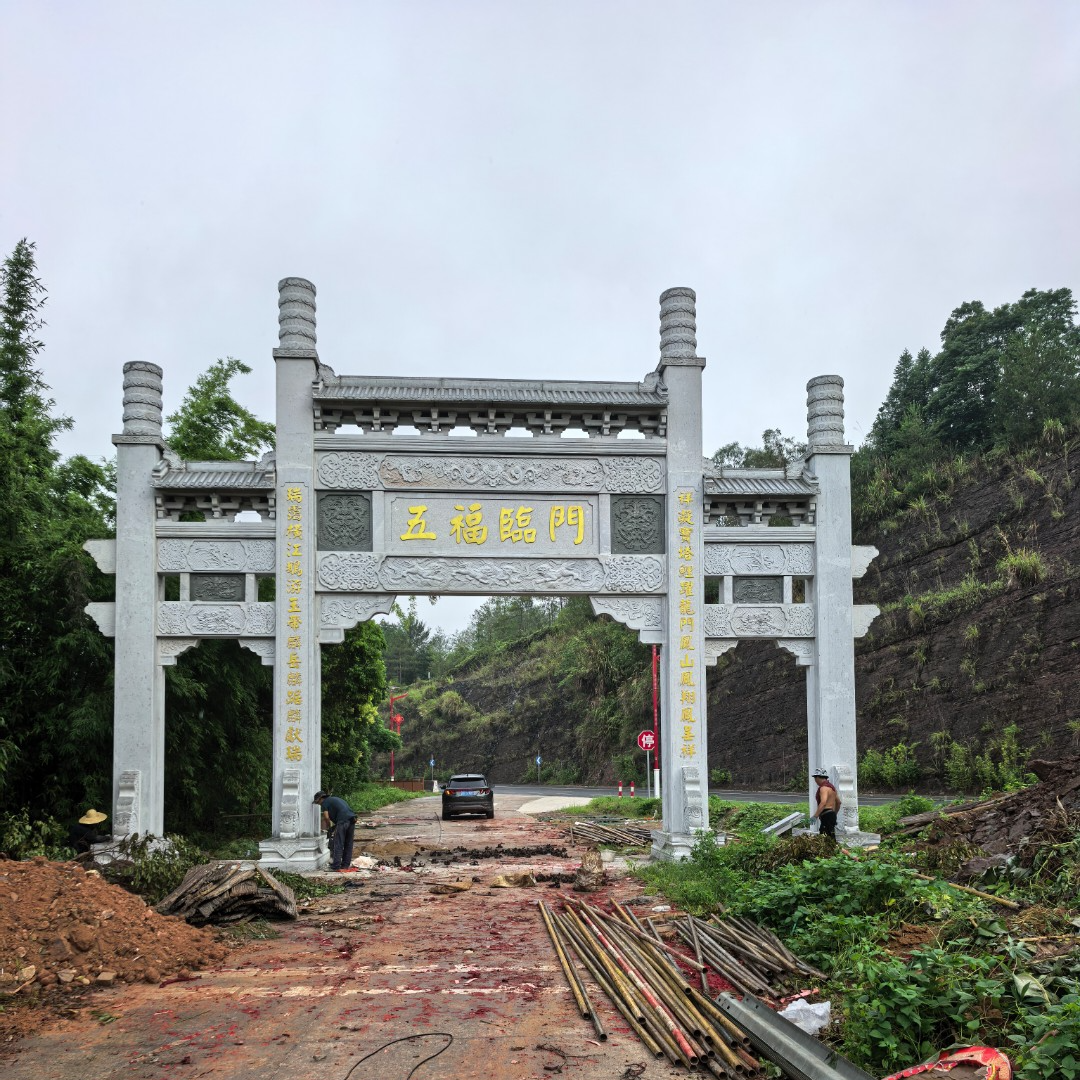

The Stone Archway, as a traditional architectural form rich in cultural heritage, is widely used in various locations such as rural areas, scenic spots, parks, ancestral halls, and cemeteries. It not only serves as a signpost, monument, and decoration but also carries profound historical and cultural significance.
Stone archways are commonly constructed from stone materials, which vary widely, including but not limited to bluestone, granite, and marble. These stones are ideal for creating archways due to their hardness, resistance to weathering, and ease of carving.
Structurally, stone archways can be single, triple, quintuple, or even more doors, with varied top designs such as soaring or flat-topped. Each stone archway showcases a unique artistic charm, tailored to its intended use and design requirements. For instance, rural gateways are often simple and elegant, reflecting the rustic and tranquil nature of the countryside; while scenic archways might be more ornate and intricate, complementing the surrounding natural scenery.
In terms of carving techniques, the Stone Archway truly embodies the essence of stone carving art. Elements such as mythical animal reliefs, flower and bird patterns, and historical anecdotes are skillfully integrated into the archway, adding both artistic beauty and symbolizing auspiciousness, happiness, and longevity. These carved works often feature smooth lines and lifelike forms, showcasing the masterful skills and boundless creativity of the stone carvers.
The application of Stone Arches is extensive, not limited to rural areas or scenic spots as mentioned above. In ancestral halls, cemeteries, and other places, Stone Arches hold profound meanings of remembrance and respect for our ancestors. Serving as a symbol at the entrance, they guide people into solemn and respectful spaces, allowing them to feel the weight of history and the transmission of culture.
Additionally, with the advancement of modern architectural technology, the craftsmanship of stone archways has also been continuously innovated. Modern stone archways, while retaining traditional elements, incorporate more modern design concepts and techniques, making them more in line with the aesthetic needs and usage habits of modern people, while maintaining a classical charm.
When manufacturing stone archways, attention must be paid to selecting appropriate stone materials and carving techniques to ensure quality and aesthetics. Additionally, consider the installation location and surrounding environment to harmonize with the surroundings and achieve the best artistic effect. There are manufacturers producing stone archways, which feature exquisite design, refined craftsmanship, and superior materials, meeting various customer needs.